The best-kept secret of Emilio Duró: how he reinvented his life after the toughest blows.
True happiness: what Emilio Duró discovered after hitting rock bottom.Emilio Duró has dedicated his life to giving lectures and training leaders. However, his greatest lesson came after facing severe personal crises. Today, at 64 years old, he asserts that happiness does not depend on success, nor even on attitude. The key, he says, is to find a purpose, a meaning that gives direction to each day.
During an interview for Aprendemos Juntos 2030, an initiative by BBVA, this Spanish businessman and speaker shared the deepest lessons he learned along his journey. What he discovered not only transformed his view of the world but also offers a roadmap for anyone seeking a fuller life.
The turning point that changed everything
“Harvard University says that we all face at least four major blows in life. I had them all at once,” Duró confessed. It was at that moment that he realized he was not happy. Sadness pushed him to seek answers, and it was then that he began to wonder why some people maintain their energy and optimism, even in the most adverse circumstances.
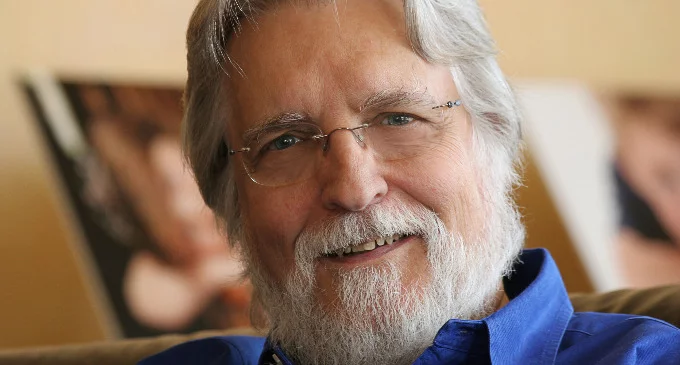
The answer was clear: the difference is not in what happens, but in how we respond. “When life goes wrong, we are not to blame for everything, but we are responsible for how we react,” he stated.
Duró compares life to a barcode: white stripes and black stripes. What matters, he says, is to focus on ensuring that the white ones always weigh more than the black ones. A simple yet powerful way to view the world.
The shift in Psychology that marked a before and after
In 1980, he recounts, Psychology took a crucial turn. In addition to studying severe pathologies, it began to focus on people who, despite everything, were happy. What did they have in common? Why, in the same company, can two people with the same tasks have such different levels of satisfaction?
“It is your mind that projects reality”, Duró summarizes. This idea became the center of his studies: to understand why some are happy without having much, while others have everything and do not find peace.
The importance of social relationships
One of the most relevant findings of Emilio Duró is linked to a study from the University of Michigan. Researchers sought the profile of people who are most successful and live the longest. What they discovered was revealing: they are not alone and have an active social life.
This fact leads Duró to one of his most compelling statements: “From the moment we are born until we die, we seek one thing: to be loved.” And he warns that we have replaced that search for love with a screen. “We give our lives to see how many likes we get,” he says, highlighting a great paradox of current times.
Meaning as the axis of happiness
Duró insists that mood is temporary. What truly remains is the meaning given to life. At this point, he mentions Viktor Frankl, an Austrian psychiatrist and author of Man's Search for Meaning, as one of his great influences.
Frankl observed that in Nazi concentration camps, prisoners who had a reason to live — a sick child, parents waiting for them — survived longer. “Life is only wonderful when you have a why,” Duró summarizes.
The five universal regrets
During his talks, Emilio Duró often mentions a list of the main regrets expressed by people before they die:
- Having lived the life that others expected, not their own.
- Having worked too much, sacrificing health and family.
- Not having expressed enough love: touching, hugging, kissing.
- Having distanced themselves from loved ones, both physically and emotionally.
- Not having been happier, despite the opportunities.
This list reflects a shared emotional reality, which Duró uses as a guide to help others avoid those mistakes.
Concrete actions to start being happy
At the end of his presentation at Aprendemos Juntos 2030, the speaker proposes a series of simple habits that, according to various scientific studies, can significantly improve well-being:
- Singing generates immediate positive emotions.
- Programming the mind in the morning with good thoughts changes the focus of the day.
- Focusing on the good, not the negative, improves overall mood.
- Exercising reduces worries.
- Meditating or practicing relaxation techniques transforms emotional state.
All these practices do not require large investments or drastic changes, just a commitment to oneself.
Happiness is in anticipation
One of the most graphic examples Duró gives is that of dog food: “A dog is happy when you prepare its food, not when it eats it.” That is to say, happiness is in hope, in the anticipation of something good.
The same happens with vacations. Studies indicate that people feel more happiness in the weeks leading up to a trip than during the trip itself. Anticipation generates a type of pleasure that is profoundly human and can be cultivated.
From theory to practice: love, share, laugh
Emilio Duró does not limit himself to sharing ideas; he also lives by them. He firmly believes that we have stopped laughing and that this is making us sick. “Children laugh up to 300 times a day. We, less than 20 times a month,” he warns.
For him, good humor must regain its place in adult life. “We have been led to believe that if you laugh, you are not working. But I have my doubts,” he says, with irony.
His proposal is not revolutionary, but it is radical: to recover the human, to reconnect, to love again. Because, at the end of the day, that is the source of all lasting happiness.