What no one saw coming in "Paradise," the series that changes everything starting this Monday on Disney+
The new season of Paradise breaks the confinement of the bunker and expands its conspiratorial thriller into a devastated outside world.
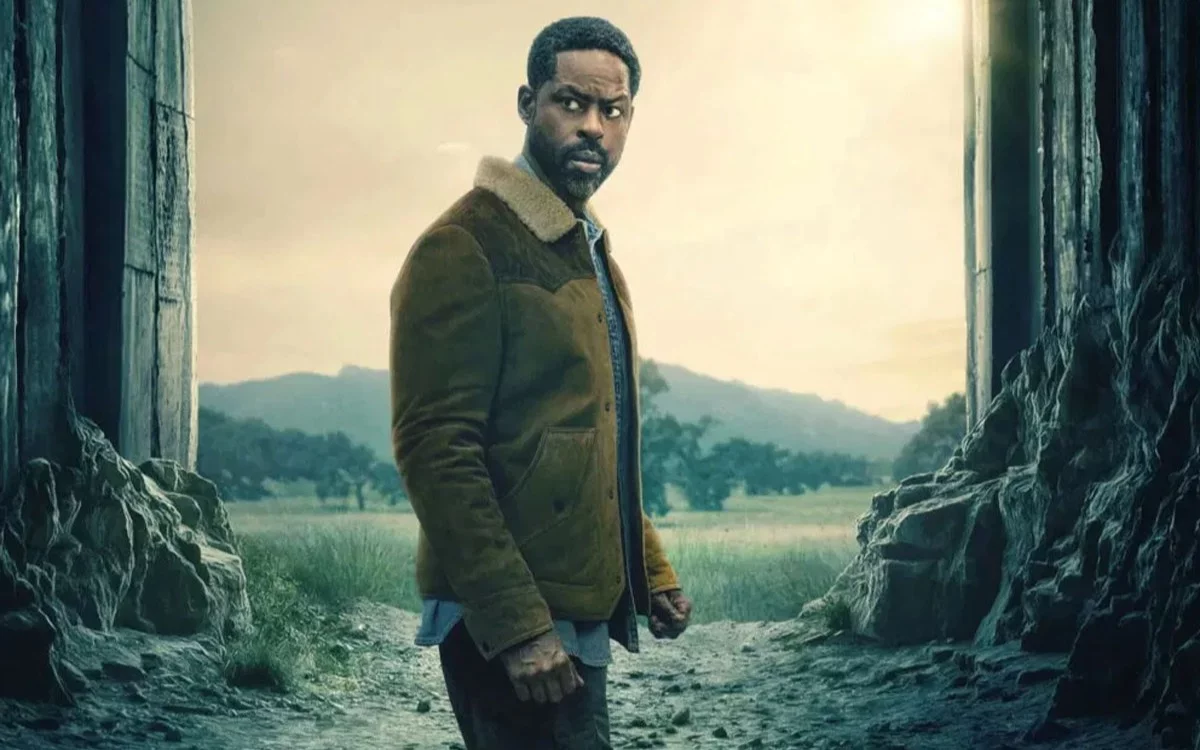
The return of Paradise was not a simple continuation. It was a break. The premiere of the second season on Disney+ completely dismantled the paradigm that held the first installment: the refuge is no longer the absolute center of the conflict.
The dystopian thriller expanded its scale. Isolation gave way to external chaos. And the internal balance of the bunker began to crack.
The result is a narrative reinvention that modifies the sense of community, redefines alliances, and places new characters at the center of the tension.
From the refuge under the mountain to the world after "The Day"
In the first season, the story focused on coexistence within a bunker hidden under a mountain in Colorado. There, a select group survived the global collapse known as "The Day."
In this new stage, that confinement is broken.
Xavier, played by Sterling K. Brown, extends his search for Teri beyond the limits of the refuge. For the first time, the audience accesses the devastated exterior.
That movement changes everything. The narrative stops revolving exclusively around the management of internal order and expands towards social reconstruction after the disaster.
The bunker is no longer an impregnable sanctuary. It is a contested territory.
The murder that fractured harmony
The closure of the previous season left an open wound: the murder of President Cal Bradford.
That event, far from being resolved, now becomes a catalyst for new power struggles. The apparent harmony of Paradise fractures.
The survivors who remained outside the refuge emerge as active players. They claim their place in the utopia that was protected for three years.
The tension is no longer just internal. It is political, moral, and territorial.
Sinatra, played by Julianne Nicholson, maintains hidden agendas as isolation loses its meaning. Reserved strategies begin to surface.
The promised paradise shows its cracks.
An unexpected protagonist and new alliances
The addition of Shailene Woodley to the main cast marks another turning point. Her character embodies one of the external survivors of the bunker.
Her presence expands the dramatic scope. It introduces the perspective of those who resisted outside the protected system.
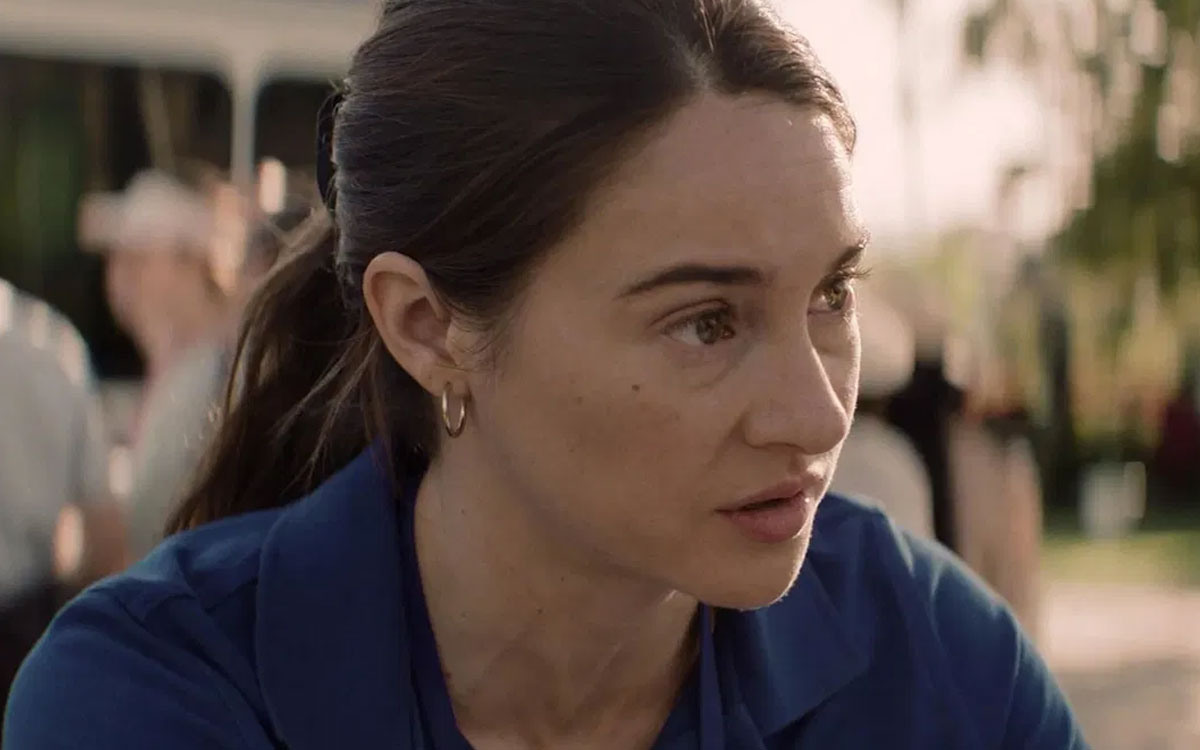
Shailene Woodley: the new figure that alters the balance in "Paradise"
The dynamic between the original refugees and the newcomers reveals deep tensions:
- Who has the right to occupy the refuge?
- What does justice mean after a global collapse?
- Can a community based on exclusion be rebuilt?
The stable cast is completed with Sarah Shahi, Nicole Brydon Bloom, Krys Marshall, Enuka Okuma, Aliyah Mastin, Percy Daggs IV, and Charlie Evans, along with special appearances by Thomas Doherty and Timothy Omundson, among others.
The expansion of the cast reinforces the idea of a world that expands beyond the original confinement.
The creative twist that changes the rules
Creator Dan Fogelman defined this season as his own reinterpretation of The Empire Strikes Back. The reference is not casual.
In that film, the narrative universe darkens and the protagonists face defeats that redefine their path. Here, something similar occurs.
"The second installment is going to revolutionize what they thought the first season would be," Fogelman anticipated.
The emphasis remains on the conspiracy thriller. The twists constantly reconfigure the status of the characters.
The production continues under the banner of 20th Television, with Fogelman as creator and executive producer alongside Jess Rosenthal, John Hoberg, Brown, Steve Beers, Glenn Ficarra, and John Requa.
The presence of Sterling K. Brown also in the executive production reinforces the artistic control over the evolution of Xavier and his impact on the collective narrative.
Release strategy and global conversation
The launch of three initial episodes simultaneously, followed by weekly releases, responds to a clear strategy on Disney+.
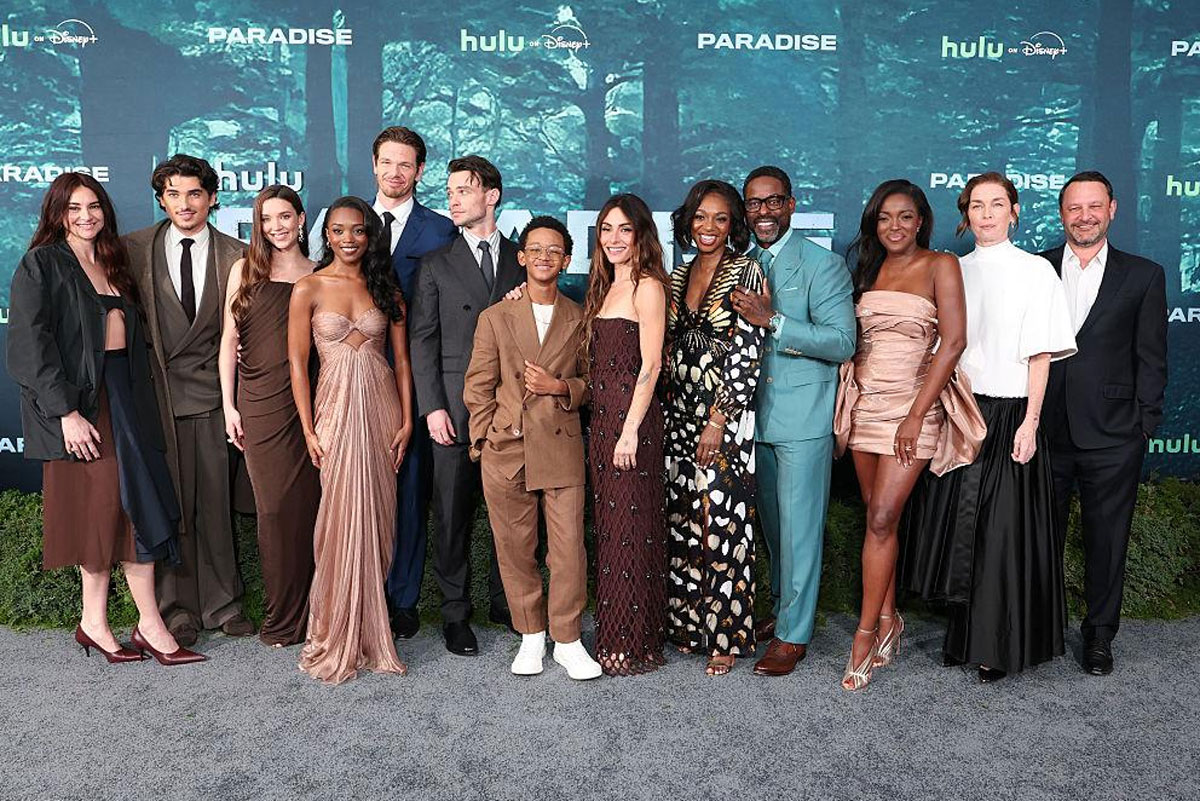
The complete cast of Paradise
The goal is to combine the event effect with the progressive accumulation of debate on social media and in the press.
The structure accompanies the narrative shift: from introspective confinement to expansive conflict.
Paradise and contemporary dystopian fiction
Since its development under 20th Television, Paradise has established itself as a proposal that revisits the American dream through the allegory of the bunker.
The series integrates conspiracy, survival, and internal politics. The refuge functions as a metaphor for privilege and exclusion.
In this second season, the opening to the outside redefines the central conflict. It is no longer just about managing resources, but about deciding who belongs and who is left out.
The external chaos forces a review of the foundations of the supposed paradise.
Dystopian fiction thus finds a new angle: it is not enough to survive. One must rebuild.
And in that process, alliances transform, secrets come to light, and the very idea of community changes forever.