Forget about walking fast: tai chi walking is the technique that many start to practice and few know why it changes balance so much.
The tai chi walk is gaining popularity for its effects on balance, strength, and mental calm. Experts explain why this simple technique is surprising.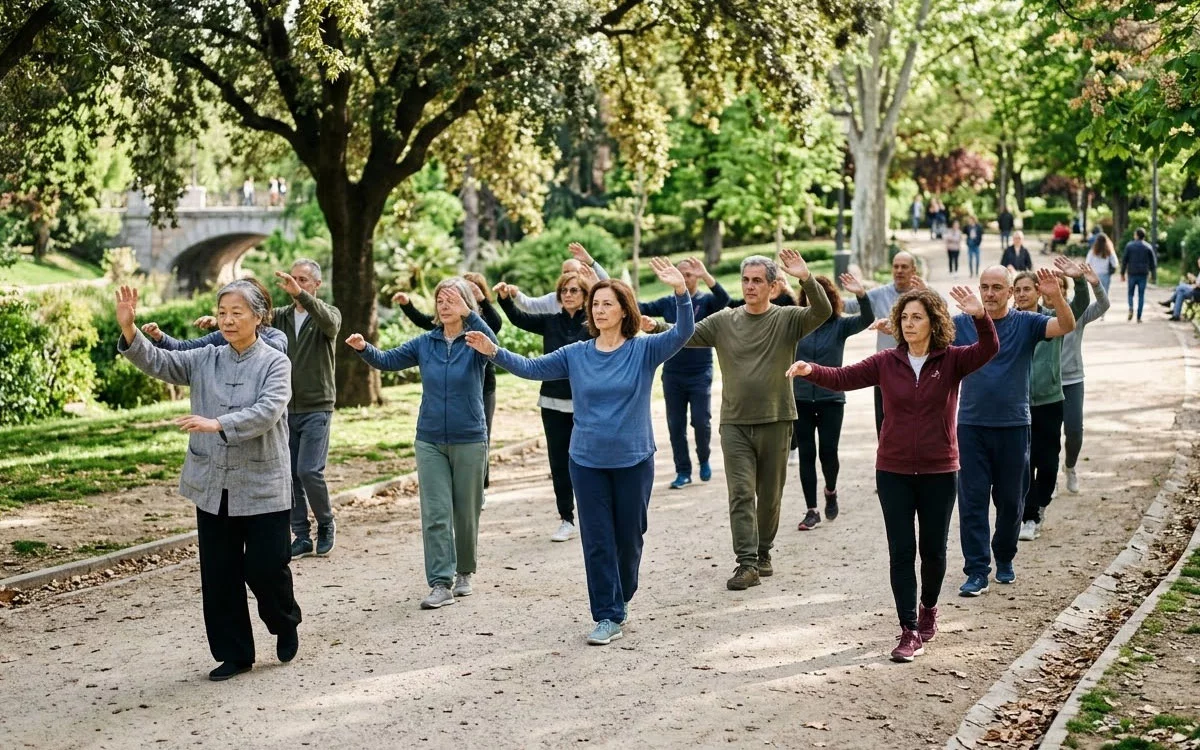
The “tai chi walk” began to attract the attention of health specialists, movement instructors, and people looking to improve their well-being without intense exercise. Although at first glance it seems like just a slow walk, those who practice it have discovered that it is a technique with real benefits for the body and mind.
This movement is part of tai chi, an ancient martial art originating from China that combines fluid movements, conscious breathing, and mental concentration. Over time, this practice transcended the martial realm and became a widely used method of gentle exercise in health, rehabilitation, and wellness programs.
In recent years, the tai chi walk has started to expand in gyms, rehabilitation centers, senior residences, and social networks. Videos and virtual classes teach the fundamentals of the movement, allowing more and more people to incorporate it into their daily routine.
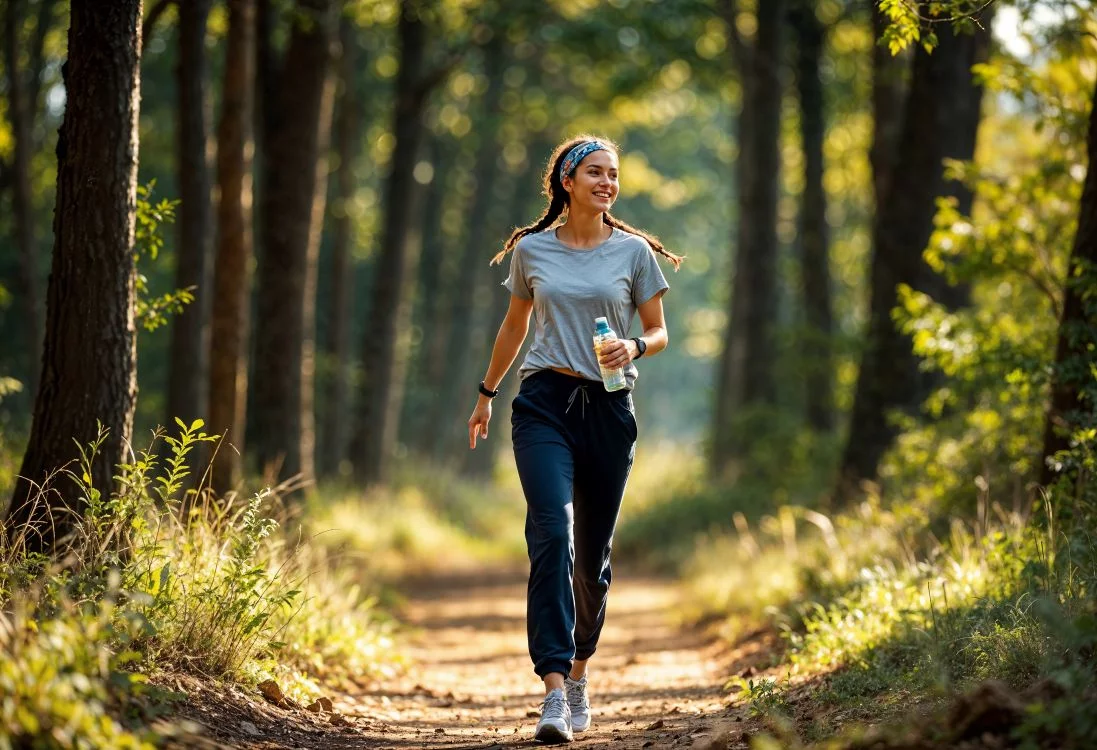
Experts agree on one key point: the simplicity of this practice is precisely what makes it so effective. It requires no equipment, can be performed in almost any space, and is accessible to people of different ages and fitness levels.
What is the tai chi walk and how is it different from walking normally
The tai chi walk is based on a simple principle: walking with total control of movement. Unlike conventional walking, the exercise eliminates the natural momentum between steps and slows down each transition.
This forces the body to work differently.
Each step is taken with mindfulness, slowly transferring weight from one leg to the other. The knees remain slightly bent, and the posture is kept upright throughout the movement.
Kinesiology professor Li Li from Georgia Southern University explained that this technique significantly improves balance and body stability. According to the specialist, the clearest rewards appear in the reduction of fall risk and in greater awareness of one's own body.
For his part, associate professor of biomechanics Feng Yang from Georgia State University described this movement as a “feline walk”. The term refers to a slow, silent, and controlled movement, similar to how cats walk.
The main difference from a regular walk lies in the fact that the body does not use momentum. Instead, each step requires muscle coordination and active balance.
This detail turns the exercise into a complete training for stability.
How to practice this exercise correctly
Learning the tai chi walk does not require prior experience. In fact, many instructors teach the technique in just a few minutes so that students can start practicing it.
The basic method follows some fundamental steps:
- Slightly bend the knees.
- Keep the back straight and the body relaxed.
- Slowly transfer weight from one leg to the other.
- Move forward without momentum or abrupt movements.
- Breathe naturally while walking.
Instructor Leda Elliott, owner of the A Thousand Cranes center in Massachusetts, taught this technique in group classes and observed that students quickly incorporated it.
One of the exercises she often recommends involves imagining that there is a cup of tea on the head. This image helps maintain the correct posture and promotes concentration during the movement.
The goal is not to walk fast or cover great distances. What matters is to feel each phase of the step and maintain attention on the movement.
Even a few minutes of practice can lead to noticeable changes in body stability.
Why experts recommend it to improve balance
One of the main benefits of the tai chi walk is related to proprioception.
Proprioception is the body's ability to recognize its position in space. This system allows for maintaining balance, reacting to a stumble, or adjusting posture while walking.
Over time, this ability tends to decrease. For this reason, many older adults develop insecurity while walking or fear of falling.
The practice of tai chi constantly stimulates this system.
By walking slowly and with control, the body receives continuous signals about the position of the legs, body weight, and balance. This forces the brain and muscles to coordinate to maintain stability.
Recent research has shown that during the tai chi walk, the body must actively stabilize with each step. This represents a greater challenge for balance than normal walking.
As a result, the muscles of the legs and trunk strengthen while body awareness improves.
The impact on fall prevention in older adults
Falls represent one of the most common health problems in the older adult population.
Preventing such accidents depends on two key factors:
- Quickly detecting a loss of balance
- Having enough strength to correct the movement
The tai chi walk helps train both aspects.
According to Professor Feng Yang, regular practice not only improves physical stability but also reduces the fear of falling. This point is important, as the fear of falls often leads many older adults to reduce their physical activity.
This reduction ends up weakening the muscles even more and increases the risk of accidents.
Tai chi breaks that cycle.
As a gentle, safe, and controlled exercise, many people regain confidence in their mobility and move with greater freedom.
An accessible exercise for all ages
Another of the most notable advantages of the tai chi walk is its accessibility.
It requires no machines, weights, or special facilities. It also does not demand advanced physical fitness.
It can be practiced:
- At home
- In a hallway
- In a park
- In an exercise room
- In group classes
Even specialists recommend starting with very brief sessions.
Two or three minutes daily may be sufficient at first. Over time, the duration can gradually increase as the body adapts to the movement.
The exercise can also be performed barefoot or with soft-soled shoes, which facilitates connection with the ground and improves control of body weight.
For this reason, many rehabilitation and wellness programs have incorporated it as part of their routines.
The relationship between the tai chi walk and stress reduction
Beyond the physical benefits, the tai chi walk also serves as a form of moving meditation.
Each step requires attention, conscious breathing, and body control. This combination generates a calming effect similar to mindfulness practices.
By focusing on movement and breathing, the mind reduces the constant flow of thoughts and tensions.
Many practitioners described the experience as a moment of pause within the fast pace of everyday life.
This mental component explains why the technique is also used to reduce anxiety and improve the sense of well-being.
The slow repetition of the movement promotes relaxation and helps regulate stress.
Why this practice has become a trend in health and wellness
The growing interest in the tai chi walk reflects a shift in how many people understand exercise.
For years, the idea prevailed that only intense workouts could generate real benefits. However, recent research has begun to highlight the value of gentle and mindful practices.
Tai chi has become one of the clearest examples of this trend.
Its combination of slow movement, balance, muscle strength, and mental attention has transformed it into a valuable tool for overall health.
For this reason, instructors, kinesiologists, and wellness professionals have begun to recommend it more frequently.
The tai chi walk, being the most basic movement of this discipline, represents an accessible entry point for those who wish to start practicing.
And many people have discovered that behind such a simple gesture as walking slowly lies a deep training for the body and mind.