Climbing stairs: the exercise that many overlook and that experts recommend for heart health.
Practicing climbing stairs can improve cardiovascular health, strengthen the legs, and promote circulation without the need for a gym.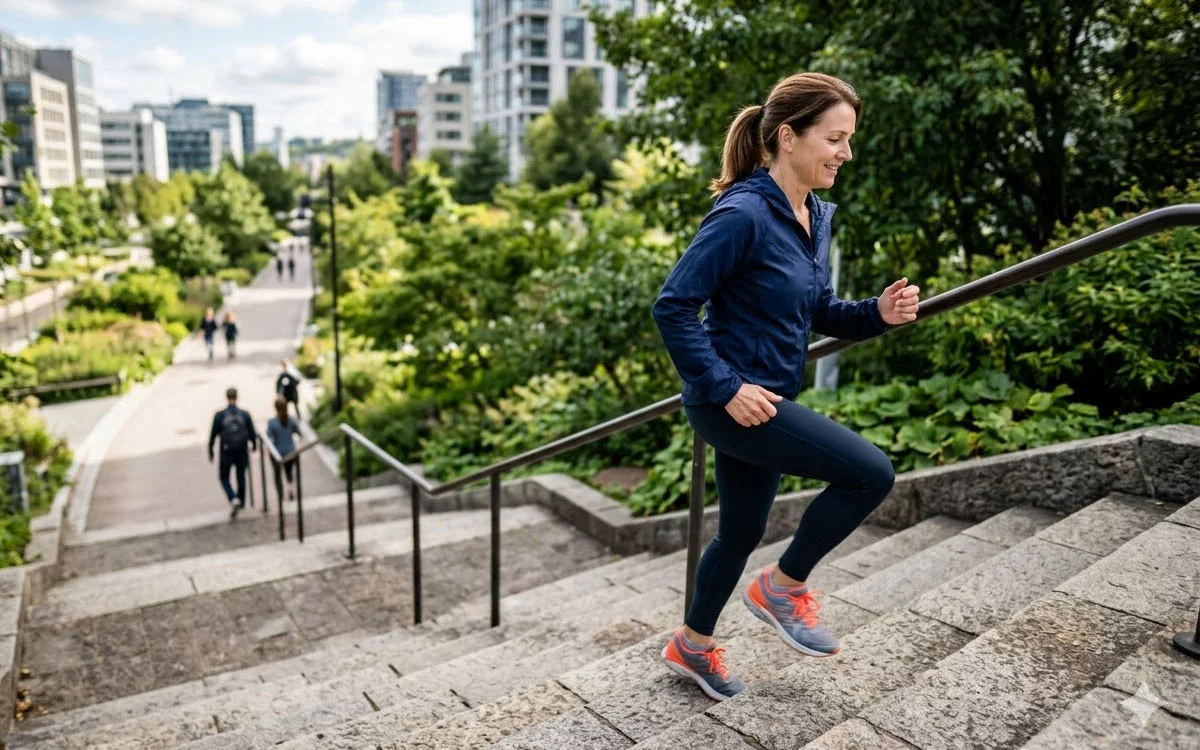
Climbing stairs has become one of the physical activities that health and preventive medicine specialists highlight for its cardiovascular benefits. Although walking or using a stationary bike are usually the most common recommendations, more and more studies indicate that vertical movement can offer additional advantages for the body.
As the years go by, many people seek exercises that are effective but also friendly to the body. In this context, this everyday practice appears as an accessible alternative, as it does not require special equipment or gym memberships.
Moreover, it is an activity that most people can easily incorporate into their daily routine, whether at home, at work, or in public spaces.

Why climbing stairs strengthens the heart
One of the main benefits of climbing stairs is related to its direct impact on the cardiovascular system.
When the body performs a vertical movement, the heart must work harder to pump blood to the muscles that are being activated. This additional effort occurs in short intervals, creating a type of training that improves cardiorespiratory endurance.
Compared to walking on flat ground, climbing stairs requires greater physical effort in less time.
This type of activity resembles interval training, where the heart alternates between moments of intense effort and brief recovery periods.
Over time, this dynamic can help improve the capacity of the cardiovascular system and increase overall physical endurance.
How it improves circulation in the legs
In addition to the benefit for the heart, climbing stairs also has a positive impact on blood circulation.
When the legs contract to lift the body's weight on each step, the calf and thigh muscles act as a kind of natural pump.
This mechanism helps propel blood from the lower extremities back to the heart.
The process favors venous return, which can help prevent or reduce common circulatory problems.
These include:
- Swelling in the legs
- Fluid retention
- Appearance of varicose veins
- Feeling of heaviness in the extremities
Keeping the circulatory system active is especially important as time goes by, as circulation tends to become less efficient.
An exercise that also strengthens muscles
Another advantage of climbing stairs is that it combines two types of training at the same time.
On one hand, it functions as aerobic exercise, benefiting the cardiovascular system.
On the other hand, it also involves muscle strengthening work.
Each step activates different muscle groups in the lower body, including:
- Quadriceps
- Glutes
- Hamstrings
- Calf muscles
Strengthening these muscles is essential for maintaining body stability.
Having stronger legs also helps protect the joints and improves balance.
This is especially relevant for older adults, as better balance reduces the risk of falls.
What studies say about climbing stairs
Various studies have analyzed the benefits of this activity.
A recent study that evaluated data from thousands of participants found that climbing more than five flights of stairs a day could reduce the risk of cardiovascular disease by approximately 20%.
Although this type of activity does not replace other forms of exercise or medical recommendations, the results suggest that incorporating simple movements into daily life can have positive effects on health.
The key is to maintain activity consistently and make it part of the daily routine.
How to practice climbing stairs safely
Experts point out that the goal is not to perform the activity at maximum speed.
The most important thing is to maintain a comfortable and steady pace.
To avoid injuries or strain on the joints, they recommend:
- Climbing the steps in a controlled manner
- Using the handrail for support
- Maintaining a stable posture
- Placing the foot completely on each step
People with knee problems or mobility issues should perform the activity with special caution.
In such cases, it may be helpful to consult a healthcare professional before incorporating this type of exercise into the routine.
Alternatives for those without stairs at home
Not all homes have stairs. However, there are simple alternatives to perform similar movements.
Some options include:
- Using stairs in parks or plazas
- Taking advantage of stairs in public buildings
- Doing exercises with a step or platform
The important thing is to incorporate functional movements that activate the body and help combat sedentary behavior.
A simple exercise with great benefits
The practice of climbing stairs shows that maintaining good health does not always require complex routines or specialized equipment.
Sometimes, the simplest movements can offer significant benefits for the body.
Incorporating this activity into daily life can help strengthen the heart, improve circulation, and keep the legs active.
That is why many specialists believe that this daily practice can become an effective tool for maintaining health in the long term.