The AI that saves lives in the fight against breast cancer
In October, Breast Cancer Awareness Month, the evidence grows that AI has become a crucial player in achieving earlier and more accurate diagnoses.
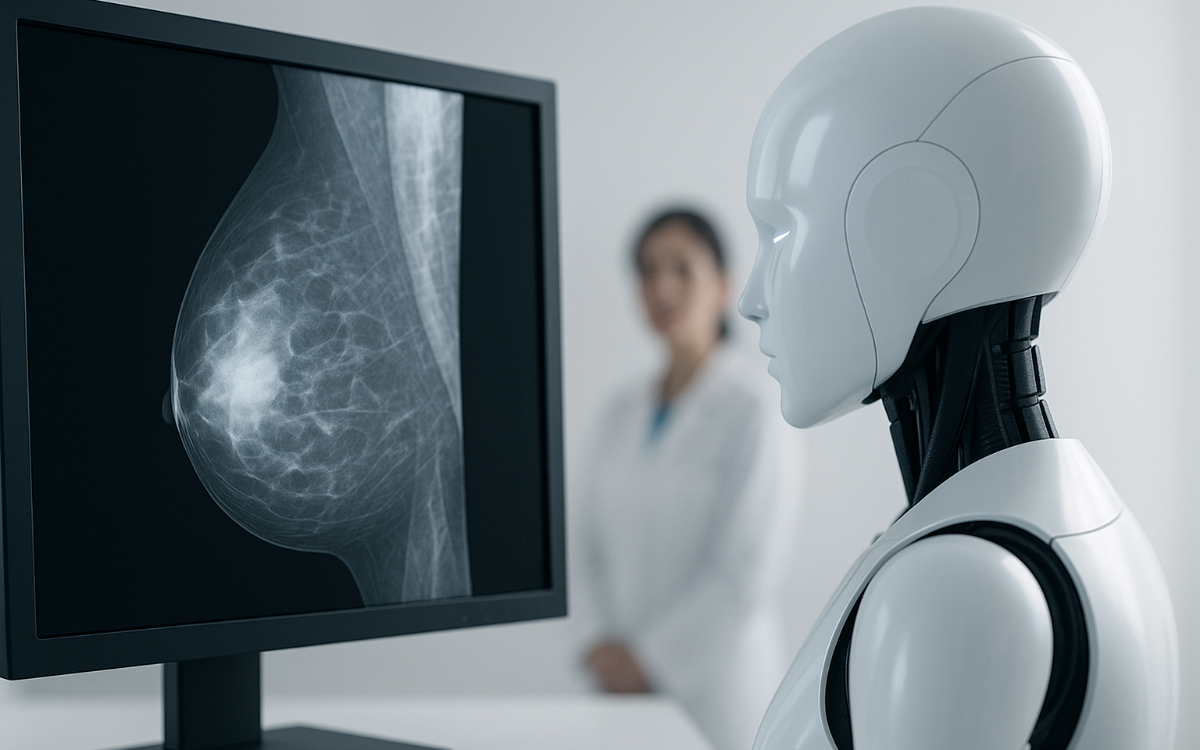
Artificial intelligence (AI) is revolutionizing various industries by improving efficiency, innovation, and access to cutting-edge solutions. In medicine, its impact is undeniable: from early disease diagnoses to the development of personalized therapies and new drugs. During October, Breast Cancer Awareness Month, a compelling fact stands out: AI has become a crucial player in detecting this disease in its early stages, managing to identify signals that could go unnoticed in conventional studies.
mammograms remain the global standard in breast cancer detection. However, their reach has limits. Some tumors, especially smaller or fast-growing ones, can escape the human eye, delaying treatment and reducing the chances of success. This disease remains one of the leading causes of death among women worldwide. Latin America has around 462,000 new breast cancer diagnoses per year and nearly 100,000 deaths caused by this disease, according to the Strategic Plan of the Pan American Health Organization 2026-2030.
Meanwhile, in Mexico, data from the National Institute of Statistics and Geography (INEGI) and the Institute of Biomedical Research of UNAM confirm that malignant tumors were the third leading cause of death in the country in 2024, with 47,439 deaths, while the average age of breast cancer diagnosis is 52 years— a decade earlier than in the United States or Europe—and between 60% and 70% of cases are detected in advanced stages.

The AI that sees beyond
In light of this reality, technology offers a breath of fresh air. Tools like Mia, developed by Kheiron Medical in the UK, have managed to identify breast cancer signals that even experienced radiologists overlooked in 11 patients.
The key lies in its deep learning algorithms, which analyze mammograms with millimeter precision to detect almost invisible anomalies. The result: earlier diagnoses, more favorable prognoses, and lives saved. But for AI to reach its full potential in medicine, more than just software is required.
However, for AI-based solutions like Mia to function seamlessly and with the precision that the medical environment demands, it is necessary to have a critical digital infrastructure specially designed to support real-time intensive processing loads. For Vertiv, edge computing becomes an essential element, as it brings data processing closer to medical equipment, reducing latency in image interpretation and improving diagnostic response times. This capability is crucial for providing more agile and personalized results to each patient.
“Early detection does not only depend on sophisticated algorithms, but on hospitals having reliable power, efficient cooling, and processing capacity close to the point of care,” says Gustavo Pérez, Director of Market Development at Vertiv Latin America.
The processing power demanded by AI is no small matter. The next generations of processors could reach densities of up to 500 kW per rack, a technical challenge that can only be met with stable energy solutions and advanced cooling systems. Hospitals must implement strategies that ensure the permanent availability of these resources, guaranteeing accurate diagnoses, continuous care, and zero interruptions.

Early detection of breast cancer: the AI that changes the times and prognosis
“Investing in critical digital infrastructure is directly investing in saved lives: shorter diagnosis times, timely treatments, and fewer deaths,” assures the executive from Vertiv.
In Latin America, the ability of AI to detect early signs of breast cancer opens a unique opportunity in the region. Its adoption can strengthen health systems, expedite diagnoses, and reduce waiting lists, especially in public hospitals. But for this to happen, it is necessary to optimize energy infrastructure, ensure operational continuity, and train medical and technical staff to make the most of these solutions.
Technology that supports the health of the future
With global experience in developing technological solutions for critical environments, developers of mission-critical IT solutions and infrastructure actively participate in designing infrastructures that ensure the continuous operation of AI-based applications.
In this way, comprehensive solutions are offered that range from the network to the chip, including power management, uninterruptible power systems, distribution boards, busway, switchgears, batteries, and thermal management through liquid cooling, essential for extracting the heat generated by GPUs and processors.
The experience in developing these technologies allows hospitals, research centers, and digital medical networks to have stable, efficient systems prepared to respond to the demands of intensive real-time data processing, contributing to building a more resilient and sustainable health infrastructure, capable of sustaining the growing technological demand of contemporary medicine and preparing the sector for the challenges of digital health in the future.
The fight against breast cancer no longer solely depends on human detection but also on technological innovations and the strength of the infrastructures that support them. In Mexico and Latin America, where most cases are detected in late stages, AI represents an opportunity to change the course of history. Investing in mission-critical technology is, in essence, investing in hope, time, and lives.