Triple-negative breast cancer: scientists block "molecular bridges" that evade the immune system
In a significant breakthrough in breast cancer research, the Weizmann Institute of Science in Israel has developed an antibody capable of blocking the molecular connections that tumors use to evade the immune response.

This finding promises to open a new path in the treatment of this type of aggressive cancer, known as triple-negative breast cancer, by targeting the molecular mechanisms that facilitate tumor progression.
The molecular bridges of cancer: a strategy for tumor survival
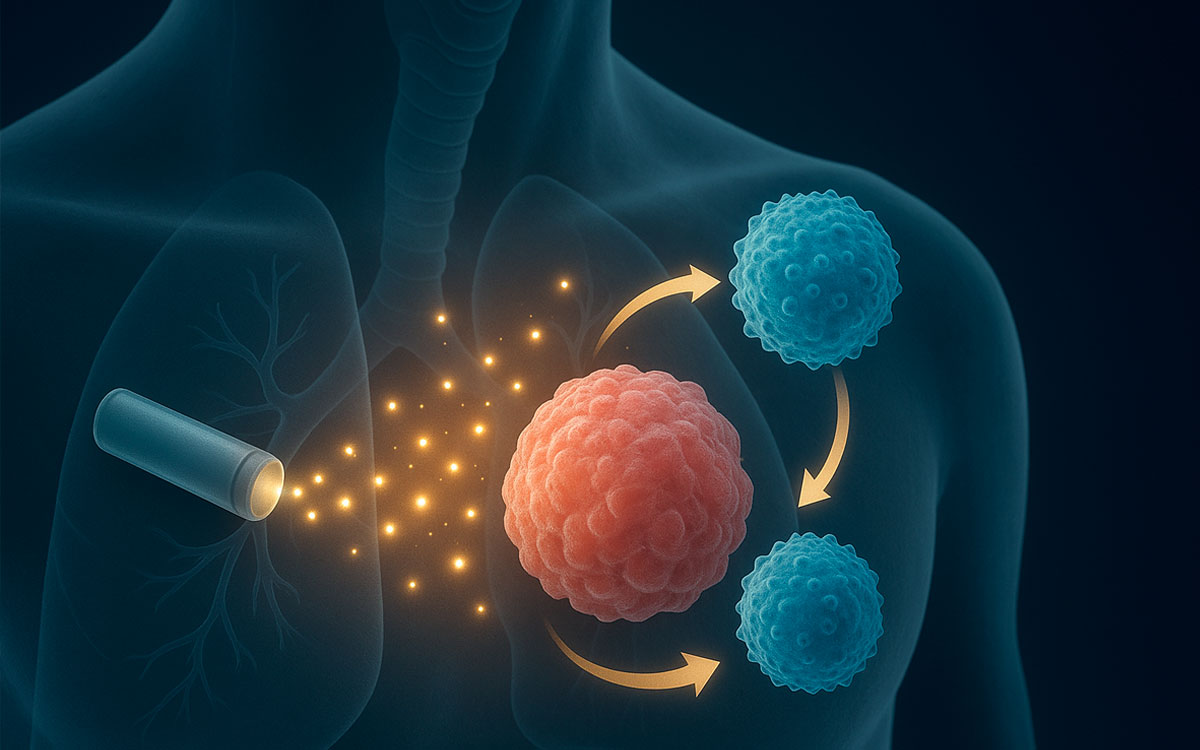
In the style of a strategic warfare tactic, triple-negative breast cancer tumors build “molecular bridges” in their immediate environment, deceiving the immune system into not attacking them. Researchers from Professor Idit Shachar's lab have demonstrated that these bridges help the tumor strengthen its survival. This type of cancer, which is difficult to treat due to its resistance and ability to evade the immune system, is a challenging enemy in the oncology field.
The results of this study, published in Cell Reports, detail how cancer cells send signals to prompt nearby immune cells to form these “bridges.” This blocks the immune response, facilitating tumor growth. By blocking the formation of these connections, the antibody developed by Weizmann scientists restores the immune system's ability to attack cancer, managing to inhibit its progression in preclinical studies conducted in mice.
Breast cancer and its environment: a complex enemy
For a long time, cancer treatments focused on directly eliminating cancer cells, but recent research indicates that it is crucial to consider the microenvironment surrounding the tumor. In a previous study, the Weizmann team identified that certain types of blood cancers created similar bridges between cells, using a protein called CD84 (SLAMF5). This protein allows cancer cells to bind to supportive immune cells, helping the tumor survive and proliferate.
The collaboration between Weizmann and City of Hope
When studying the most aggressive type of breast cancer, researchers found elevated levels of CD84 in the tumor microenvironment. This discovery was made possible through collaboration with the City of Hope research center in California, one of the largest cancer centers in the United States. Dr. Steven Rosen, vice president of City of Hope, proposed studying samples from patients with triple-negative breast cancer, a type of cancer that presents very evasive characteristics and, to date, has no effective treatment.
Unlike other types of cancer, triple-negative breast cancer does not present external characteristics that allow for easy identification. Thus, researchers explored the possibility of focusing treatment on its supportive microenvironment, rather than on the cancer cells themselves, as an innovative and more effective alternative.
The role of CD84 in the tumor microenvironment
Studies in Shachar's lab, led by PhD student Stav Rabani, revealed that tumors from patients with triple-negative breast cancer exhibit abnormally high levels of CD84. When studying these tumors in genetically modified mice that do not express this protein, they observed that these developed significantly smaller tumors.
This key finding prompted researchers to test the previously developed antibody, which had demonstrated its ability to block molecular bridges in blood cancer. Tests in mice with breast cancer showed that injections of the antibody, administered twice a week, significantly slowed tumor growth and, in some cases, achieved complete recovery.
Immune cells and the cancer evasion strategy
The molecular bridges of CD84 favor the accumulation of immunosuppressive cells in the tumor microenvironment. This allows cancer to evade the immune response and continue growing unhindered. In this regard, regulatory B cells play an important role: these bridges cause B cells to produce a suppressive protein that hinders the activity of T cells, which are responsible for attacking cancer. When this protein is released into the tumor microenvironment, it affects T cells and nullifies their ability to destroy cancer cells.
A treatment with potential for personalization
Professor Shachar and her team are optimistic about the potential of this antibody, as by focusing on cells that express elevated levels of CD84, it opens new possibilities for the treatment of a variety of tumors, not just those in which the CD84 protein is directly involved. This innovation is particularly relevant in the era of personalized medicine, where each treatment seeks to adapt to the individual characteristics of each patient.
Shachar emphasizes that most cells in a healthy organism do not present elevated levels of CD84, which makes this antibody a specific and less invasive tool. Unlike other treatments, such as chemotherapy, which affects both healthy and cancerous cells, this approach aims to exclusively affect the tumor microenvironment, thereby minimizing side effects.
New perspectives in cancer research
This advancement has captured the interest of several experts in immunology and molecular oncology. The research involved prominent figures such as Professor Emine Gulsen Gunes, Dr. Martin Gunes, Dr. Aimin Li, and Professor Raju Pillai from City of Hope, as well as Bianca Pellegrino, Bar Lampert, and Dr. Keren David from the Weizmann Institute.
By blocking these molecular bridges, scientists open an innovative horizon in the fight against breast cancer, one of the most aggressive and complex diseases to treat. Research continues, but the findings from the team offer a ray of hope for future therapies against this type of tumor and other cancer variants that use similar mechanisms to evade the immune system.