Not even the fire of 2019 could hide it: the unexpected discovery that changed the history of Notre Dame
The treasure they discovered in Notre Dame remained hidden for centuries until the fire brought it to light. A finding that rewrites history.
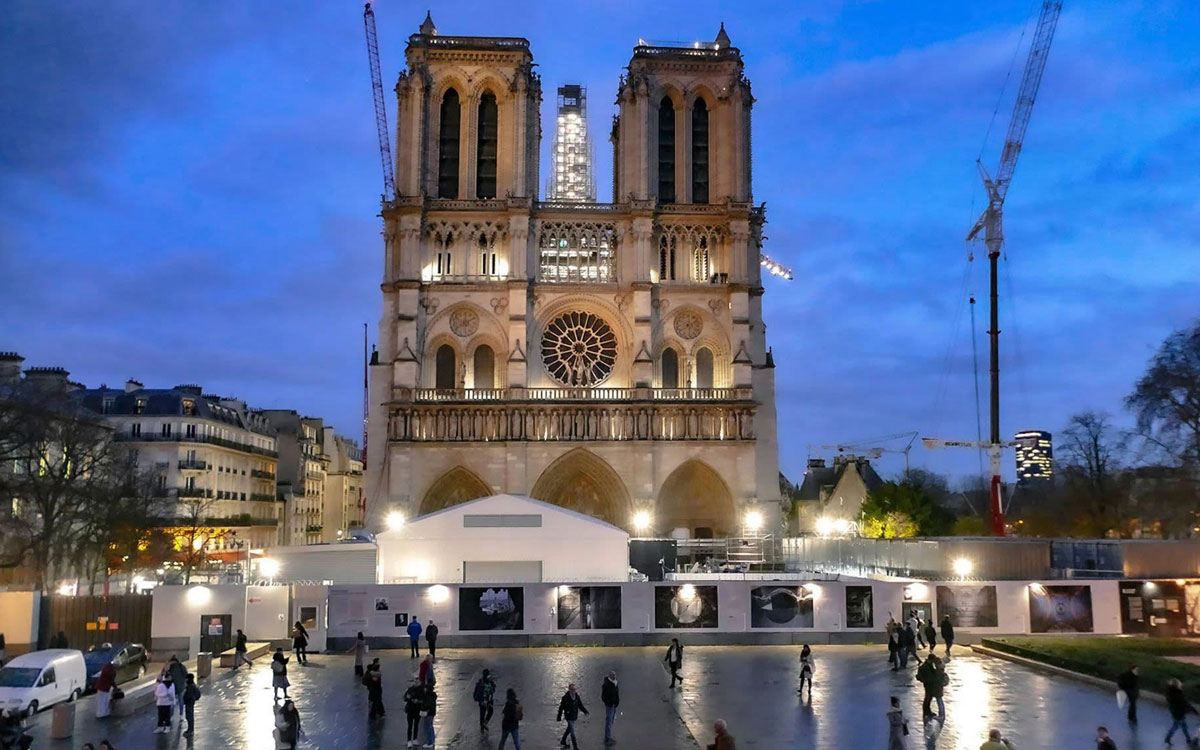
The treasure discovered in Notre Dame: a medieval jewel revealed by fire beneath its foundations
Six years after the devastating fire that shook the Cathedral of Notre Dame, one of the most important symbols of Paris, a group of archaeologists made an unexpected finding: a treasure hidden beneath the church floor. What seemed like an architectural tragedy turned out to be the key to uncovering one of the most delicate and ancient religious pieces in Europe.
The treasure found in Notre Dame that moved during Holy Week
During the last days of Holy Week, and amid the restoration work of the Gothic temple, researchers found a sculpture depicting Jesus with closed eyes, partially buried beneath the tiles and debris of the floor. The piece, dating back to the 13th century, is part of the ancient choir screen, a structure that separated the main altar from the public for centuries and had disappeared from historical records over 300 years ago.

A discovery forced by tragedy
After the fire that occurred in April 2019, reconstruction work could not begin without first ensuring the stability of the damaged walls and vaults. However, French legislation requires that, before any intervention on a site of historical value, preventive archaeological excavations be conducted.
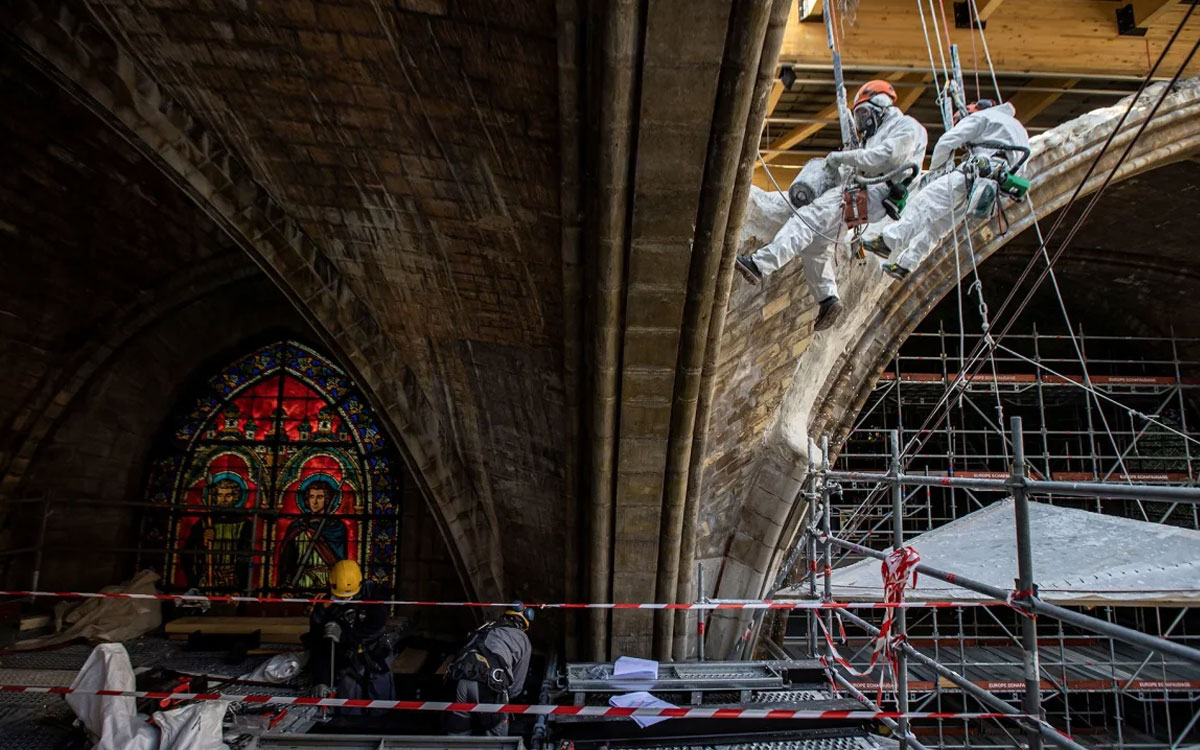
This is how they rediscovered a Gothic jewel that had remained buried by royal order
For this reason, a team from the National Institute of Preventive Archaeological Research, led by Christophe Besnier, was authorized to work for just five weeks. They were permitted to excavate only 40 centimeters deep in some areas of the floor… and that was enough.
More than a thousand fragments beneath the surface
What seemed like a simple technical cleaning ended up revealing 1,035 fragments of ancient sculptures, many of which belonged to medieval structures dismantled centuries ago. Among all the findings, one stood out immediately: a Gothic figure of Christ, painted with incredible detail and realism.
The torso and face of Jesus, with closed eyes and a serene expression, were described by the archaeologists as “an exceptional work.” In Besnier's own words: “The delicacy of the eyelids, the shape of the ears, the nose... every detail is of a fineness we had not seen until now”.
The mystery of the choir screen
The sculpture was part of an imposing structure four meters high that closed off the visual access to the choir of the cathedral. This type of screens was common in medieval churches and served two key functions:
- Liturgical privacy: it allowed priests to perform daily services without being exposed to the public.
- Religious education: it served as a kind of “narrative screen,” decorated with scenes from the Passion of Christ, such as the Last Supper, the Crucifixion, and the Resurrection.
According to historian Dany Sandron, this screen was a true gem of Gothic sacred art. But its presence began to become uncomfortable starting in the 18th century.
Louis XIV, the king who wanted a different style for Notre Dame
In the 1710s, King Louis XIV ordered the remodeling of the interior of Notre Dame. His idea was to modernize the space and replace the Gothic aesthetic with a more open and Baroque one, with sculptures that included his own image and that of his father, Louis XIII.
But there was a problem: the old screen could not be destroyed or removed as if it were a simple decoration. It was a sacred piece. The solution? To bury it in the same place. Thus, what was once visible and central became hidden beneath the cathedral floor for over three centuries.
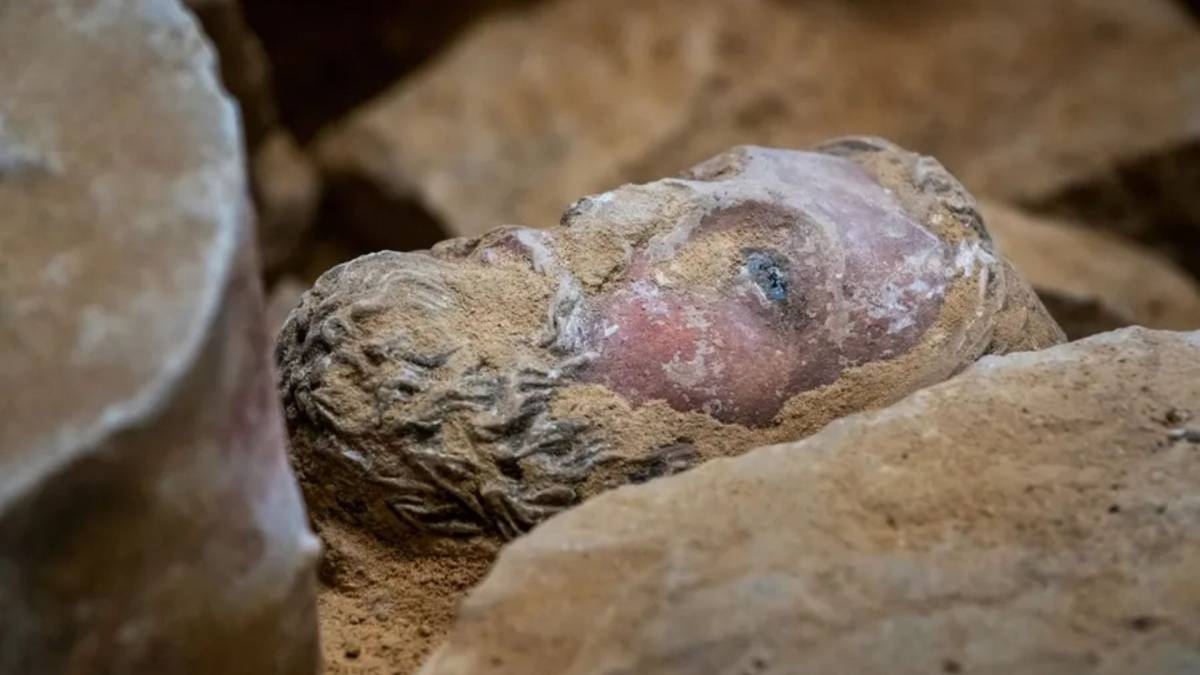
The religious piece found after the Notre Dame fire
The legacy that survived the fire
The discovery of the treasure discovered in Notre Dame not only adds artistic value. It also allows specialists to accurately reconstruct what the church was like in its early centuries of operation, and how religious practices evolved over time.
According to expert Mathieu Lours, these elements reveal how architecture responded to the needs of medieval liturgy. The stairs leading to the pulpit, for example, allowed clerics to preach from an elevated, protected place strategically hidden from the public's view.
What else remains to be discovered beneath Notre Dame?
Although this finding was made possible by an exceptional permit, archaeologists will not have more opportunities to excavate so deeply. The restoration of the cathedral is under strict planning and scheduling, and any intervention that involves removing soil requires authorizations that are rarely granted.
Still, experts are convinced that there are still more secrets beneath Notre Dame, hidden among the foundations that support centuries of history, faith, and art. For now, the discovery of this sculpture of Christ is enough to rekindle interest in the hidden heritage that survives, even, the fire.