Pope Francis changes the Catholic Church forever
Pope Francis changes the Catholic Church forever by incorporating a woman for the first time into a key economic control position in the Vatican.
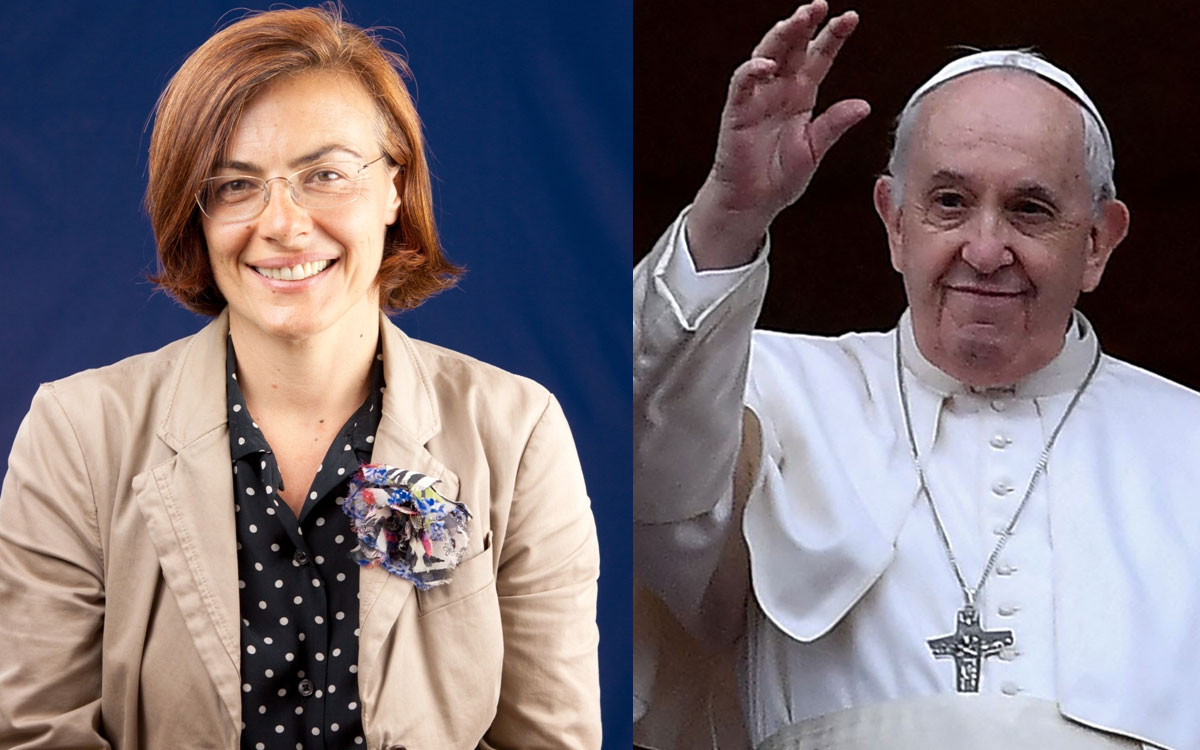
For the first time in its history, the Vatican has appointed a woman to a key leadership position. With this decision, Pope Francis changes the Catholic Church forever, promoting a fundamental transformation in one of the world's most conservative institutions. The inclusion of Concetta Brescia Morra in the Vatican's financial oversight body is not only unprecedented but also represents a turning point for female participation in ecclesiastical leadership spaces.
Appointed on July 25, 2024, Brescia Morra has joined the Council of the Vatican Authority for Financial Supervision and Information, the body that oversees the economic operations of the Holy See. She is the only woman on the team, and her inclusion is part of a strategy by the pope to give greater prominence to women in the Vatican power structure.
Toward a Church with Greater Female Prominence
Brescia Morra's appointment was not isolated. It is part of a reform plan that Pope Francis has been promoting for years to open real decision-making spaces for women. Her presence in an economic oversight body demonstrates that the change is more than symbolic: it is functional and strategic.
The pontiff has been clear in asking bishops around the world to include women in their working teams. He also promoted the Apostolic Constitution Praedicate Evangelium in 2022, which allows any layperson — including women — to lead offices of the Roman Curia, a privilege that had previously been reserved exclusively for the male clergy.
Who is the Woman Breaking a Millennia-Old Tradition?
Concetta Brescia Morra is an expert in economic law. A professor at Roma Tre University, she directed the Research Center on European Banking and Financial Law and was part of the European Banking Institute. She also worked as a visiting researcher at Harvard University.
Her technical background fits perfectly with the objectives of the body to which she was assigned: ensuring financial transparency in the Vatican. The Council in which she now participates was reformed in 2020 to strengthen economic controls, following several scandals related to mismanagement of funds.
Transparency as a Papal Flag
Pope Francis's pontificate has been marked by the need to clean up the Vatican's image regarding finances. His decision to call on specialists like Brescia Morra aligns with this vision. She will work alongside figures like Carmelo Barbagallo, former head of Supervision at the Bank of Italy, in a structure that also includes a legal and regulatory affairs unit.
In the words of the pope himself, “a Church closed to the world cannot respond to the needs of the people of God.” Therefore, his insistence on incorporating prepared women into management roles aims to strengthen institutional credibility.
She is Not the Only One: Other Women Already Hold Relevant Positions
The path toward inclusion did not begin with Brescia Morra. In 2021, the pope had already appointed Sister Raffaella Petrini as Secretary General of the Governorate of Vatican City, the second highest position in that structure. He also appointed Nathalie Becquart as Undersecretary of the Synod of Bishops and Barbara Jatta as Director of the Vatican Museums.
With each appointment, Pope Francis consolidates his intention to expand the female presence in strategic positions. Although the possibility of female priesthood remains off the table, administrative and management doors are already open.
The Most Ambitious Structural Reform of the Catholic Church in Centuries
The Constitution Praedicate Evangelium, in effect since June 2022, represents a turning point in ecclesiastical governance. It allows laypeople and women to access positions previously exclusive to clergy, marking an unprecedented evolution in the Vatican's institutional structure.
The text also reorganizes the Roman Curia, reduces bureaucracy, and promotes a more agile model of pastoral management. According to many experts, it is the most important transformation of the Church since the Second Vatican Council.
What the Pope Expects from This Change
By including women in decision-making spaces, Pope Francis aims to change not only the organizational chart of the Vatican but also its internal culture. He knows that female presence brings different perspectives and that this is key for a Church seeking to engage with contemporary society.
“Women have the ability to read reality with a different perspective. And that perspective is necessary,” he stated in an interview. With these reforms, the pope is not only responding to social demands but also building a more representative and diverse Church.
Is This Just the Beginning?
Everything indicates that it is. The arrival of women in relevant positions will continue to grow, especially in administrative, academic, and diplomatic areas. Francis has made it clear that the future of the Church will be with women inside, not outside.
The inclusion of Brescia Morra marks the beginning of a stage in which training, merit, and experience surpass gender barriers. And although there is still a long way to go, the direction is clear.