Neither hygiene nor habit... the real reason for not flushing the toilet with the lid up.
Flushing the toilet with the lid up can disperse aerosols with microbes. Science explains why it poses a risk.
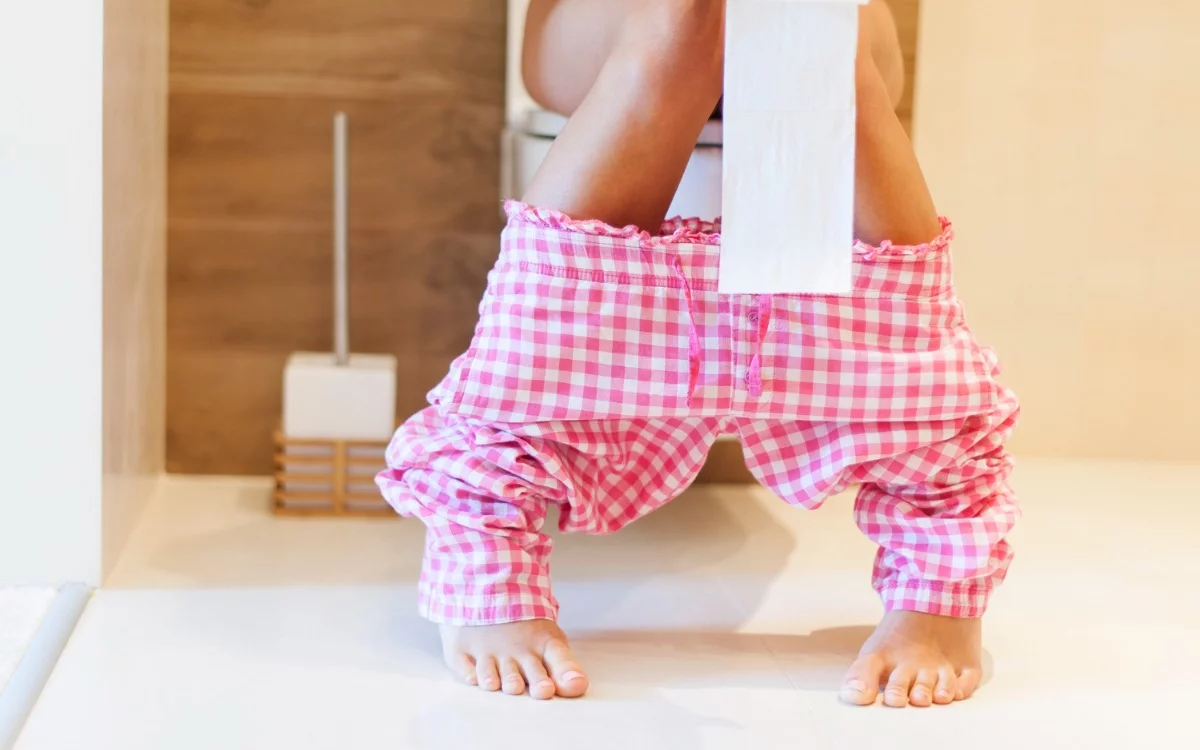
Understanding why it is not advisable to flush the toilet with the lid up may seem like a minor detail of everyday hygiene, but science shows that this gesture is much more relevant than we imagine. Every time a person activates the toilet mechanism, a phenomenon occurs where invisible microdroplets loaded with microorganisms are dispersed, which can remain in the air and settle on various surfaces in the bathroom. Although the process lasts only a few seconds, its effects can extend for several minutes and reach everyday objects.
The microbiologist Raúl Rivas González from the University of Salamanca explains that although defecating is a universal activity, the way we manage bathroom hygiene can significantly modify the risk of pathogen transmission. Therefore, it is worth analyzing the problem beyond the obvious: the toilet is a critical point in infection prevention, and certain habits, no matter how simple they may seem, make an important difference in the health safety of homes and public restrooms.
From Roman latrines to the modern bathroom: how our habits changed
The debate about whether to lower the toilet lid before flushing is relatively recent. In Rome in the year 315, there were more than 150 public latrines with long communal marble benches where privacy was not a priority. The function of the space was collective, and hygiene was understood in a completely different way than today.
Today, despite technological development, more than 3 billion people worldwide still lack access to safe and clean toilets, forcing millions of men, women, and children to defecate outdoors. This practice exposes entire communities to diseases transmitted by intestinal pathogens, affects water supply, contaminates soils and food, and creates particularly severe social and emotional risks for women and girls.
In this global context, the UN has reiterated that sanitation is a basic human right. In 2024, the theme of World Toilet Day was "The toilet is a place for peace and progress", a reminder that even the simplest habits —including lowering the toilet lid— influence public health.
The evolution of the toilet: how the modern toilet was born
The first functional design resembling the current toilet was created in 1592 by Sir John Harington, godson of Queen Elizabeth I. His invention included an elevated water tank and a pipe to evacuate waste. However, it went unnoticed for two centuries.
The decisive change came in 1775 when Scottish mechanic Alexander Cumming patented the "S" shaped pipe. This siphon allowed for sealing gases from the drainage system, preventing bad odors and improving hygiene. From then on, the toilet evolved into a fixture present in millions of homes.
But even today, the toilet is more complex than it seems. Its operation involves movements of water, turbulence, bubbling, and splashes that can expel aerosols loaded with intestinal or urinary microorganisms. These aerosols are key to understanding why flushing the toilet with the lid up poses a risk.
The invisible plume: what happens when the toilet is flushed
Every time the flush is activated, a phenomenon known as toilet plume is generated. This process consists of the release of tiny microdroplets that rise from the bowl into the environment. Although we cannot see them, the expelled aerosols can remain suspended in the air and settle on towels, soaps, faucets, doorknobs, or even on the user's clothing and skin.
The microorganisms that may be present in that invisible cloud include:
- Intestinal bacteria such as Escherichia coli, Salmonella, Shigella, Campylobacter, or Clostridium.
- Antimicrobial-resistant microbes.
- Enteric viruses expelled in large quantities in cases of diarrhea.
In microbiological terms, the toilet can become a point of pathogen dispersion if basic preventive measures are not taken.
How dangerous are bathroom aerosols?
In public restrooms without adequate ventilation, the risk increases significantly. Particles remain suspended longer and can be inhaled by users.
A study conducted in 2015 in 56 restrooms in the Minneapolis–St. Paul metropolitan area detected pathogenic and antimicrobial-resistant Escherichia coli on multiple surfaces. Most significantly, transmission does not solely depend on direct contact with the toilet; aerosols are responsible for much of the cross-contamination.
This means that even without touching the toilet, a person can be exposed to microorganisms present in the environment or deposited on everyday objects.
When the microbial load is extreme: the role of intestinal diseases
Many enteric pathogens are found in feces in extremely high concentrations. For example:
- An infected person can shed up to 100 billion colony-forming units of Salmonella or Shigella per day.
- Enteric viruses can be released in amounts exceeding one trillion viral particles per gram of feces.
After flushing the toilet with the lid up, some of these microorganisms can adhere to the outside of the toilet, the lid, the bathroom floor, and other nearby surfaces. In shared bathrooms, this phenomenon poses a significant risk to those who use them afterward.
Does lowering the toilet lid really help?
Yes, it helps, but it does not provide total protection.
Several studies indicate that lowering the lid reduces aerosols by 30% to 60% that are emitted when flushing. Therefore, public health professionals recommend closing the toilet lid before using it.
However, there is an important detail: the smallest aerosols can escape through the gap between the lid and the seat, even when it is closed. This means that the measure reduces the risk but does not eliminate it completely.
For this reason, closing the lid should be combined with other hygiene actions.
Recommended measures to reduce exposure to microorganisms
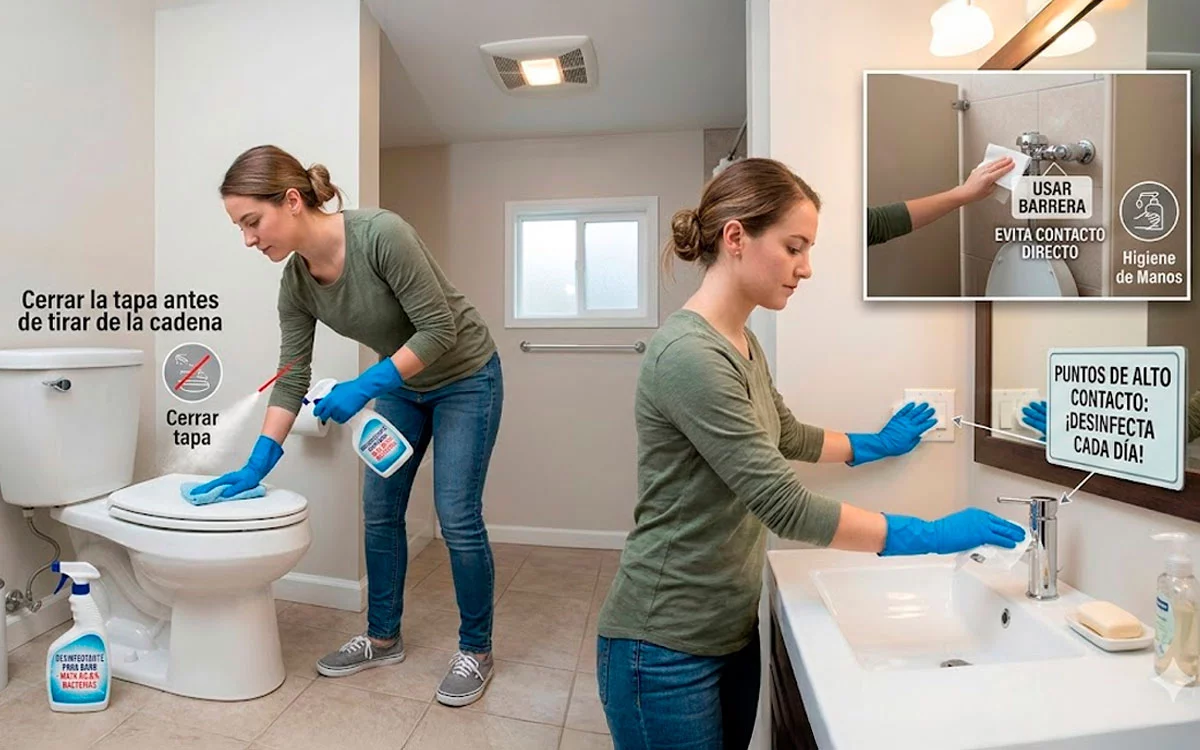
Experts agree that to reduce risks associated with the toilet, it is necessary to adopt a comprehensive approach that includes:
- Closing the lid before flushing
- Ventilating the bathroom to allow for air renewal
- Cleaning and disinfecting surfaces frequently
- Avoiding storing items near the toilet, such as towels or brushes
- Maintaining proper hand hygiene after using the bathroom
These complementary measures are essential, as even with the lid closed, the bathroom can still be exposed to microscopic contaminants.
Why flushing the toilet with the lid up remains an underestimated risk
Most people do not perceive the invisible impact of such a simple gesture. However, science shows that the toilet functions as a system capable of dispersing microorganisms through the air. And while it is not about creating alarm, it is important to understand that adopting more responsible habits significantly contributes to the prevention of infections at home and in shared spaces.
Understanding why it is not advisable to flush the toilet with the lid up incorporates a new perspective on hygiene, public health, and microbial prevention. A small gesture can make a real difference.