Toilet aerosol and bacteria: how to reduce germ spread in the bathroom
Specialists explain how to reduce the spread of germs in the bathroom and why closing the lid is not enough to stop contamination.
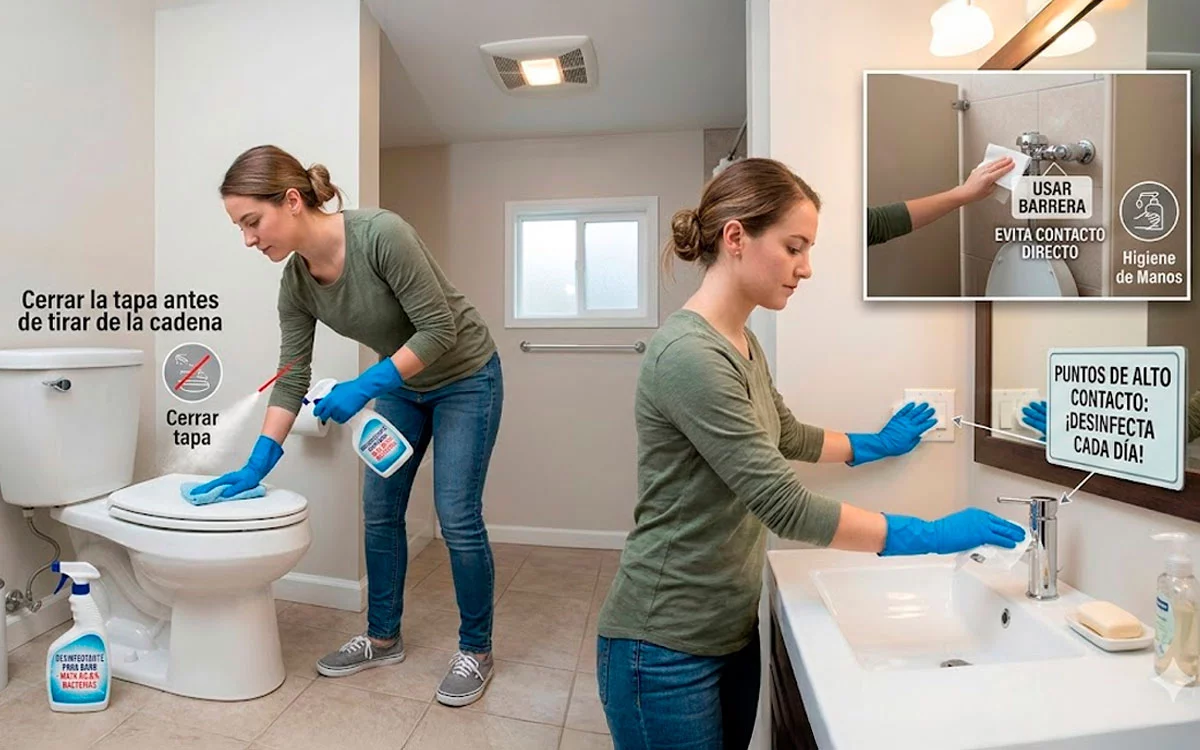
How to reduce the spread of germs became a key question following the results of a recent study in environmental microbiology that questioned a long-standing practice: lowering the toilet lid before flushing. The gesture, repeated daily in millions of homes, did not provide the protection that many believed.
For years, health professionals recommended closing the lid to avoid the so-called "aerosol effect." The theory indicated that, when flushing, a cloud of microscopic particles could contain bacteria such as Escherichia coli and other pathogens. These droplets remained suspended in the air and then settled on nearby surfaces.
However, new scientific evidence showed that the closed lid did not make the expected difference. The real barrier, experts argued, was another: systematic cleaning and disinfection after each use.
The study that changed what was believed about the toilet
The research was conducted by an international team of specialists in environmental microbiology. To analyze cross-contamination, scientists used an RNA virus as an experimental marker inside the toilet bowl.
The objective was clear. They compared the spread of microorganisms when flushing with the lid up and with the lid down. They then measured the presence of viral contamination both in the toilet and on surrounding surfaces.
The results surprised even part of the scientific community.
“The results showed that there was no difference between flushing with the lid up or down when it came to viral contamination on bathroom surfaces,” the authors explained.
In other words, aerosol was produced in both scenarios.
The microscopic particles reached areas more than a meter away from the toilet. Floors, sinks, countertops, and even personal items could receive those invisible droplets.
The real critical point: disinfection
The most relevant finding was not in the lid, but in the subsequent cleaning.
The researchers observed that only the application of disinfectant after each flush significantly reduced environmental contamination.
“This latest research demonstrates that disinfecting the toilet and all surfaces after flushing may be necessary,” the study's authors stated.
The conclusion was straightforward: lowering the lid did not replace hygiene.
In practical terms, those wishing to know how to reduce the spread of germs should prioritize active cleaning and not rely solely on closing the seat.
Why the toilet aerosol remains a problem
The phenomenon is not new. The aerosol effect was described decades ago. Each flush generated turbulence in the water that propelled microdroplets into the air.
These particles could carry intestinal bacteria, viruses, and other microorganisms present in biological waste.
In small bathrooms with limited ventilation, the concentration of particles could remain suspended for several minutes.
Additionally, the humid environment favored the persistence of certain pathogens on surfaces.
For this reason, specialists insisted that ventilation should also be part of the preventive strategy.
Updated cleaning recommendations
Hygiene and infection control specialists emphasized that the frequency and method of cleaning determined the actual effectiveness in reducing microorganisms.
The main recommendation was to disinfect the bowl after each flush, especially in homes with high turnover of people.
When that practice is not possible, it was advised to perform a deep cleaning at least once a week.
Products with sodium hypochlorite — bleach — demonstrated high effectiveness against common bacteria and viruses.
For proper hygiene, it was recommended:
First. Apply a bleach cleaner inside the toilet.
Second. Use a long-handled bristle brush to scrub edges and internal areas.
Third. Allow the disinfectant to act for the time indicated by the manufacturer before rinsing.
Fourth. Also clean the external surfaces: lid, seat, tank, and base.
Fifth. Disinfect the floor around the toilet, where particles also settle.
These measures showed greater impact than the simple act of lowering the lid.
Homes with vulnerable individuals: reinforced measures
In households where individuals with infectious diseases or compromised immune systems reside, experts advised increasing the frequency of cleaning.
The microbial load in these environments could represent an additional risk.
Daily disinfection — or even after each use — was presented as a prudent measure.
Additionally, it was suggested to keep cleaning utensils exclusive to the bathroom, avoiding their use in other areas of the home.
The toilet brush also matters
One of the least considered points was the maintenance of the cleaning tools themselves.
The toilet brush, if not disinfected after each use, could become a secondary source of contamination.
Specialists recommended applying cleaner to the brush and allowing it to dry completely before storing it.
They also advised replacing brushes and sponges regularly, especially in humid environments where microorganisms proliferated more easily.
Beyond the toilet: forgotten surfaces
The hygiene of the bathroom did not end at the bowl.
Sinks, faucets, countertops, walls, shower curtains, and even the ceiling accumulated microscopic particles over time.
Periodic deep cleanings reduced the accumulation of dirt and resistant microorganisms.
Proper ventilation helped decrease environmental humidity, a key factor in the survival of certain pathogens.
Opening windows or using exhaust fans after a shower was part of the recommended measures.
Tips for public restrooms
In shared spaces, prevention required even more attention.
Experts recommended avoiding direct contact with high-traffic surfaces, such as handles and faucets.
The use of disposable paper towels allowed users to turn off the water tap and open the door when leaving without directly touching the surfaces.
Washing hands with soap and water for at least 20 seconds remained the main barrier against the transmission of pathogens.
This habit, supported by health authorities worldwide, significantly reduced the risk of infections.
A shift in daily routine
The research did not suggest abandoning the gesture of lowering the lid. It simply indicated that it was not enough.
The emphasis shifted towards regular disinfection.
Those seeking how to reduce the spread of germs should understand that effective prevention combined several actions: cleaning, ventilation, and handwashing.
The message was clear and direct. Active hygiene surpassed symbolic practices.
Scientific evidence reinforced the need to update household routines based on concrete data.
In a context where environmental health gained prominence, every daily habit could make a difference.
The bathroom, a commonplace and seemingly controlled space, revealed that prevention did not depend on a single gesture, but on a comprehensive and constant strategy.