Goodbye to the $100 bill? The changes planned by the Federal Reserve of the United States
The iconic 100-dollar bill, known for its design featuring Benjamin Franklin, could disappear. Why?

The most famous banknote in the world, featuring the face of Benjamin Franklin, could face one of the most significant changes in its history. The Federal Reserve of the United States has announced an ambitious project to modernize this denomination with advanced security measures. However, a more radical proposal suggests the possible elimination of high-denomination banknotes, including the $100 bill, arguing that its disappearance would reduce illicit activities and adapt the financial system to the digital world.
Why will the $100 bill be redesigned?
The last redesign of the $100 bill occurred in 2013, when features such as the 3D security strip and color-changing ink were added. Now, the Federal Reserve plans to incorporate even more advanced technologies that will help combat counterfeiting and modernize cash.
Among the new proposed security measures are:
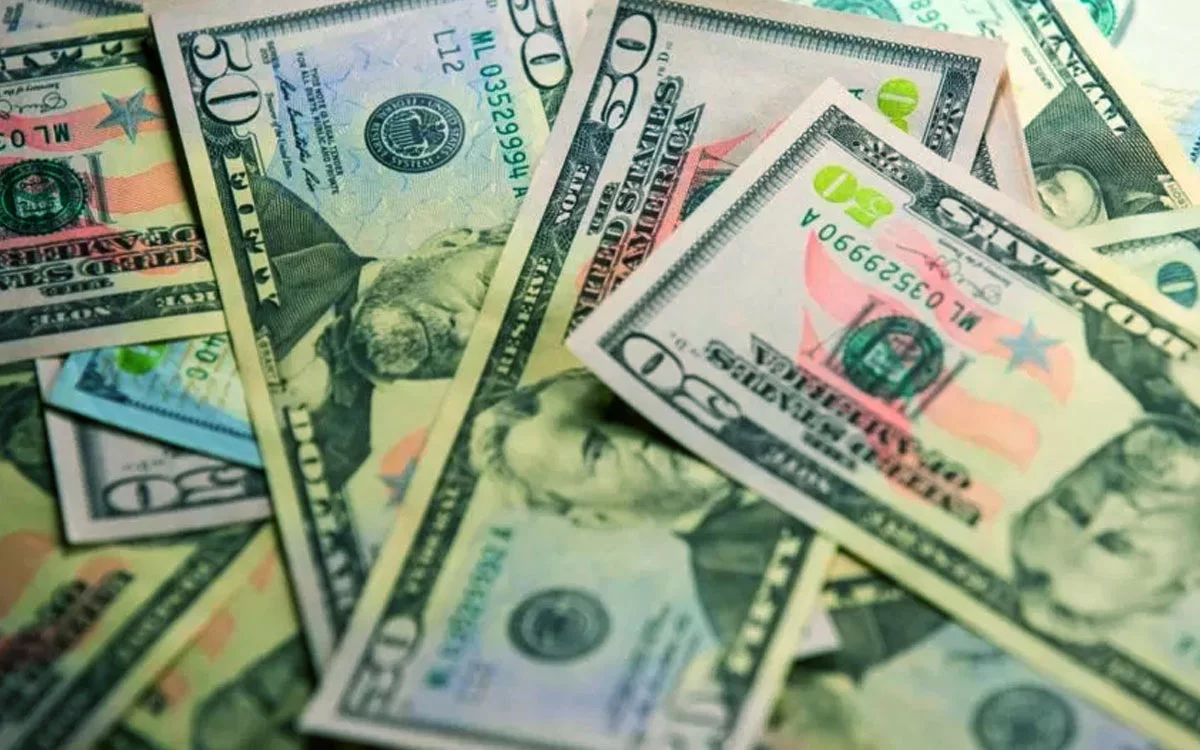
- Microprinting that makes illegal reproduction difficult.
- Optically variable inks that change color depending on the angle of view.
- Digital authentication elements, aligned with current technological standards.
Although there is no exact date for the circulation of this new design, experts estimate that the new $100 bill could be available between 2034 and 2038. This timeline is part of a broader project that will begin in 2026 with the update of other bills, such as the $10 bill, followed by the $50 in 2028 and the $20 in 2030.
Will the $100 bill be eliminated?
Beyond modernization, a proposal has emerged that seeks to completely eliminate high-denomination banknotes, including the $100 bill. This idea has been supported by economists like Kenneth Rogoff, a professor at Harvard University and author of the book The Curse of Cash.
Among the main arguments for this elimination are:
- Reduction of illicit activities: High-denomination banknotes facilitate the movement of large sums of money anonymously, making them attractive for illegal activities.
- Greater financial security: Replacing cash with digital methods would allow for more effective transaction control, making money laundering and other financial crimes more difficult.
- Adaptation to the digital age: With the growing use of electronic payment methods, cash, especially in high denominations, is becoming less relevant in the current economy.
How will this measure affect consumers?
While there is no confirmation that the $100 bill will be eliminated, the discussion raises important questions about the future of cash in an increasingly digitized financial system. According to the Federal Reserve, approximately 60% of transactions in the United States are already conducted using debit or credit cards, reflecting a clear trend towards the use of electronic payment methods.
If the $100 bill were to be eliminated, larger transactions would depend on other forms of payment, such as bank transfers or digital services. This could have a positive impact on financial security, but it could also pose challenges for those who rely on cash as their primary payment method.
A progressive change in the monetary system
The idea of eliminating high-denomination banknotes is not new. Since 1969, the United States has stopped printing $500, $1,000, $5,000, and $10,000 bills, although they remain legal in some transactions. This precedent supports the possibility that the $100 bill may eventually face a similar fate.
Meanwhile, the redesign project for this denomination is progressing as part of a broader initiative to reinforce trust in cash and ensure that it meets modern standards of security and functionality.
Towards a cashless future
The decline in cash usage is a global trend, driven by the popularity of digital transactions. Although cash remains an important option for many, financial digitalization is changing the way we handle money.
The redesign of the $100 bill, along with the possibility of its elimination, represents a milestone in this transformation process. As its future is debated, the role of cash in the modern economy continues to evolve towards safer and more efficient forms.