Could octopuses be the next rulers of the planet? A professor from Oxford believes it is possible.
There are plenty of reasons for this marine species to dominate the planet, as octopuses are one of the most intelligent species in the world. Find out when it could happen.
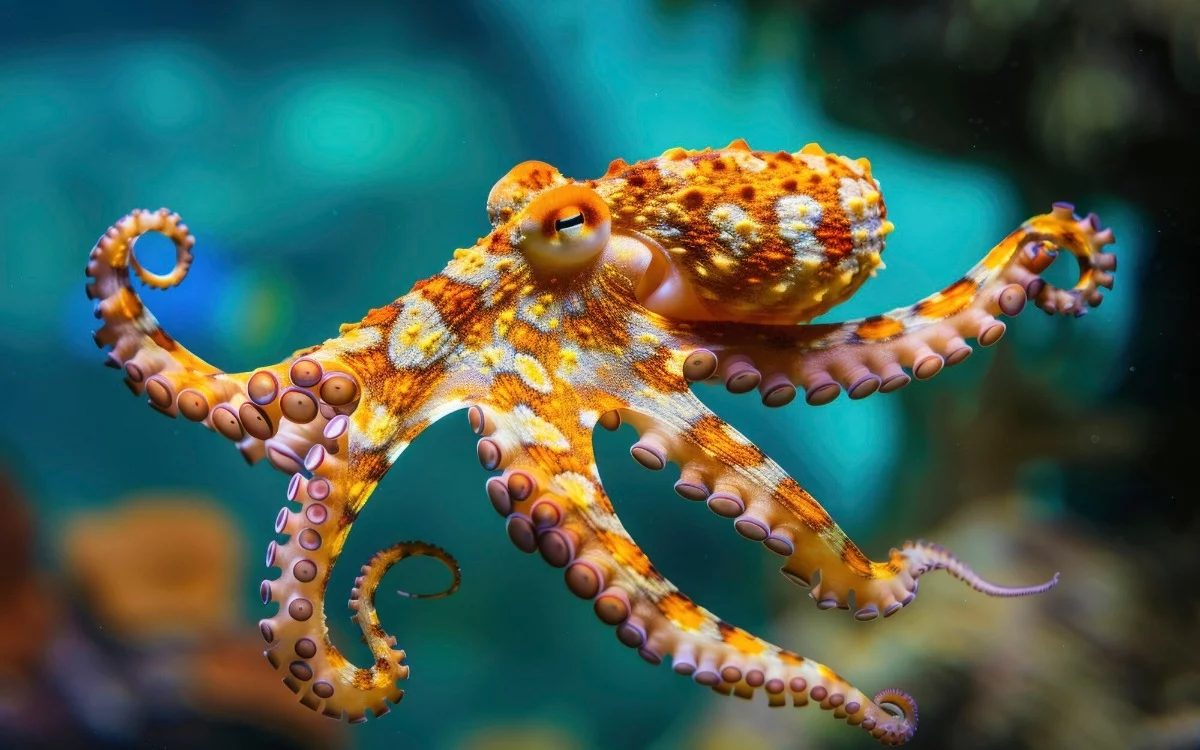
A professor from the University of Oxford has launched a hypothesis that seems straight out of a science fiction novel: octopuses, with their extraordinary intelligence and adaptive skills, could become the dominant species if humans were to disappear. According to biologist Tim Coulson, this enigmatic marine animal has the necessary tools to build civilizations in the distant future.
Octopuses: An Uncommon Intelligence
Octopuses are considered one of the most intelligent creatures in the animal kingdom. Their ability to solve problems, learn from experiences, and adapt to complex situations has fascinated scientists for decades. In laboratories, these animals have demonstrated surprising skills, such as solving mazes, remembering solutions for weeks, and learning by observation.
A famous example is their ability to escape from aquariums. They have been seen leaving their tanks, exploring other containers in search of food, or even finding their way back to the sea. This combination of ingenuity and adaptability is what has led Professor Coulson to propose his theory in the book The Universal History of Us.
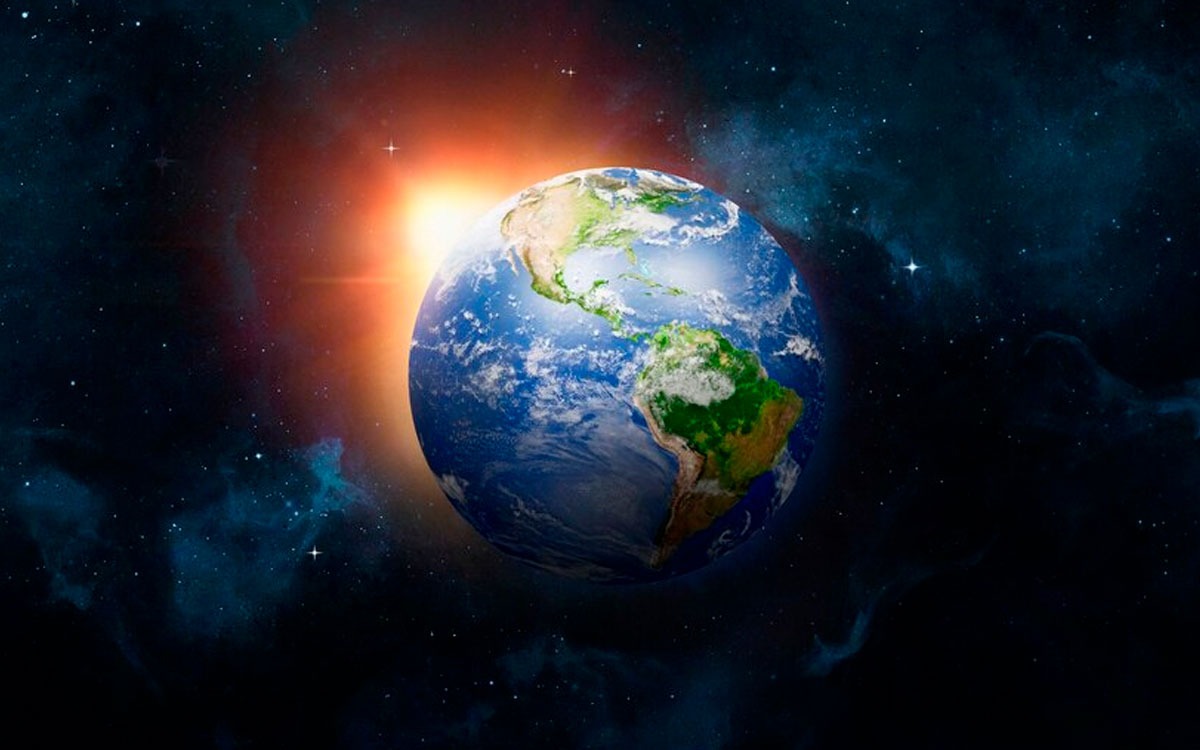
According to Coulson, if humanity were to disappear due to a global catastrophe, octopuses could leverage their decentralized intelligence to become the new rulers of the planet.
What Does It Mean to Have "Decentralized Intelligence"?
One of the most intriguing characteristics of octopuses is their unique nervous system. Unlike humans, whose intelligence is centralized in the brain, octopuses have two-thirds of their neurons distributed in their tentacles. This means that each of their arms can make independent decisions while the central brain coordinates overall actions.
This decentralization gives them an advantage in highly complex situations. According to Coulson, such a system could allow them to adapt to extreme scenarios, such as drastic changes in the environment following the disappearance of humans.
In his theory, the professor suggests that octopuses could develop advanced communication skills, enabling them to organize into complex societies. Although this idea may sound far-fetched, the concept of an underwater civilization led by octopuses is not entirely impossible when considering the necessary evolutionary time.
How Long Would This Change Take?
Coulson himself admits that his theory is speculative and that a process of this kind would be extremely slow. He talks about hundreds of thousands or even millions of years for octopuses to develop the necessary skills to form civilizations. However, he also acknowledges that this scenario could be interrupted by catastrophic events, such as changes in ocean ecosystems or new mass extinctions.
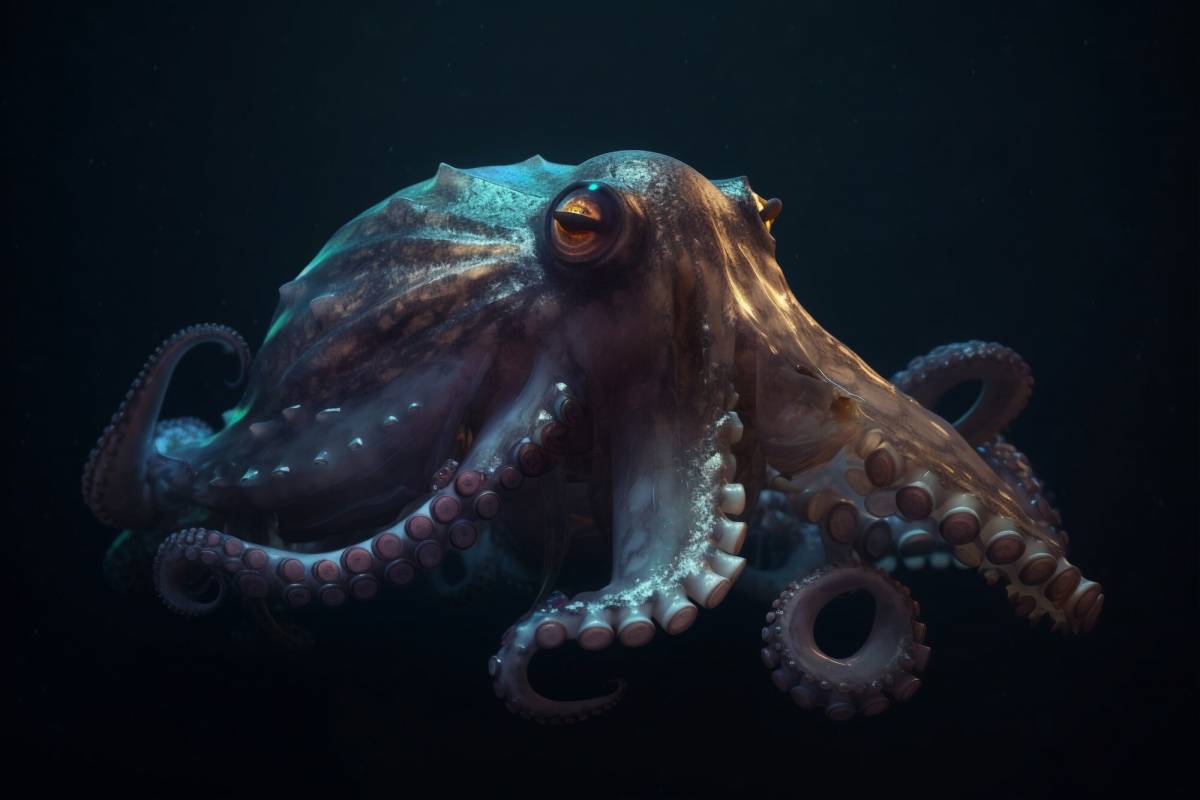
A professor from Oxford claims that octopuses could become the future rulers of the planet thanks to their astonishing intelligence.
Despite the limitations, the theory has opened an interesting debate among biologists, anthropologists, and science communicators. Could another species take the place currently occupied by humans? And if so, why not an animal as intelligent and adaptable as the octopus?
Octopuses and the Debate on Animal Intelligence
The idea that octopuses could build future civilizations invites us to reflect on what it means to be intelligent. In the natural world, intelligence is not measured solely by the ability to build tools or speak a language, but also by adaptability, problem-solving, and the ability to learn.
Octopuses excel in all these aspects. For example, in one experiment, an octopus was observed learning to open a jar with a lid to obtain food inside, a task that involves advanced reasoning. Additionally, their ability to remember patterns or solutions for weeks demonstrates a level of cognition that few animals possess.
This type of intelligence, combined with their ability to camouflage, manipulate objects, and quickly adapt to new circumstances, reinforces the idea that they are much more than simple marine creatures.
What Would Happen to Humanity?
Coulson's theory also touches on a disturbing point: what would happen if humans disappeared? Although the scenario is hypothetical, it invites reflection on our fragility as a dominant species. According to some experts, climate changes, pandemics, or natural disasters could be the main causes of eventual human extinction.
In this case, animals like octopuses, with their adaptability and problem-solving abilities, could be in a privileged position to thrive.
Beyond Science Fiction
While imagining octopuses as the builders of underwater civilizations may seem like a story worthy of a movie, Coulson's theory has a serious background. It forces us to rethink the diversity of intelligence in the animal kingdom and to consider how other species might adapt to a post-human world.
Time will tell if this speculation has any merit, but in the meantime, it serves as a reminder of how fascinating and mysterious nature is.