What the world reveals if you reduce it to just 100 people
An exercise that shows global inequality like never before: if the world were a village with 100 inhabitants, the data on the distribution of wealth and access to rights will shock you.
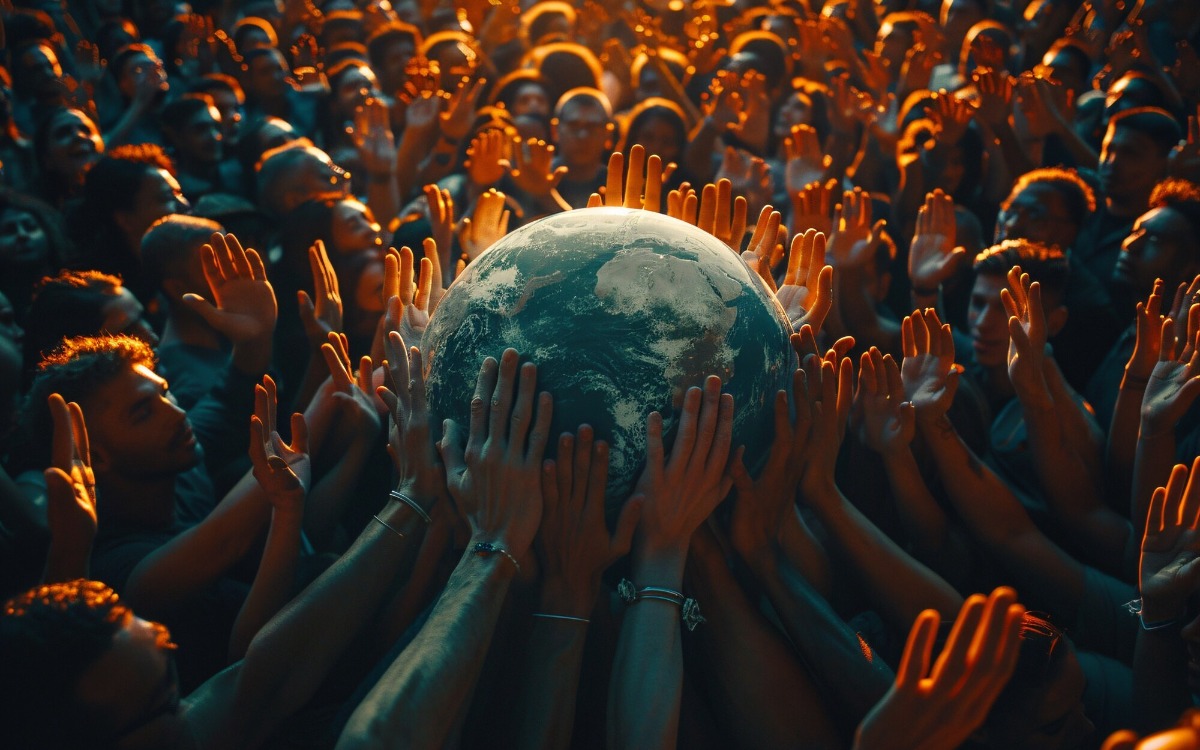
If the entire planet were reduced to a small village of just 100 people, without losing the current proportions, the distribution of wealth and access to basic rights would reveal a deeply unequal landscape. This exercise, so often shared as a viral reflection, transforms global statistics into a tangible image that speaks directly. And what is seen is striking: the majority live without the essentials, while a minority accumulates almost everything.
The population in real proportions
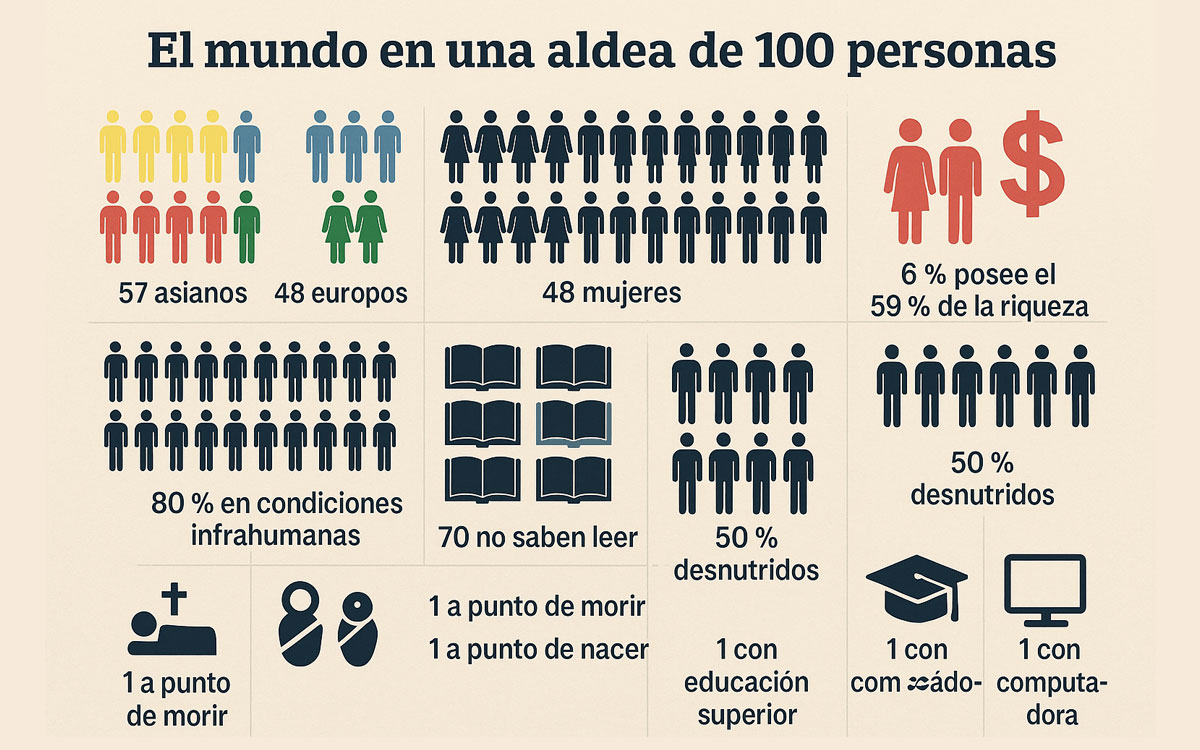
In this symbolic village, there would be 57 Asians, 21 Europeans, 8 Africans, and only 4 people from America (adding North and South). Women would be the majority: 52 compared to 48 men. And only 30 people would be white; the remaining 70 would belong to other ethnicities. Regarding religions, there would also be a strong concentration: only 30 would be Christians, while the remaining 70 would practice other beliefs or none.
Sexuality, education, and technology
Of the 100 people, 89 would be heterosexual and 11 homosexual. Only one person would have access to university, and that same proportion is repeated in access to technology: only one would have a computer. Additionally, 70 people would be unable to read, and 50 would suffer from chronic malnutrition. One person would be on the brink of death, while another would be about to be born.
The brutal concentration of wealth
The most shocking figure might be this: 6 people would concentrate 59% of all the wealth. All of them would also be North American. This number, which is supported by various real estimates from international organizations, illustrates the disproportion between those who have more and those who barely survive. Meanwhile, 80 people would live in inhumane conditions.
The mirror of our reality
This type of visualization is not just symbolic, but deeply revealing. It reduces the billions of inhabitants of the world to a comprehensible scale, where each number represents a face, a story. Thus, it becomes evident what is often lost in macroeconomic statistics: the majority of humanity lives without basic rights.
If the world were 100 people: these data will change your perspective
The figures that invite reflection
Beyond the imaginary village, some hard data can help understand the global context:
- More than 770 million people live on less than $1.90 a day, according to the World Bank.
- 75% of the global population does not have access to effective social security or public health systems.
- More than 260 million children and adolescents are not enrolled in school.
Privileges that are not seen as such
This exercise also serves as a mirror for the reader. If you have a roof, food, clean clothes, access to education and health, you are in a privileged minority. If you can read these words, you have something that 70 of the 100 people in this imaginary village do not have: literacy.
And if you also have money saved—whether in the bank, in your wallet, or even in a piggy bank—you are among the 8% richest people on the planet. Something that seems basic to many is not even within reach for billions.
The importance of what we take for granted
There are also invisible dimensions in this analysis. If you have never lived through a war, if you do not know the experience of extreme hunger, torture, or prison, you are ahead of 500 million people who have gone through those tragedies. What we take for granted every day is an unattainable goal for others.
Education, understanding, empathy
The exercise does not seek to blame but to raise awareness. If we could look at global reality as this small village of 100 inhabitants, perhaps mutual understanding would grow. Accepting differences, reducing gaps, and working for a more equitable world starts with understanding. And with stopping to view inequality as a distant statistic.
The rarity of having all the basics
Even having your parents alive and together places you in a very uncommon condition. Access to physical and emotional health, healthy relationships, and free time are other aspects that often go unnoticed in discussions about inequality, but which also form part of this great gap between those who can and those who cannot.
So what do we do with this now?
This type of exercise does not solve problems, but it can change mindsets. Understanding that what is daily routine for some is a privilege for others can modify attitudes, open conversations, and perhaps guide decisions. From donating, sharing, educating, to exercising more conscious consumption. Because while you cannot change the world alone, you can change the way you are in it.