What if your therapist were an AI?
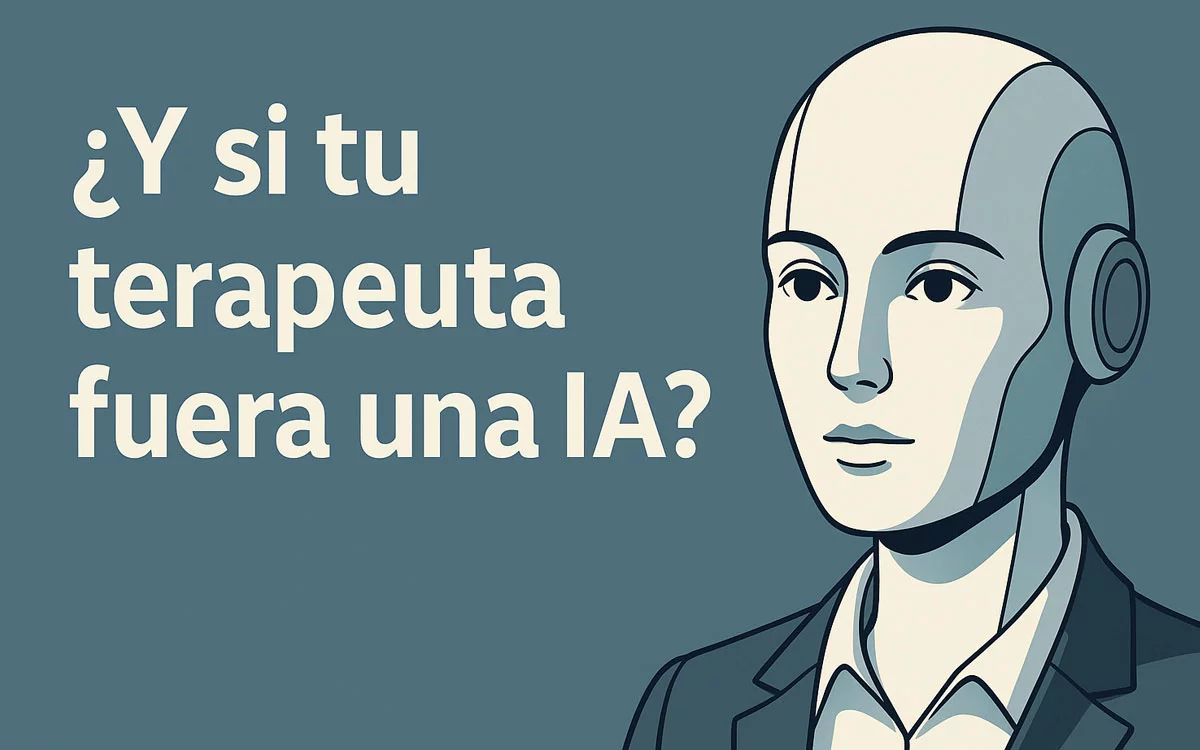
Imagine that you are in the middle of the night, going through an emotional crisis, and you have no one to call. Only then does a possibility appear: open an app and start talking to your AI therapist. There are no waits, no judgments. This scene, which just a few years ago seemed like science fiction, is now part of the real debate in the world of mental health. Could artificial intelligence help you with your anxiety, your sadness, or your darkest thoughts? To what extent can a machine emotionally support you?
The advantages of AI therapy that excite many
One of the strongest promises of this type of digital assistance is its constant availability. Unlike a human professional, an AI can interact with you 24 hours a day, 7 days a week. No schedules, no appointments, no waits. This allows many people to find an immediate space to vent or receive guidance.
Another key advantage is that it does not judge. For those who feel shame or fear when opening up to a therapist, the coldness of an AI can be paradoxically comforting. There are no facial expressions, no awkward glances. Just a channel of dialogue that, no matter how automated it is, can provide some relief.

The ability to remember patterns is also noteworthy: an AI can record what you say, detect mood changes, recognize trends in your emotional language or thought habits. This “clinical memory” can be useful for tracking processes that extend over time.
And of course, the cost. Many of these tools are free or accessible, democratizing access to a type of assistance that, in many countries, remains a luxury.
What an AI cannot give you
But the debate about having an AI therapist does not end with promises. Because, like everything, it also has its limits. And some are decisive.
The first and most obvious: it does not feel. Although it can simulate empathy, an artificial intelligence does not have real emotions. It is not moved, it does not get upset, it does not resonate with your words. This limits the quality of the therapeutic bond, especially when what is needed is deep emotional containment.
Secondly, there is the reading of context. An AI may fail to interpret cultural nuances, non-verbal language, or irony. It may respond with generic phrases to what is an existential dilemma for you. And that, far from helping, can make you feel even more alone.
Technological dependency is another risk. Being always available and providing immediate responses, some people might avoid consulting with human professionals even when they really need to. In this case, the AI goes from being an ally to an obstacle.
Finally, there are the ethical and privacy risks. Who has access to your emotional data? Where is it stored? What happens if that information is leaked or used for commercial purposes? These are questions that still do not have clear answers and are increasingly concerning.
Balance as the key
Experts agree that an AI should not replace a human therapist, but it can act as a complement. For example, to accompany processes with breathing exercises, mindfulness, mood tracking, or moments of crisis where access to a professional in real-time is not possible.
There are platforms that already incorporate algorithms trained in cognitive behavioral psychology to guide users in moments of anxiety, insomnia, or ruminating thoughts. Some even integrate with wearables that measure heart rate and sleep to suggest preventive actions in the face of stress indicators.
Complex cases: where AI falls short
In situations such as grief, trauma, existential crises, or severe mental disorders, human intervention remains irreplaceable. The ability of a real therapist to read between the lines, contain silences, connect emotionally, and adjust the approach according to the patient's history cannot be emulated by a machine.
“An AI can help detect patterns or help you identify emotions, but it cannot embrace you with its gaze,” comments a consulted clinical psychologist.

The film "HER" (2013), starring Joaquin Phoenix, focuses on the emotional and futuristic approach to the relationship between humans and technology.
The user's voice: between relief and bewilderment
Those who use AI-based mental health tools highlight their practicality, clear language, and availability. But they also mention that, in critical moments, they feel that “something is missing.” That the responses sound good, but empty. And that while they help in everyday life, they do not replace human contact.
This ambivalence is part of the collective learning. We are exploring new models of care, with benefits and dangers in equal measure.
The future is hybrid
Everything indicates that the most viable path will be a coexistence between humans and artificial intelligences in the therapeutic field. AI can optimize diagnoses, automate administrative tasks, help maintain healthy routines, and accompany between sessions. But emotional depth, intuition, and the human perspective remain irreplaceable.
An AI can be a useful complement, especially for self-exploration sessions, mindfulness exercises, or stress management. But it does not replace the depth, intuition, and emotional containment that a human therapist can provide, especially in complex or traumatic cases.
As in so many areas, technology can enhance, but not replace what is essential.
If your therapist were an AI, this is what you could expect
Possible advantages
- 24/7 availability: There are no hours; you can talk to it whenever you need.
- No personal judgments: An AI will not judge you, which can make it easier to open up.
- Continuous tracking: It can accurately remember emotional, behavioral patterns, and progress.
- Lower cost: It is generally more accessible than a human therapist.
Important limitations
- Lack of genuine empathy: It can simulate understanding, but does not feel or perceive like a human.
- Limited context: Sometimes it does not capture emotional, cultural, or non-verbal nuances.
- Technological dependency: You may rely too much on an AI without seeking human help when necessary.
- Ethical and privacy risks: Where is your information stored? Who has access?