What are the early symptoms of kidney stones and how can they be prevented?
The symptoms of kidney stones can be confused with other conditions, but identifying them in time can prevent serious complications.

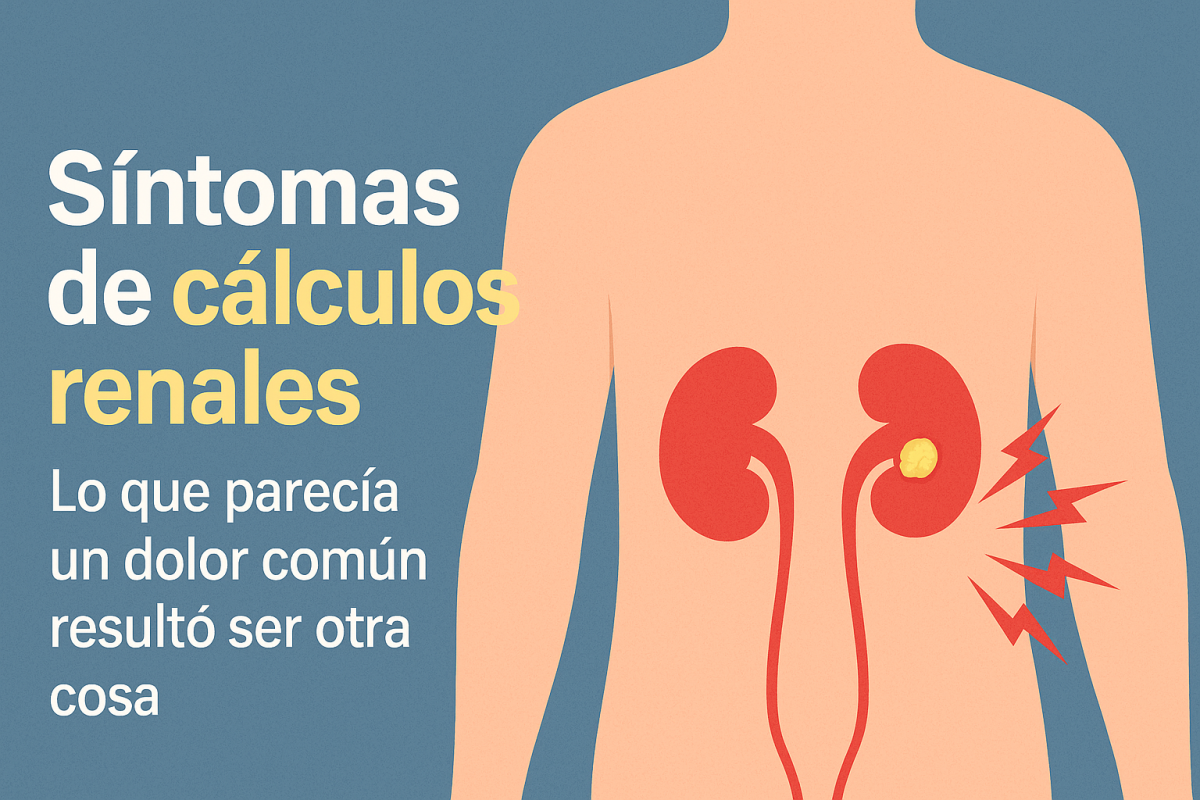
What seemed like a common pain turned out to be something else: paying attention to the symptoms of kidney stones
The symptoms of kidney stones can appear suddenly. One day your back hurts, the next you have difficulty urinating or notice a change in the color of your urine. What many interpret as a muscular problem or a simple infection may actually be a silent and dangerous condition: renal lithiasis, more commonly known as kidney stones.
This disorder, which affects between 10% and 12% of the population according to the Department of Health, can lead to serious complications if not detected in time. Identifying its warning signs allows for quick action and helps avoid damage to the urinary system or infections that could jeopardize long-term kidney health.
Dr. Walter P. Mutter, a nephrologist at Mass General Brigham Medical Center, warns that “recognizing the symptoms early and consulting a specialist are two key steps to avoid more complex treatments.” In this guide, we review what kidney stones are, why they form, how they are detected, and what to do to reduce the risk of them recurring.

What are kidney stones and how do they originate?
Kidney stones are solid masses formed by minerals and salts that cluster within the kidney. In some cases, they can also be found in the bladder. These substances are usually eliminated from the body through urine, but when they concentrate, they crystallize and group together to form a solid structure. Their size varies from a tiny particle like a grain of salt to that of a golf ball.
“These stones accumulate layer by layer over months or even years,” explains Dr. Mutter. While they remain stationary, they do not cause discomfort. The problem begins when they move or block the normal flow of urine, triggering pain and other symptoms that are hard to ignore.
Warning signs you shouldn't overlook
When a stone begins to move, the signs appear suddenly. Among the most common symptoms of kidney stones are:
- Sharp pain in the back, side, lower abdomen, or groin.
- Unexplained nausea or vomiting.
- Blood in urine, cloudy urine, or strong-smelling urine.
- Burning or pain when urinating.
- Constant feeling of urinary urgency, even with little output.
- Fever and chills, which could indicate an associated infection.
These types of discomfort should not be ignored. An imaging study such as a X-ray, ultrasound, or CT scan can confirm the presence of a stone, establish its size and location, and define the most appropriate treatment.
What causes kidney stones and how are they detected?
The exact cause varies in each patient. In many cases, a clear origin cannot be determined, although there are medical conditions or habits that increase the risk.
“A complete metabolic study is essential when a predisposition to form stones is suspected,” says Mutter. This includes reviewing family history, the use of certain medications, diet, and a 24-hour urine collection that allows for analysis of components that may promote crystal formation.
Factors that increase the risk
Some aspects that may predispose a person to develop kidney stones include:
- Gender and race: white men have a higher likelihood.
- Calcium metabolism disorders or endocrine problems.
- History of frequent urinary infections.
- Digestive system conditions, such as inflammatory bowel disease.
- Family history of renal lithiasis.
- Diet high in animal proteins or oxalates (such as spinach, almonds, beets).
- Obesity and sedentary lifestyle.
- Prolonged use of certain supplements or medications.
Treatments available depending on the case
The way to treat stones mainly depends on their size, location, and associated symptoms. In some cases, a stone may pass on its own if the person maintains adequate hydration. However, when they are larger or cause obstruction, medical interventions are required:
- Ureteroscopy: a thin tube is inserted through the urinary tract to remove or fragment the stone.
- Extracorporeal shock wave lithotripsy (ESWL): breaks the stones from the outside to facilitate their natural elimination.
- In more severe situations, minimally invasive surgery may be required.
Habits that can help you prevent them
Preventing the formation of kidney stones involves adopting certain lifestyle changes, especially in diet and hydration.
-
Increase fluid intake
Drinking between 3 and 4 liters of water a day helps dilute the substances that form stones. “A constant flow of urine is the best natural defense,” notes Dr. Mutter. -
Reduce sodium and sugar
Decreasing salt in the diet is especially helpful for people prone to forming calcium stones. Likewise, avoiding sugary drinks and products with high fructose corn syrup is also advisable. -
Limit animal protein consumption
A diet rich in red meats or processed meats can create a chemical environment conducive to mineral crystallization. -
Maintain a healthy weight and exercise
Physical activity not only improves overall health but can also promote the natural expulsion of small stones.
What to do if you think you have kidney stones?
If you experience any of the symptoms of kidney stones, the most important thing is not to wait for them to worsen. “The worst thing is to do nothing,” warns Mutter. Consulting a urologist or nephrologist immediately can prevent complications such as infections, kidney failure, or the need for surgery.
The specialist reminds us that kidney stones do not have a definitive cure, but there are multiple ways to manage them and prevent their recurrence. The sooner action is taken, the less impact there will be on the patient's quality of life.