"Walking yes, but it's not enough": what cardiologist Aurelio Rojas recommends to live longer and better
The cardiologist Aurelio Rojas proposes a simple formula to reduce cardiovascular risks and live longer: steps, minutes, and strength in balance.

Walking is healthy, yes. But if you think that is enough to take care of your heart, you might be overlooking the most important thing. Cardiologist Aurelio Rojas, one of the most influential doctors on social media, states that walking alone is not enough to maintain good cardiovascular health.
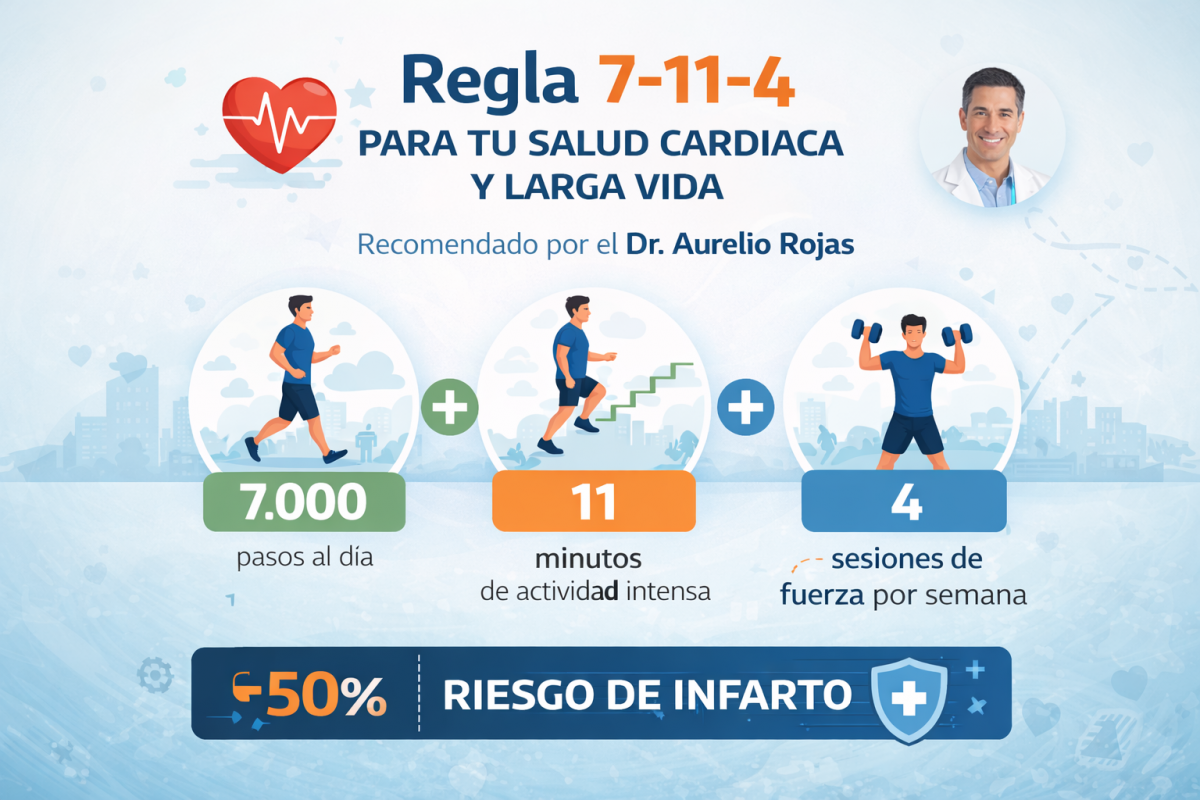
His proposal is based on a concrete formula, easy to apply and backed by scientific studies: the 7‑11‑4 rule. This approach combines daily physical activity, brief but intense effort, and muscle strength training, without the need to go to a gym or follow complicated routines.
What is the 7‑11‑4 rule? The formula that summarizes the essentials for your health
Unlike exercise programs that require a lot of time or specialized equipment, Dr. Rojas's rule can be practiced from home and without excuses. Here are his three keys:

7,000 steps a day
Walking at least seven thousand steps daily helps to improve circulation, stabilize blood pressure, and control body weight. Additionally, it is a habit that helps reduce stress, boost energy, and prevent chronic diseases. It’s not just about moving, but about walking with intention and a steady pace.
11 minutes of intense activity
This type of exercise does not require equipment or special spaces. It can consist of walking quickly, climbing stairs, or performing functional movements like jumps, burpees, or squats. Just eleven minutes a day at a vigorous pace have a direct effect on endurance, cardiovascular function, and longevity.
4 strength training sessions a week
Muscle is key to good metabolic health. Rojas recommends performing strength exercises at least four times a week, working arms, legs, and core. This helps to preserve muscle mass with age, prevent falls, and maintain an active metabolism, which is crucial for preventing heart disease.
Is walking good? Yes, but it’s not enough
Although walking has numerous benefits —and is an excellent starting point—, it does not cover all the physical needs of the body. According to Dr. Rojas, many people mistakenly believe that just walking is enough to protect them from cardiovascular risk.
Complete physical activity includes aerobic exercises, strength training, and intensity stimuli. These three dimensions complement each other to provide the best results. Ignoring any of them, especially strength, limits the positive impact of exercise on health.
Why strength training is so important
Rojas explains it clearly: “muscle is a protective organ”. As we age, we lose muscle mass, and that affects mobility, energy, and the body's ability to defend itself. Including exercises like planks, push-ups, squats, and bodyweight exercises helps to:
- Reduce the risk of metabolic diseases
- Strengthen bones and joints
- Increase insulin sensitivity
- Prevent frailty and falls in older adults
It is a common mistake to think that strength is only important for athletes. In reality, it is vital for anyone who wants to age with autonomy and quality of life.
Why is walking alone not enough?
Because it does not generate the necessary stimulus to strengthen the cardiovascular system or maintain muscle mass, especially after the age of 40. While walking can reduce sedentary behavior, if it is not combined with some intensity and strength, the benefit falls short.
Rojas emphasizes that the key is balance: move more, but also move better.
Benefits of applying the 7‑11‑4 rule according to science
This approach is not a trend or a personal whim. It is backed by scientific data showing significant improvements in overall health:
- Walking 7,000 steps a day reduces mortality in adults and seniors.
- Doing at least 10 minutes of intense exercise improves cardiovascular health more than walking slowly for 30 minutes.
- Strength training four times a week helps preserve muscle mass, protect the heart, and maintain a healthy weight.
Moreover, this routine improves sleep, mood, daily energy, and mental clarity.
7‑11‑4 rule: the exercise routine that doesn’t require a gym
What happens if you do nothing?
Sedentary behavior is directly related to:
- Higher risk of heart disease
- Type 2 diabetes
- High blood pressure
- Abdominal obesity
- Loss of bone and muscle mass
- Fatigue and sleep disorders
That’s why Dr. Rojas's proposal aims to change habits from simplicity and consistency, without the need to complicate things.
A basic 7‑11‑4 routine for any day
- Walk: take a brisk walk in the morning or after meals
- Intensity: perform 2 blocks of 5 minutes of dynamic exercise (climbing stairs, jumping, or running in place)
- Strength: do 4 weekly sessions of 15 to 20 minutes with squats, sit-ups, and push-ups
Everything can be adapted to each person's physical level.
“You don’t need to train like an athlete, but you should move every day as if your health depended on it. Because it really does.”, Dr. Rojas.
And the best part: you can do it without leaving your home, without paying subscriptions, or using expensive equipment. You just need commitment and consistency.
5 simple exercises recommended by cardiologists to live longer and better
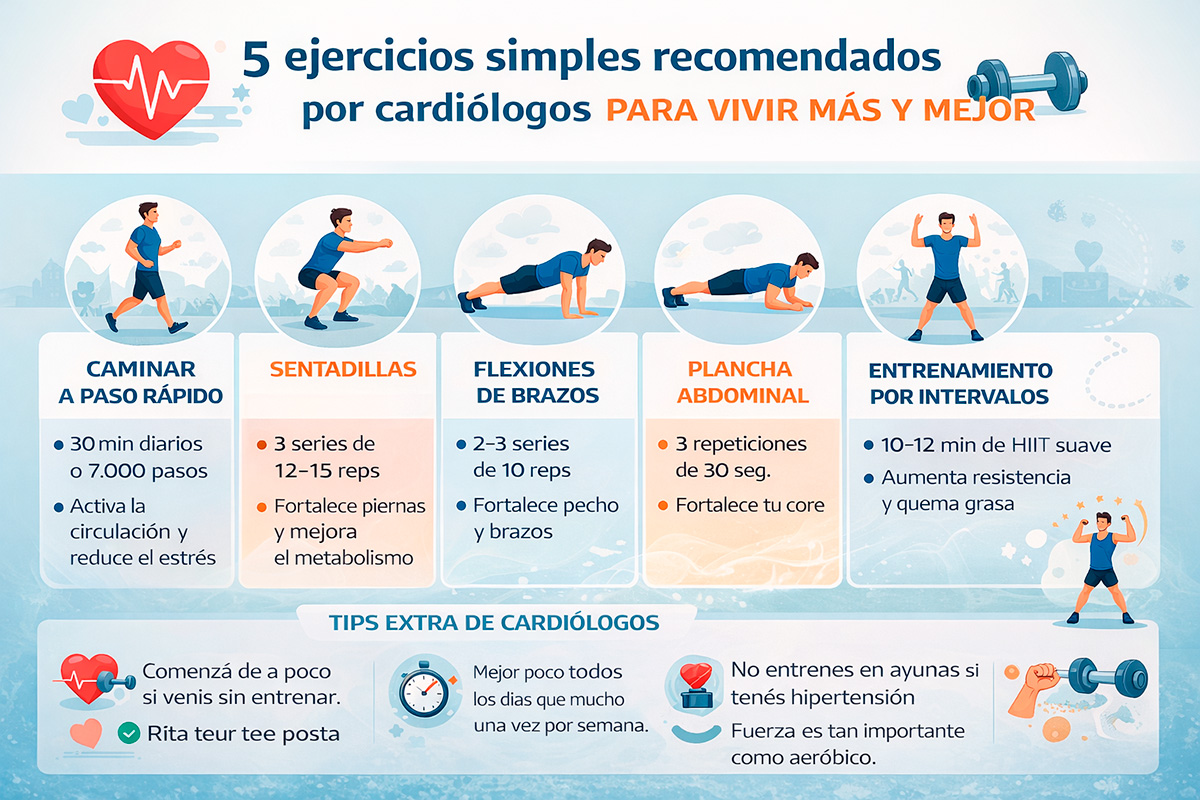
1. Walk briskly
- Recommended duration: 30 minutes a day or 7,000 steps
- Benefits: Activates circulation, reduces blood pressure, improves blood glucose, and relieves stress.
- Tip: Use an app or watch to count steps. Take the stairs if you want to intensify the effort.
2. Squats
- Sets: 3 of 12 to 15 repetitions
- Benefits: Strengthens legs, glutes, and stimulates venous return. Improves metabolism.
- Technique: Keep your back straight, feet shoulder-width apart, lower until your thighs are parallel to the floor.
3. Push-ups
- Sets: 2 to 3 of 10 repetitions (can be done with knees on the ground if you are a beginner)
- Benefits: Increases muscle strength, improves posture, and strengthens chest and arms.
- Extra: Improves heart rate if done in a circuit.
4. Plank
- Duration: 3 sets of 30 seconds (increase progressively)
- Benefits: Strengthens the core, stabilizes the spine, and improves overall balance.
- Technique: Tighten your abdomen, keep your back straight, and do not let your hips drop.
5. Gentle HIIT (High-Intensity Interval Training)
- Duration: 10–12 total minutes
- Example: 30 seconds of jumping jacks + 30 seconds of rest, repeat with gentle burpees or skipping
- Benefits: Increases lung capacity, endurance, and burns fat quickly.
- Important: Ideal to do 3–4 times a week if there are no medical restrictions.
Extra tips from cardiologists
- Start slowly if you haven’t exercised in a while.
- Don’t train on an empty stomach if you have hypertension or are on medication.
- Better to do a little every day than a lot once a week.
- Strength training is as important as aerobic exercise.