Trip to the imposing Iguazu Falls
The ideal time of year arrives to visit one of the 7 natural wonders of the world.

Por Martín Leonetti
:: Argentina ::
The Iguazú River, which means great water in Guarani, flows into the Paraná River, carrying its course across 1,500 meters wide and splashing islands and islets before emptying into a lava cliff formed 120 million years ago.
The Iguazú Falls are located within the protected area of the Iguazú National Park, an area that covers more than 67,000 hectares in the northernmost part of the Province of Misiones, in the Republic of Argentina. More than one billion people worldwide voted to make them one of the 7 natural wonders of the world in 2012.
The system is composed of 275 waterfalls in the heart of the Paranaense Jungle, distributed 80% on the Argentine side and 20% on the Brazilian side. It is located 17 kilometers from the mouth of the Iguazú River on the Paraná River, at the point where the "triple border" between Argentina, Brazil, and Paraguay is found. On the Argentine side is the city of Puerto Iguazú, while on the Brazilian side is Foz do Iguaçú and in Paraguay, Ciudad del Este.
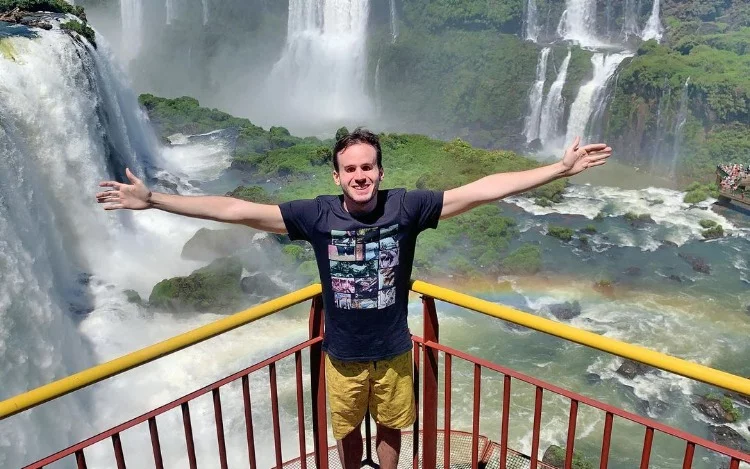
On October 9, 1934, this area was declared a National Park and in 1984, UNESCO proclaimed it World Heritage Site. Additionally, in 2013, the park was named Exceptional Universal Value, also by UNESCO.
Day 1: Touring the "Argentine side"
Our guide "Luchi" Albarenga, from the company Sol Iguazú, planned the tour so that we arrived at the park with very good timing to visit all the attractions without rush.
The park is visited daily by an average of 6,000 to 11,000 people. On this occasion, there were about 9,000 people walking along the walkways, so if there is no good planning, a lot of time can be wasted.
We recommend entering the park as early as possible, we did so around 9 and luckily there weren't many people at the ticket offices, so we entered very quickly. Just 15 minutes later, groups full of tourists arrived that would have delayed entry.
First point, head to the Central Station of the Ecological Train of the Jungle and wait there. The train departs every 15 minutes and transports about 250 people per trip, taking about 10 minutes to reach the Devil's Throat Station, the second stop on our tour.
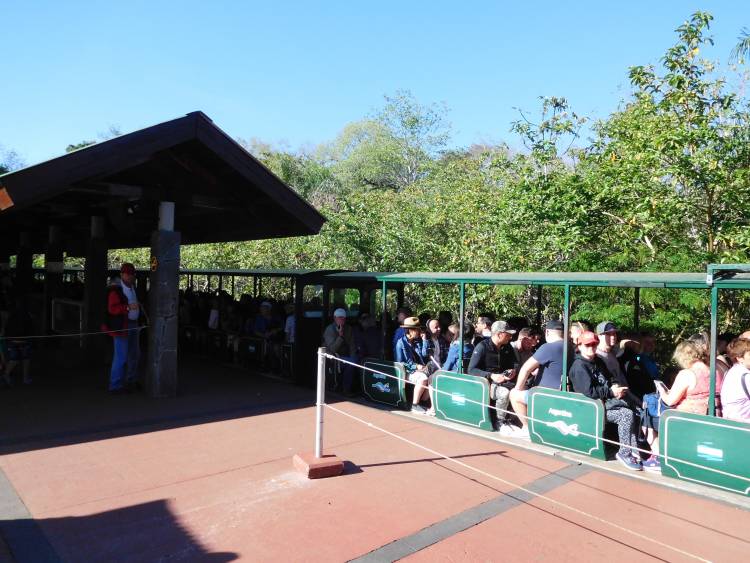
About 1,100 meters separate the station from the viewpoint of the Devil's Throat. The walkway system is perfectly flat and very comfortable to walk on, with a slope of no more than 6º, unfolding through the jungle and the islands between the arms of water of the Iguazú River.
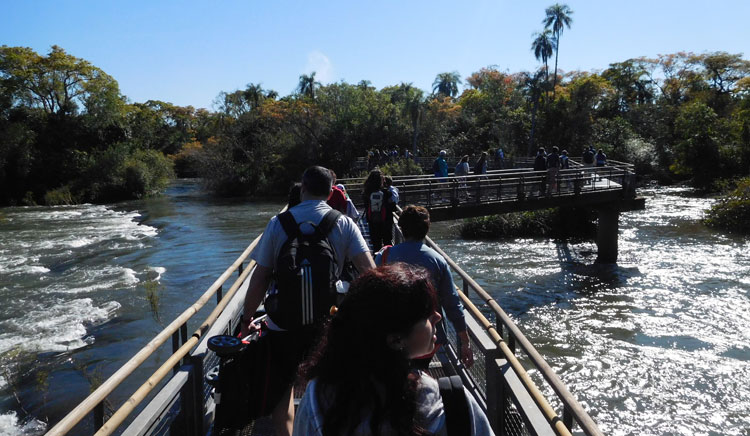
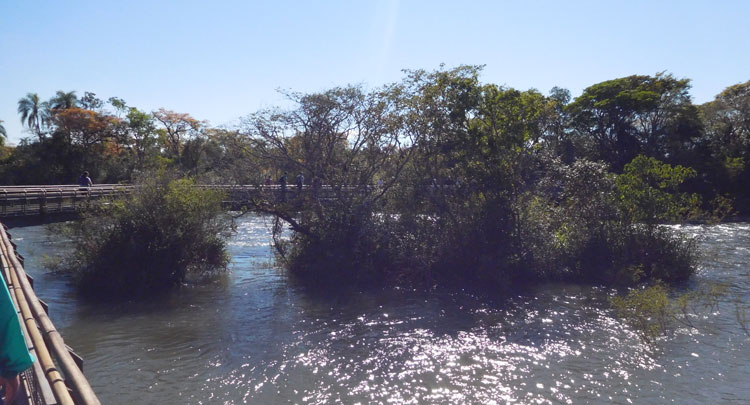
It is recommended to wear comfortable clothing and footwear, as well as bring water bottles.
Upon reaching the viewpoint, the experience transforms into a magical and unique moment, contemplating a huge wall of water over 80 meters high, located on the border of Argentina with Brazil.
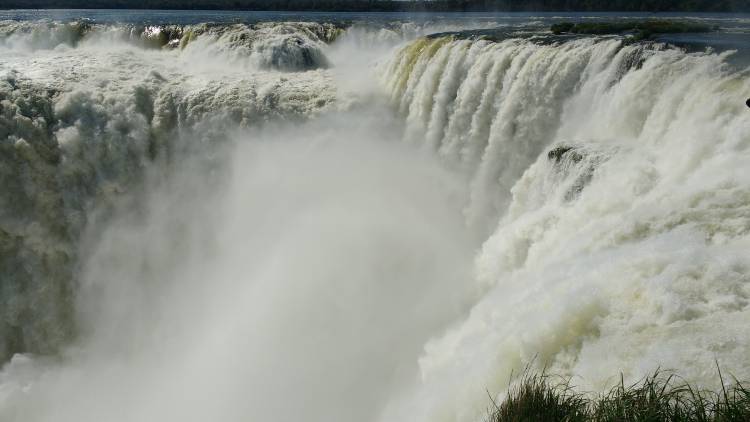
There are no words to describe the majesty and beauty of this place in the world. The experience of being next to a gigantic wall of water, with an entire river falling before our eyes, makes us feel insignificant and humbles us.
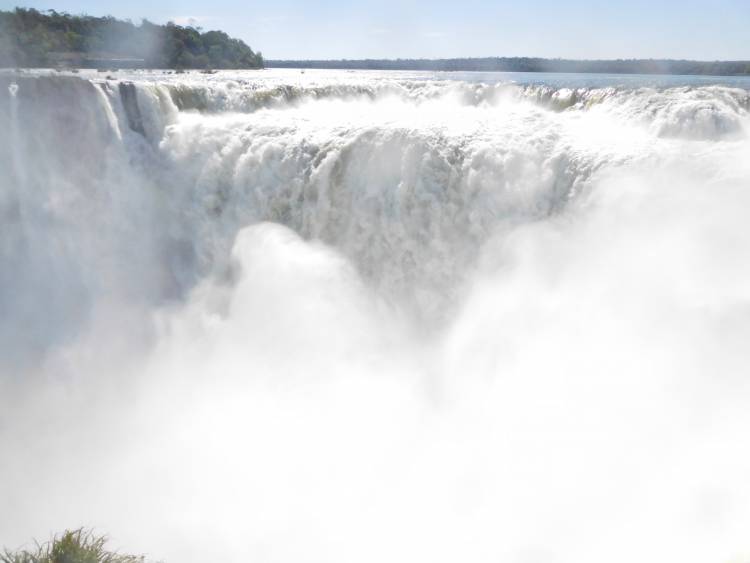
One is left "hypnotized" by the grandeur of the Devil's Throat. Millions of liters of water rushing beneath our feet, falling from a height similar to a 30-story building, while swifts dive into the endless mist, only to reappear at full speed on the opposite side.
The park's retractable walkway system was specially designed so that, in the event of an extraordinary increase in the water flow of the Iguazú River, the walkways would not be damaged.
Returning from the Devil's Throat, the next step is to explore the Upper Circuit, a 1,750-meter walk that begins 200 meters from the Falls Station of the Ecological Train. The upper circuit covers the waterfalls Dos Hermanas, Chico, Ramírez, Bossetti, Adán and Eva, Bernabé Méndez and ends at the Mbiguá, allowing a panoramic view of the horseshoe of waterfalls. After the Mbiguá Falls, a branch of walkways crosses the Upper Iguazú River to reach the edge of the second most important waterfall in the system: the San Martin Falls. There is a viewpoint with the best panoramic view of the entire park. It is of low difficulty, with no stairs, featuring balconies and viewpoints oriented towards various waterfalls and is surrounded by lush vegetation. Since it is more exposed to the sun, it is advisable to visit it early in the morning.
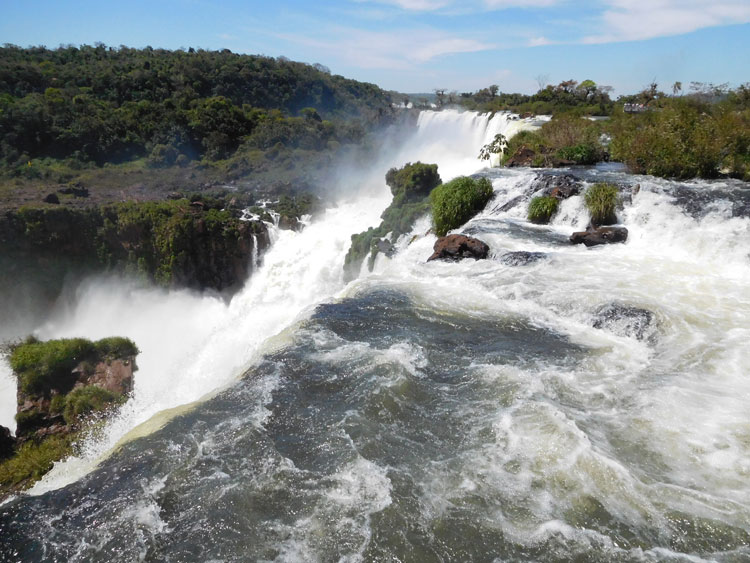
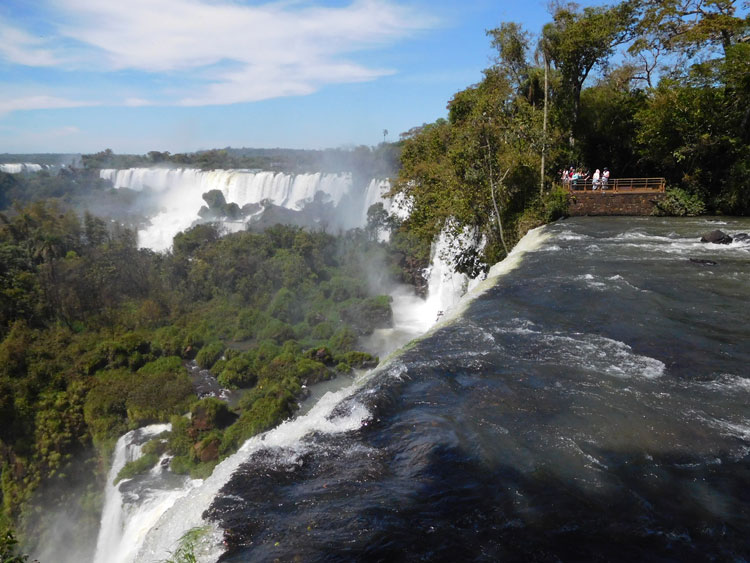
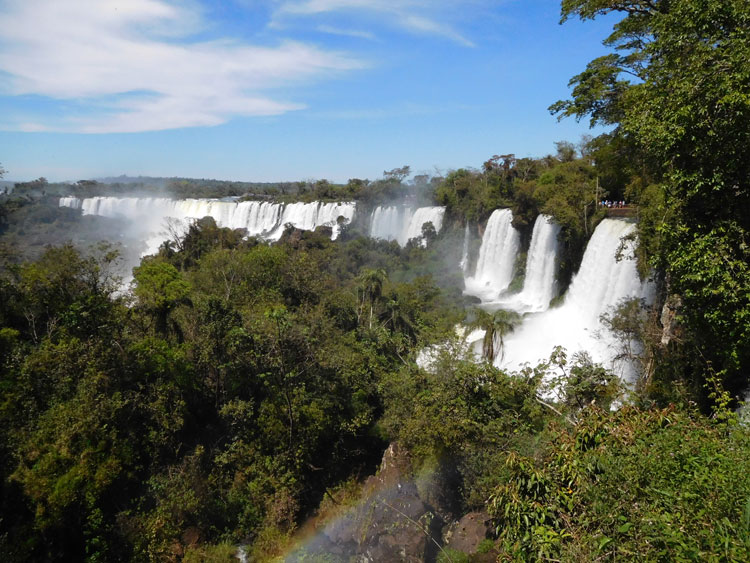
Views from the Upper Circuit
After marveling at the panoramic views, our guide Luchi awaits us to explore the Lower Circuit, which is 1,700 meters long, where the walkways enter the jungle to face the Dos Hermanas, Chico, and Ramirez Falls. After this first section, the walkway takes us to the foot of the imposing Bossetti Falls. The third and final section of the Circuit borders the lower Iguazú River, allowing us to appreciate the falls of Alvar Núñez, Elenita, and Lanusse.

Marcelo, the photographer and "Luchi" our expert guide.
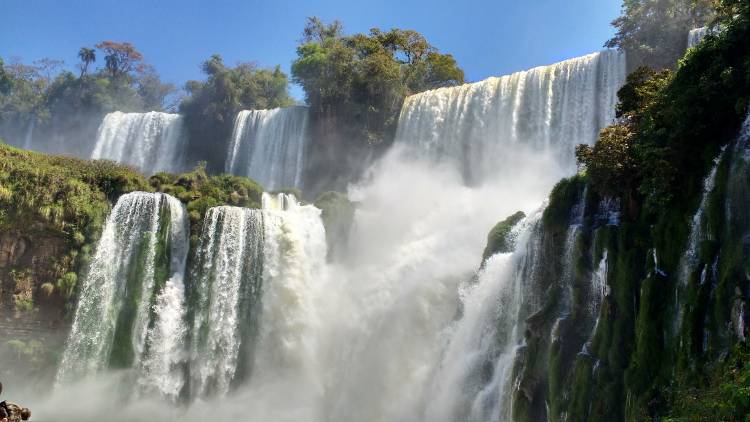
San Martín Falls
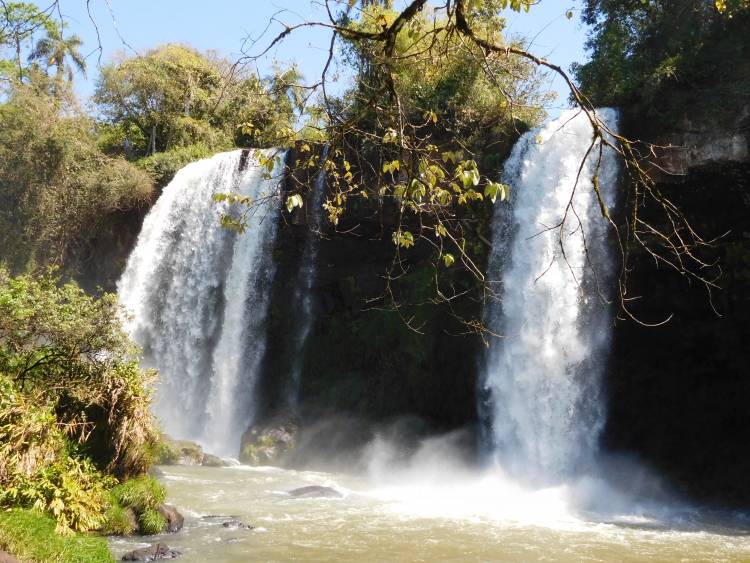
Dos Hermanas Falls
The Great Adventure
Without a doubt, the park's attraction. The experience begins with a 5 km vehicle ride through the jungle, culminating at Puerto Macuco. It then continues with a visit to the base of the Three Musketeers Falls to appreciate the set of Brazilian and Argentine falls, with the imposing Devil's Throat reigning over the canyon.
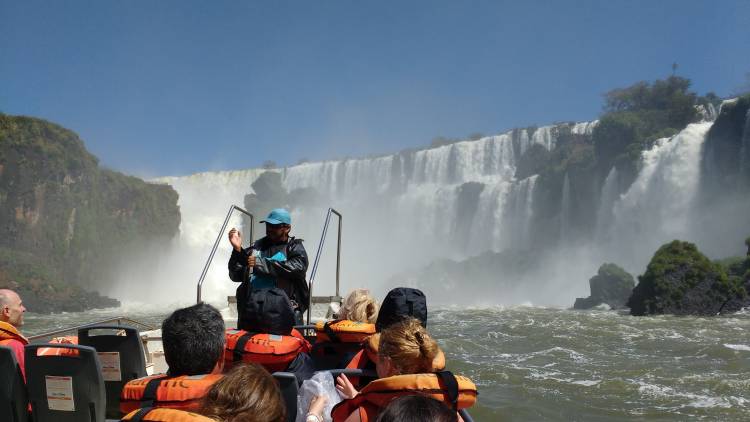
Heading to San Martín Falls
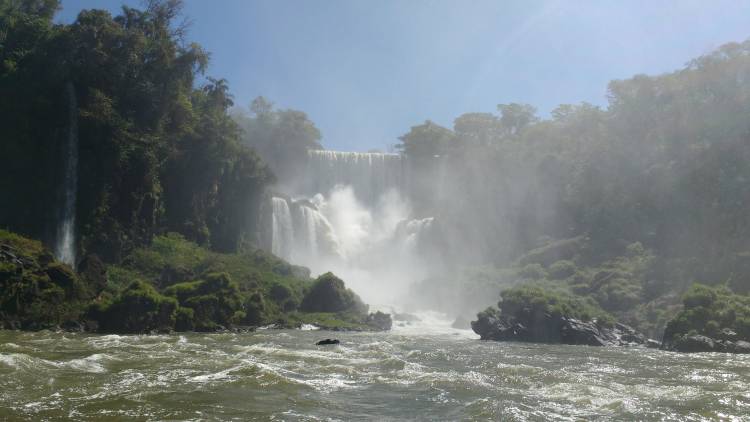
The cherry on top was experienced aboard a powerful motorboat, where we got soaked in an unforgettable baptism beneath the enormous San Martín Falls. Literally, the boat goes to the foot of the waterfall, an immense wall of water falling just a few meters away and splashing everything. Pure adrenaline and excitement, this time not on fast roller coasters, but immersed in living nature. The sensation is indescribable. Highly recommended, do not miss it!
We closed Day 1 with lunch at the Fortín Restaurant, where we enjoyed traditional Argentine barbecue.
It is recommended to visit the entire park over 2 days. The second day offers a 50% discount on the entrance fee.
The Iguazú National Park Falls Area is currently operated by Iguazú Argentina. The joint management between the state and the private sector represented a novel and unique working model in the country, which enabled the redesign of the park and the implementation of more than 7,000 meters of retractable walkways and trails. It also put into operation the Ecological Train of the Jungle, which allows tourists to move within the protected area without impacting the environment.
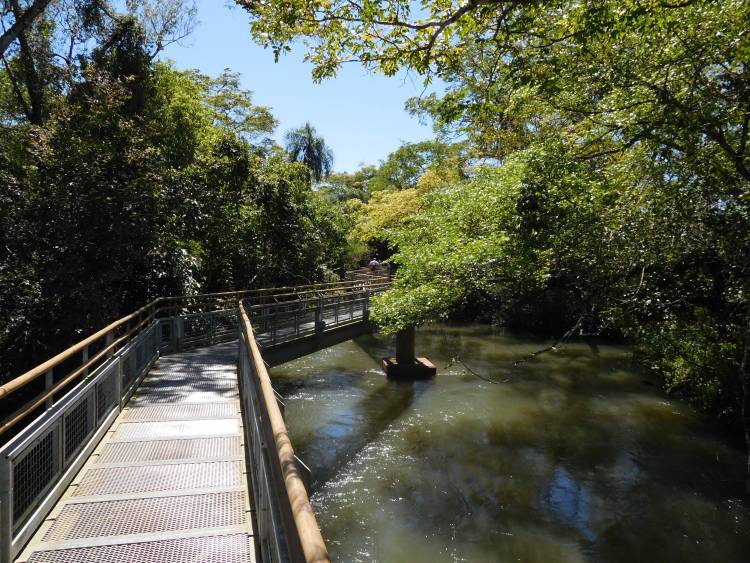
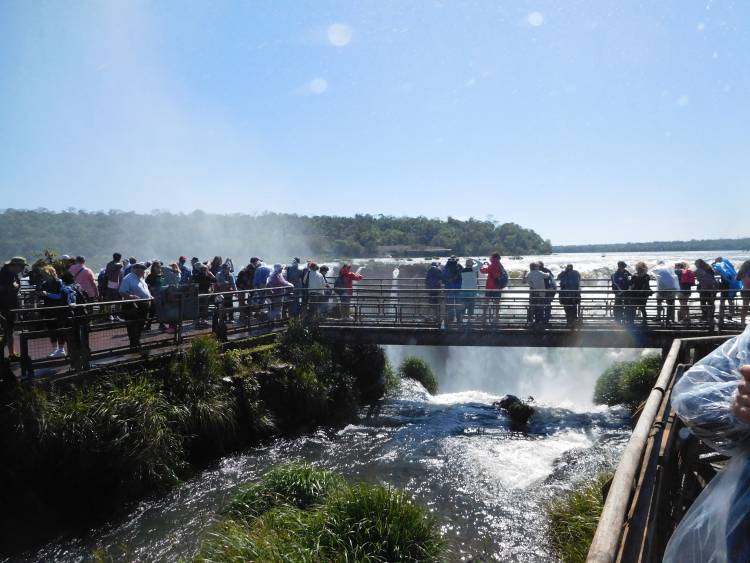
Retractable walkway system
The accessibility for people with special needs is very notable in almost 90% of the route. The tour features access ramps, designated spaces for wheelchairs on the Ecological Train of the Jungle, adapted chairs for transit on the retractable walkways, and motorized carts to transport those in need.
Additionally, it has informative signage for the different circuits and restaurant menus in braille, as well as a model with the same reading system in the Nature Interpretation Center, which allows for a first approach to the dimensions and characteristics of the area.
The park is divided into 7 main areas
- Nature Interpretation Center Yvirá Retá (near the access portal).
- Devil's Throat (Ecological Train of the Jungle - Devil's Throat Station)
- Upper Circuit (Ecological Train of the Jungle - Falls Station)
- Lower Circuit (Ecological Train of the Jungle - Falls Station)
- San Martín Island (from the dock of the Lower Circuit with free transfer).
- Green Trail.
- Macuco Trail.
Day 2: Panoramic view from the "Brazilian side"
Upon entering the Iguaçu National Park, instead of the train, hybrid panoramic buses take us from the entrance to the front of the Hotel das Cataratas, with impeccable landscaping and colorful flowers decorating its entrance.
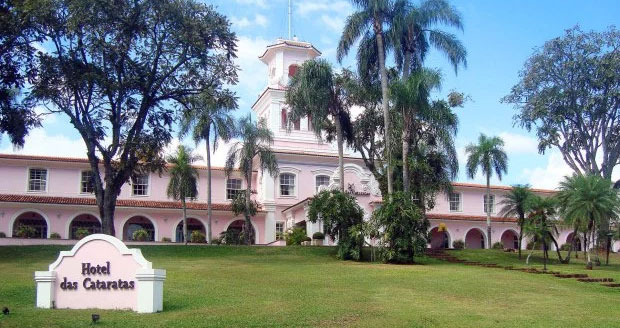
The second day was more relaxed, as the Brazilian side mainly consists of a 1,200-meter walk along the banks of the Iguazú River, allowing us to appreciate from the "green side" the waterfall system on the Argentine side, in a panoramic view. Unlike the Argentine side, the paths date back to 1939, are asphalted, and have stairs in some sections. This is because they are mostly located on the riverbank and not on the river itself.
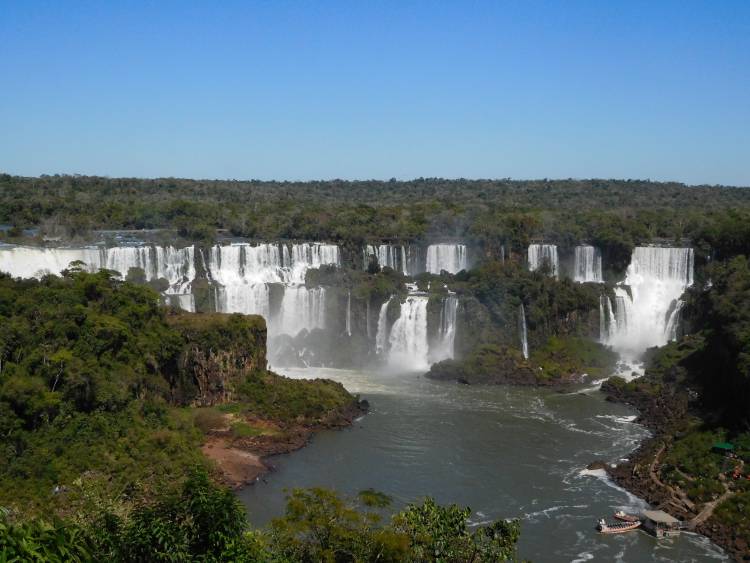
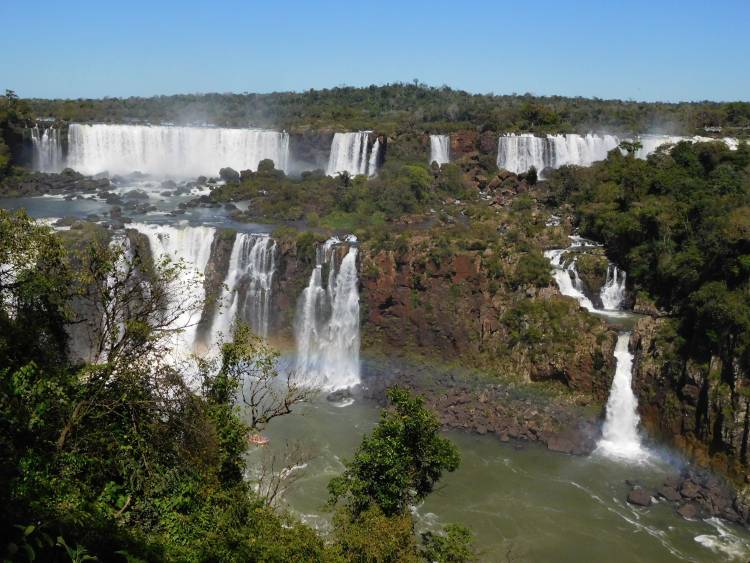
Views from the Brazilian side of the waterfall system
Arriving at the Devil's Throat from the Brazilian side, a system of walkways unfolds that enters the horseshoe very close to the Throat, surrounded by Waterfalls, on the outer side, the chain of falls on the Argentine side and on the inner side, the Floriano Falls.
There are air-conditioned elevators to go up and down from the walkways to Porto Canoas. We preferred to take the stairs, not for athletic reasons, but due to the long line that had to be waited for the elevators. We survived the staircase without problems.
On the Brazilian side, there is significant commercial infrastructure, with a lot of American-style merchandising.
It can be comfortably explored in half a day.
In conclusion, an essential getaway for this time of year. Taking a break from the daily whirlwind and filling your eyes and soul with life and pure nature. Unmissable!
Thanks
- Mrs. Rosa Sagray.
- Mr. Alcides Capra, General Manager Iguazú Argentina.
- Mrs. Karina Dudek, Marketing Department of Iguazú Argentina.
- Mr. Miguel "Luchi" Albarenga. Sol Iguazú.
Sources
- Iguazú Argentina.
- Administration of National Parks, Argentina.
- Iguaçu National Park.