They started with the hair... and found this in their mental health.
Self-care, stress, and health: why hair wellness is gaining prominence on the health agenda.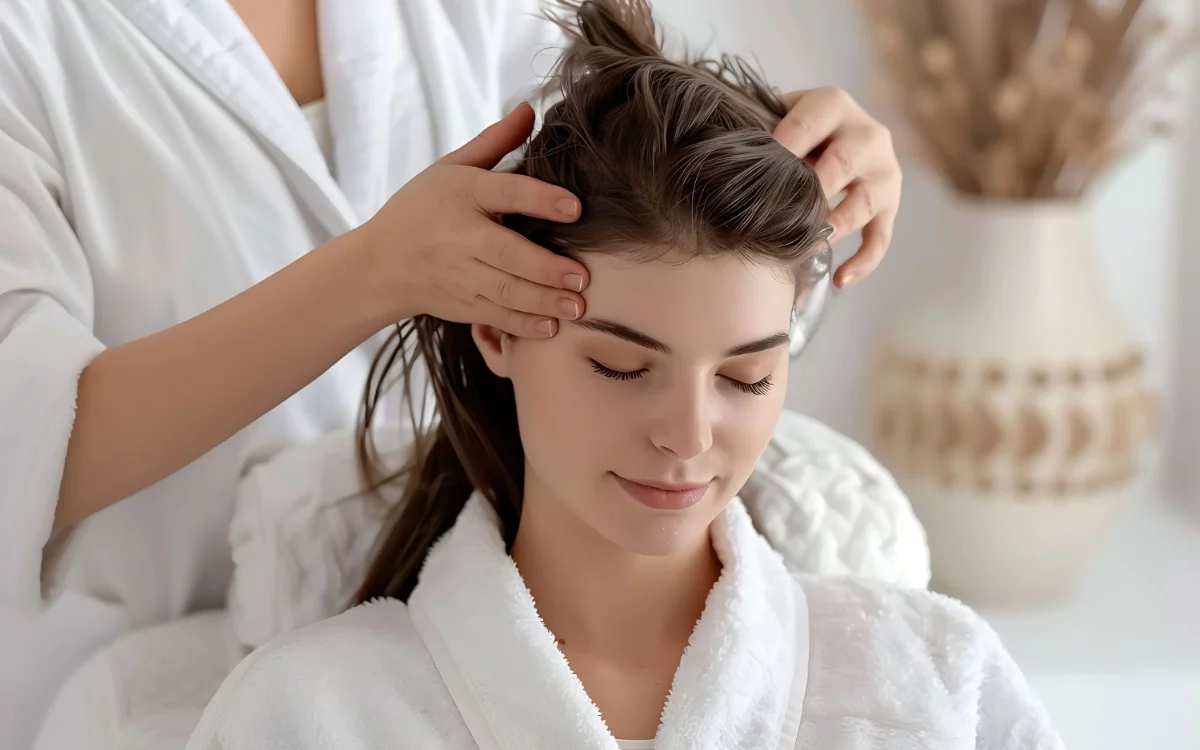
Hair wellness has ceased to be just an aesthetic issue and has strongly integrated into holistic health approaches. In a context where chronic stress affects more and more people, new practices emerge that seek to harmonize body and mind from previously unthinkable places, such as the scalp. Scalp therapies, cranial massages, and sensory techniques applied to hair are positioned as valid tools to promote relaxation, self-care, and consequently, emotional balance.
The rise of these practices is not coincidental. According to the World Health Organization (WHO), health is not limited to the absence of disease but involves a state of complete physical, mental, and social well-being. Under that definition, caring for the scalp—one of the most sensitive areas of the human body—can become an effective way to positively impact mental health.
A gateway to the nervous system: the scalp
The scalp is densely populated with nerve endings and blood vessels. It is a highly receptive area to touch, which explains why many people experience immediate relief with a simple scalp massage.
Experts in neurophysiology and wellness explain that gentle tactile stimulation of the scalp activates the parasympathetic nervous system, which is responsible for promoting states of rest and recovery. It is the opposite system to the "fight or flight" mode that is activated in response to stress.
From a professional perspective, Noelia González, a certified massage therapist and trainer in various wellness techniques, explains that treatments like Japanese Head Spa “provide real benefits by improving the conditions of the scalp, promoting microcirculation, oxygenation, and skin balance, which contributes to a healthier environment for the hair follicle.” She also emphasizes that its impact is not limited to hair: “it acts as an effective resource to reduce the impact of stress on the body and mind.”
Techniques such as Japanese cranial massage, relaxing washes in conscious hairdressing, or even slow and rhythmic brushing can induce states of deep relaxation, help lower heart rate, and improve sleep quality.
The science of sensory self-care
Beyond the pleasurable, hair wellness has a therapeutic component that is already being researched by various disciplines. According to recent studies in affective neuroscience, regular sensory care—such as massages or warm contact—generates release of oxytocin, known as “the bonding hormone” or “the hormone of well-being.”
This type of experience also modulates the activity of the amygdala, a region linked to the perception of fear and anxiety. By reducing its hyperactivity, it contributes to better management of emotional stress.
By incorporating these stimuli into a routine, individuals can achieve a sustained decrease in baseline stress, which is key to preventing psychosomatic disorders such as insomnia, muscle pain, or hair loss due to emotional causes.
Stress, a silent epidemic
WHO has warned that chronic stress is one of the main threats to health in the 21st century. It affects concentration, weakens the immune system, and promotes cardiovascular, digestive, and mental illnesses.
In this scenario, accessible strategies like those proposed by hair wellness are gaining ground. They do not require medication, can be applied at home or in therapeutic environments, and strengthen the bond with oneself. This last point is key: self-care is also an act of reconnection.
The ritualization of hair care can have a meditative effect. By involving time, mindfulness, and sensory contact, it becomes an anchor amidst the fast pace of daily life.
Professionals and interdisciplinary approaches
The rise of hair wellness has generated a convergence among professionals from different fields: dermatology, neuroscience, physiotherapy, conscious hairdressing, and complementary therapies.
Some health centers already integrate scalp relaxation therapies as part of their stress reduction programs. Others propose combined approaches that include cranial massages, aromatherapy, and deep breathing exercises.
These approaches agree that the scalp is not only the base of the hair but also a key area to access emotional balance. From there, sustainable wellness habits can be built.
When hair reflects what we feel
Another aspect that reinforces the link between hair wellness and health is that hair is a mirror of physical and emotional state. Excessive hair loss, weakening, or changes in texture are often warning signs in the face of sustained stress.
Therefore, caring for the scalp is not a minor issue. By stimulating circulation and relaxing the muscles in the area, hair health at the follicular level is also favored.
Moreover, by incorporating these cares as part of a routine, self-esteem and personal sense of control are strengthened. Feeling better inside and out is not an empty promise: it is a direct consequence of conscious, integral, and sustained self-care over time.
A more inclusive and sensory health agenda
The inclusion of hair wellness in the health agenda responds to a real need: to expand the concept of health towards more sensory, accessible practices centered on personal experience.
More and more people seek relief from stress without exclusively resorting to medications. And they find in these simple rituals a bodily, emotional, and mental refuge.
Regarding frequency, González recommends that, as a general guideline, the Japanese Head Spa be performed once a month for maintenance, although she clarifies that regularity can be adjusted according to stress levels, lifestyle, or the specific needs of each scalp.
In this context, Japanese Head Spa, a brand of Spanish origin founded in Málaga at the end of 2023, begins its arrival in Argentina with a first location in the city of Córdoba, marking its entry into the local market with a proposal for integral hair wellness. The brand plans to continue its expansion in the country over the coming months, with new openings in strategic locations, accompanying the growing demand for experiences oriented towards health, deep relaxation, and emotional balance.
Experts agree: caring for mental health also starts at the surface. In this case, by the skin of the scalp and by everything that gesture activates inside.