The silent toxic link that can ruin your day without you noticing.
Energy "vampire" people can alter your emotional balance without saying a single word. This is how they act and this is how you can protect yourself.
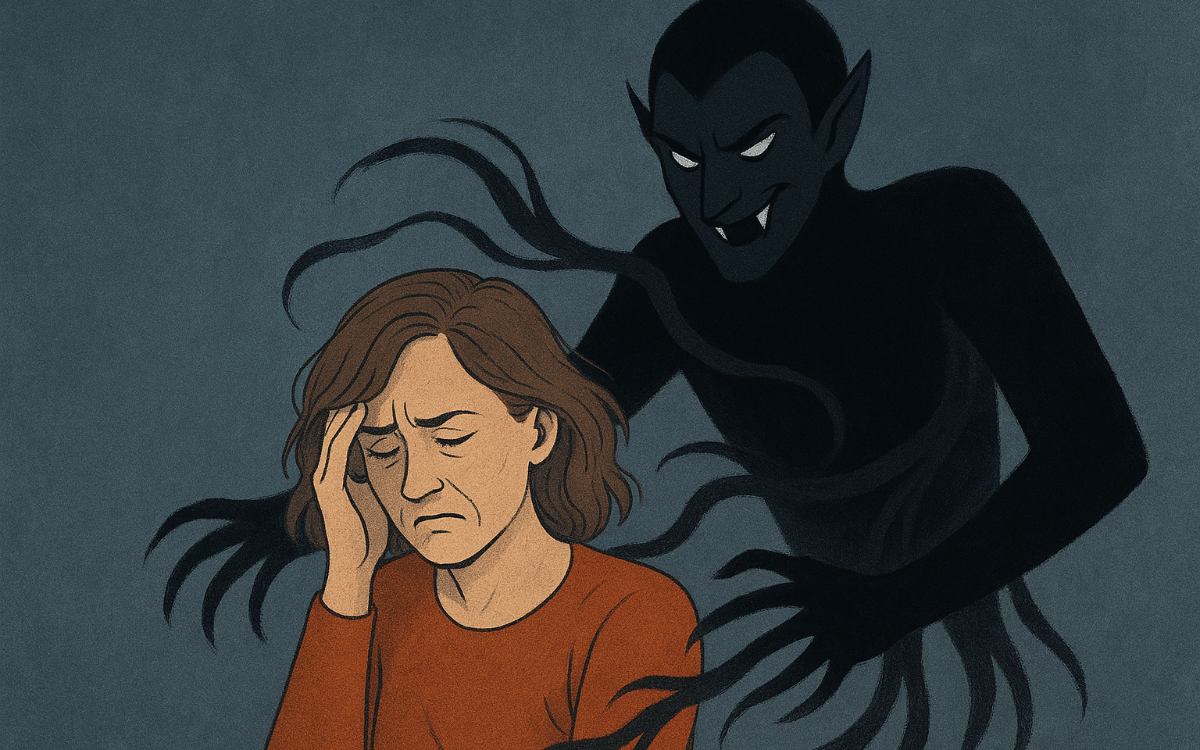
Energy vampires: that is the name psychology has begun to identify those who, without the need to speak or act directly, manage to alter the emotional balance of others. Their mere presence is enough to generate discomfort, distress, or anxiety. As if it were an invisible contagion, their way of being in the world transmits unease to those around them. And it is not about magic or suggestion: there is scientific backing that explains how this happens.
Energy vampires: the silent emotional contagion
Studies from the University of California revealed in the 1980s that emotions, especially negative ones like fear or stress, can be "contagious" without words being exchanged. If an anxious or distressed person enters a room, the rest of those present may experience similar physiological changes: elevated heart rate, sweating, muscle tension. This was discovered by researchers Howard Friedman and Ronald Riggio.
The explanation lies in mirror neurons, the same ones that cause one to yawn if they see another do it. But in this case, the emotional reflection translates into a generalized alert response. Hence the nickname: cortisol people, in direct reference to the hormone that the body releases in response to stress.

How energy vampires operate
Micaela Zappino, a psychologist specializing in mental health, describes that these individuals have developed a way of living in a constant state of threat. "What was initially a defensive reaction to a specific situation transforms into a stable way of perceiving reality. They see the world as a dangerous place,” she states. This permanent activation of the stress axis translates into physical, emotional, and social wear and tear.

In the Harry Potter saga, "Dementors" are spectral creatures that feed on human happiness, causing despair and sadness.
Ailen Lescano, a trauma specialist, explains that this type of functioning is often found in anxious personalities who never manage to "lower their guard." They live tense, on alert, with no possibility of emotional rest. “They never enter relaxation or vasovagal activation mode,” she says.
Causes: a past that won't let go
For Lucila Bergonzi, a clinical psychologist, cortisol people are not born; they are made. They have generally grown up in insecure environments, where danger was real or at least constant. "The nervous system gets stuck in survival mode. It's as if they have lived so much under storms that they continue to use umbrellas even when the sun is shining,” she explains.
This past translates into behaviors that affect not only their well-being but also that of those who live with them. Irritability, distress, emotional dependency, constant complaints, jealousy, and the need for control are some of the visible manifestations of that chronic discomfort that seems to find no way out.
Common traits of energy vampires that trigger alerts
According to the specialists consulted, cortisol people share some behavioral traits that can be clearly identified:
- Chronic victimization: they constantly seek to generate guilt or compassion in others.
- Emotional competition: they always try to outdo you in suffering or achievements, generating discomfort.
- Dependency and control: they demand constant attention and manipulate with flattery or reproaches.
- Triangulation: they involve third parties to create tension or generate conflict.
- Evading responsibility: they provoke chaos but avoid taking responsibility for the consequences.
Zappino adds that the sociocultural context also reinforces these behaviors. "We live in a society that celebrates self-demand, competition, and relentless performance. These values exacerbate the profile of cortisol people, validating their way of being in the world.”
Impact on the mental health of others
Frequent contact with a cortisol person can profoundly affect emotional health. Sleep quality, concentration, mood, and energy are compromised. "They can literally drain those around them,” warns Bergonzi.
From a psychoanalytic perspective, Zappino points out that when distress becomes unbearable, the body begins to speak for the person. Physical symptoms then appear without apparent medical cause: muscle tension, digestive disorders, insomnia, panic attacks. "When stress stops being functional, the body and psyche scream it out,” she summarizes.
How to protect oneself without cutting ties
The first defense tool is recognition. Being able to identify a cortisol person allows for more conscious decision-making. "The goal is not to cut the bond, but to learn to set emotional boundaries,” says Bergonzi.
Some effective strategies are:
- Limit shared time
- Avoid deep or personal conversations
- Prepare emotionally before a meeting
- Practice emotional regulation techniques such as breathing, grounding, yoga, or mindfulness
Lescano suggests focusing on the “here and now” to counteract the destabilizing effect of these relationships. She also recommends prioritizing pleasurable activities, meetings with people who generate well-being, and spaces that help regain internal calm.
Not trying to save the other
A common mistake is trying to "rescue" the energy vampire. According to the specialists, this is often counterproductive. "You can't be everyone's life jacket, especially if you are sinking yourself,” states Bergonzi.
Listening kindly, without getting emotionally involved, is the best way to relate to these profiles without falling into their spiral of tension. Stating one's own needs (“this harms me,” “I need distance”) and avoiding over-justification are key to maintaining a healthy stance.
Energy is also contagious
Just as stress can radiate, so can calm. Surrounding oneself with stable people who do not live in urgency is a way to counteract the cortisol effect. Because while we can all go through moments of distress, cortisol people have turned that state into their identity.
Identifying them and taking emotional distance is not selfish; it is mental health.