The secret of the immune system that can change your health forever
Psychoneuroimmunology reveals how to take control of our immune system and improve our quality of life.
For Marianela Castés Boscán, an expert in psychoneuroimmunology, health is not just a biological process, but also an exercise in self-knowledge. For this reason, she refers to her patients as "impatients", people with an urgency to transform their lives and regain control over their well-being.
“To take ownership of something, we must first know it,” explains Castés Boscán. In the past, the immune system was seen solely as a defense mechanism of the body. Today it is understood to be much more than that: a complex network that not only fights diseases but also remembers, adapts, and responds to external and internal stimuli.
Between the "self" and the "non-self": how our body recognizes what belongs to it
Castés Boscán, with studies at Kingston University, Australia, and a doctorate from the University of Paris, explained that the immune system is capable of differentiating self from non-self. Under normal conditions, it protects the organism from bacteria, viruses, and other threats. However, when there is a disturbance, it can attack the body's own cells, generating autoimmune diseases such as lupus, multiple sclerosis, diabetes, or arthritis.

According to research, this system has over 200 similarities with the brain, reinforcing the idea that its functioning is highly sophisticated. A clear example is vaccination: when a child receives a vaccine, their immune system learns to recognize the virus and generates a defense memory. Thus, if faced with that same virus in the future, it will be able to neutralize it before it causes harm.
The guardians of health: how the immune system works
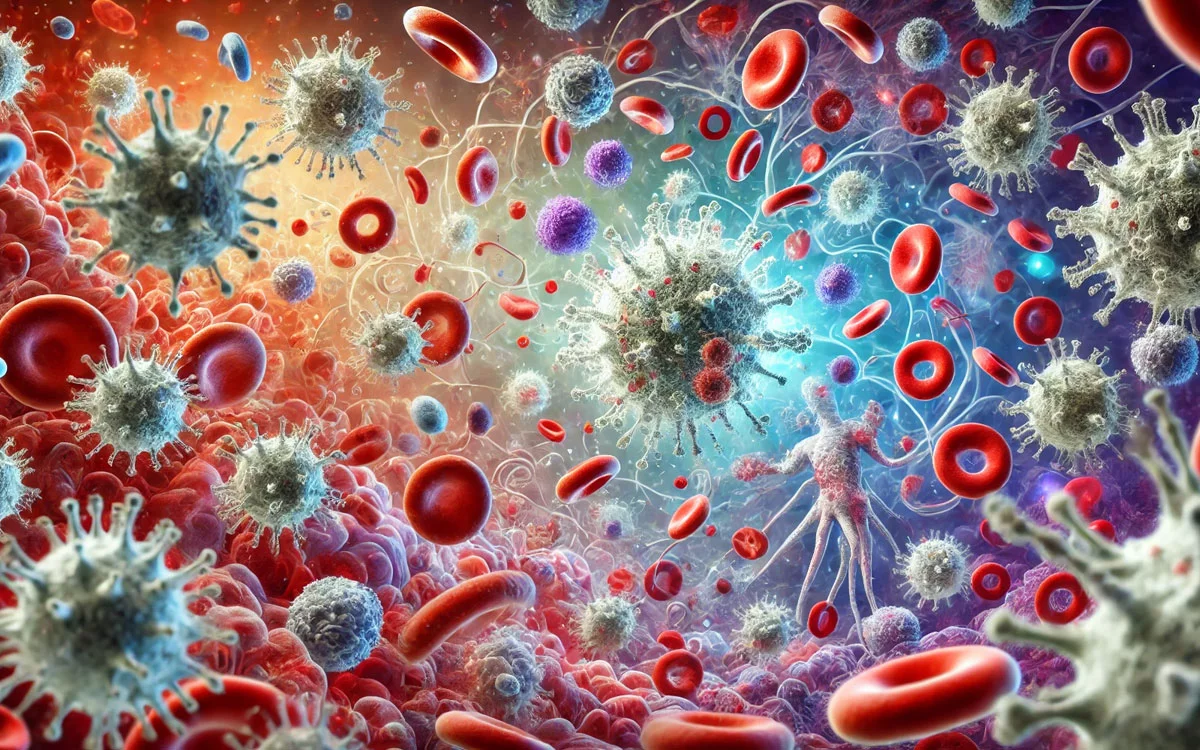
The immune system has an army of specialized cells with different functions:
- B lymphocytes: They are the only ones that produce antibodies to neutralize bacteria.
- Macrophages: Capable of "eating" foreign agents through a process called phagocytosis.
- Natural killer cells: Recently discovered, their function is to destroy tumor cells.
- Neutrophils: They are the first cells to act when an aggression is detected.
- T lymphocyte: It is the "conductor," responsible for coordinating all immune responses.
Additionally, the body has secondary lymphoid organs strategically located to activate the immune response when necessary.
Why do we feel bad when we get sick?
One of the major revelations of psychoneuroimmunology is that the immune system itself causes discomfort when it detects a threat. Muscle pain, fever, fatigue, and lack of appetite are signs that the body is reserving energy to fight against a virus or bacteria.
It was previously believed that these symptoms were caused by pathogens, but in reality, it is the immune system itself that forces us to stop and rest. Castés Boscán recommends listening to the body and avoiding excessive use of cold medications, which can suppress the immune response.
The great news for cancer patients
One of the most striking findings in this field is the relationship between the immune system and guided imagery. According to Castés Boscán, natural killer cells, fundamental in the fight against cancer, multiply and strengthen when activated through visualization techniques.
“We have found that guided imagery can induce positive biological transformations,” said the specialist. Exercising the mind with images of well-being and healing can enhance the immune system and improve the body's response to diseases.
In a study, blood samples from people practicing these techniques were sent to a laboratory, and researchers were surprised to find an unusually high amount of natural killer cells. Science has finally validated what was once considered only a belief: the mind has a real impact on the body.
Stress: the worst enemy of the immune system
One of the greatest challenges to health is chronic stress. Psychoneuroimmunology has shown that when the body experiences constant stress, cortisol is released, a hormone that inhibits immune function.
Castés Boscán explains that people with high levels of stress or depression are more prone to getting sick. The reason is that cortisol prevents the immune system from responding adequately to bacteria and viruses.
To counteract these effects, it is essential to adopt stress management strategies, such as:
- Breathing exercises and meditation.
- Guided imagery practices.
- Healthy sleep habits.
- Moderate physical activity.
- Positive social and emotional relationships.
As Viktor Frankl said, “the last of the human freedoms is to choose our attitude in any circumstance.” Through psychoneuroimmunology, we can learn to influence our own health and strengthen the immune system.
Marianela Castés is a chemist and immunologist. Founder and Honorary President of the Venezuelan Society of Psychoneuroimmunology. Honorary Member of the Latin American Federation of Psychoneuroimmunoendocrinology (PNIE). She is the author of numerous research works in the field of Immunology and Psychoneuroimmunology and an International speaker in the field of PNI. A pioneer in the development of PNI in Venezuela and Latin America. Honorary Member of the Peruvian Society of Psychoneuroimmunoendocrinology (APPNIE). Member of the Research Society of Psychoneuroimmunology. Director of the Civil Association Creating Health, Venezuela, and of MIA Evolution, S.A. Panama.