The paradoxes of our time that no one wants to accept (and that will make you reflect)
Few dare to face how we really live today.
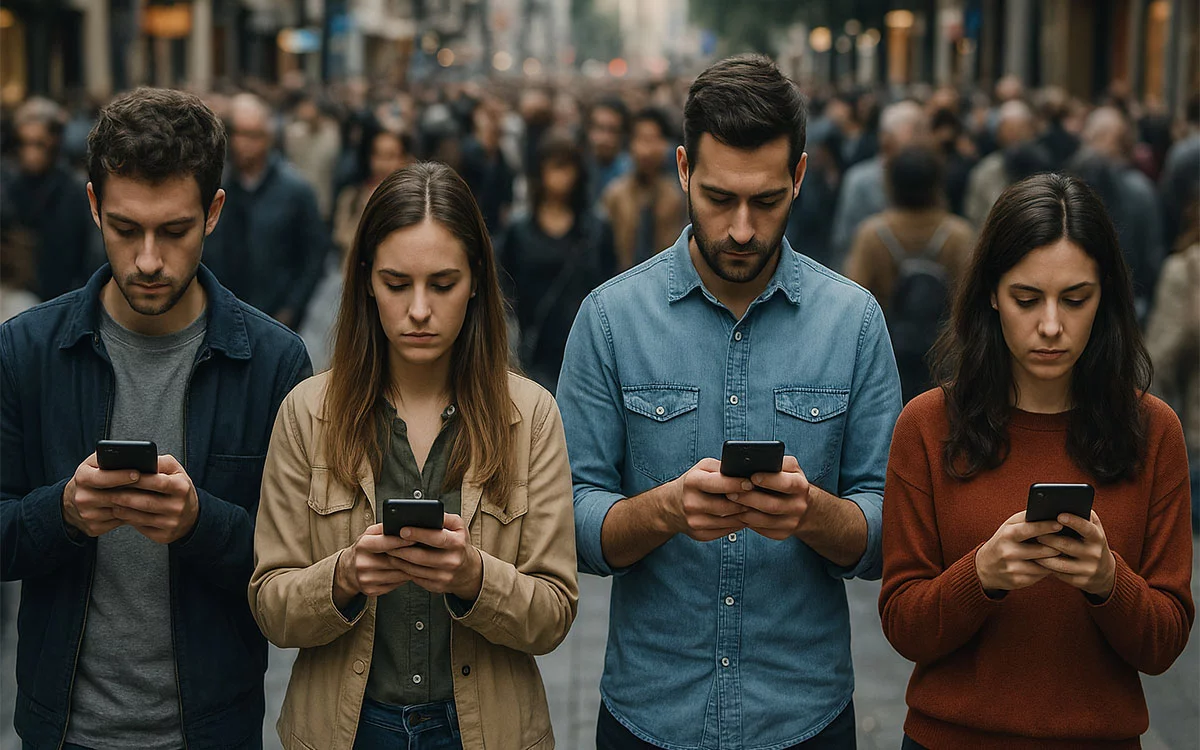
The paradoxes of our time are those contradictory realities that characterize our current way of living, and although we see them every day, we rarely stop to analyze them. We live in an era full of technological advancements, comforts, and unlimited possibilities, but paradoxically, we are also immersed in deep personal, emotional, and social crises. What is really happening to us?
Taller buildings, less patience
We live in increasingly larger cities, filled with buildings that seem to touch the sky. But, although our architecture rises, our patience and tolerance towards others decreases more and more. We have impressive buildings and wide highways, but our capacity for understanding is limited and viewpoints are increasingly narrow.
More goods, less satisfaction
We have more purchasing power than previous generations. We buy clothes, technology, and luxury items with ease. However, despite spending more, we enjoy less. We live surrounded by objects and material possessions, but that accumulation does not fill our emotional voids; rather, it often exacerbates them.

According to experts, the compulsive search for immediate satisfaction through consumption leaves us in a vicious circle of permanent dissatisfaction. We have bigger houses, faster cars, and more modern cell phones, but we lack the time to truly enjoy what we buy.
More education, less common sense
Currently, education and academic degrees are more available than ever. But this educational abundance has not necessarily meant greater common sense or better judgment. We have access to more knowledge and more experts, but concrete solutions to everyday problems seem to be scarce. Although we have more medicine than ever before in history, we have not necessarily achieved greater physical or emotional well-being.
More communication, less closeness
Technology has multiplied our ability to communicate: we have social networks, video calls, instant chats, and endless apps to stay connected at all times. But despite having incredible tools to interact with people from all over the world, real and deep communication is increasingly scarce. We are capable of talking to someone on the other side of the planet, but we cannot cross the street to meet the new neighbor. We have conquered outer space, but not the inner space, where our true emotions reside.
More speed, less tranquility
In these modern times, we move faster than ever. The accelerated pace has taught us to run, but not to wait patiently. We drive in a hurry, work in a hurry, eat in a hurry, and at the end of the day, we feel a deep sense of emotional and physical exhaustion. Our generation is expert in speed, but not in tranquility or in thoughtful reflection on what truly matters in life.
More entertainment, less real joy
We have more leisure and entertainment at our disposal than at any other time. Streaming platforms, online games, massive events; fun is everywhere. But, paradoxically, we feel less real joy. There is more food available than ever, but the nutritional quality is decreasing, and the authentic happiness derived from sharing a simple moment with loved ones seems to be in decline.
More money, less solid relationships
In many current households, both parents work, which translates into higher economic income. However, this situation does not guarantee greater emotional or family stability. Divorce and separation rates continue to rise. We live in elegant houses, but emotionally fractured homes. We have economic and professional success, but our personal relationships are increasingly superficial and unsatisfying.
More technology, less humanity
We have technological devices that make daily life easier, but many times these gadgets end up distancing us from others, creating a harmful emotional and social dependency. Nowadays, we can write more, communicate more, and have immediate access to all kinds of information, but that does not necessarily mean we are learning more or improving our human quality. We are increasingly digitally connected, but less emotionally connected.
More disposable morality, fewer solid principles
The current era is marked by a morality that changes continuously according to fleeting fashions or trends. Morality has become something disposable, temporary, easily replaceable. This phenomenon is reflected in our ephemeral personal relationships, in a variable work ethic, and in a superficial view of what is truly important in life.
We live in times where pills serve for everything: to be happy, to calm anxiety, to sleep, to lose weight. And yet, we are more emotionally sick than ever.
The current paradoxes clearly reflect that, although humanity has advanced technologically in an impressive way, it has regressed in many essential areas, especially those that make life worth living fully.