The art of dreaming: the ancestral energetic journey practiced by ancient shamans that transformed the perception of the body and energy
What is Tensegrity: a modern discipline with shamanic roots that seeks to transform human perception through precise body movements.
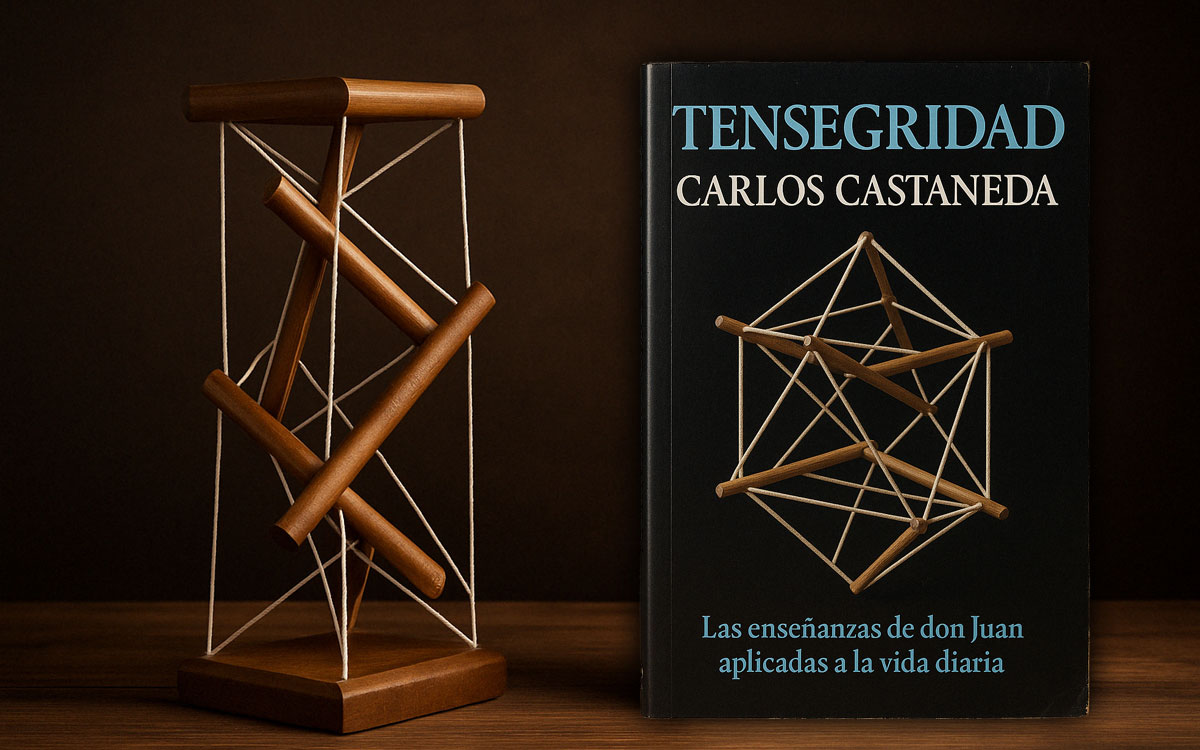
What Tensegrity Is: the fusion of body, energy, and consciousness revealed by the shamans of ancient Mexico
Talking about Tensegrity is to delve into a millennia-old tradition with a contemporary face. Although its name comes from the field of architecture, its essence has much deeper roots: the so-called magical passes, developed by shamans of ancient Mexico thousands of years before the arrival of the Spanish conquerors.
The term Tensegrity unites two key concepts: tension and integrity. This linguistic fusion precisely synthesizes the forces that compose the bodily movements transmitted by the ancient Mexican seers and that, centuries later, would reach the modern world through the accounts of Carlos Castaneda and his lineage companions.
A practice rescued from oblivion
It was don Juan Matus, a Yaqui shaman, who initiated Carlos Castaneda, Carol Tiggs, Florinda Donner-Grau, and Taisha Abelar into the art of energetic perception. According to his teachings, these movements were not mere physical exercises, but a vehicle to alter and expand human perception.
Don Juan spoke of a lineage of seers from ancient Mexico who lived between 7,000 and 10,000 years ago. These shamans sought not only knowledge but also the ability to see energy directly as it flows in the universe, beyond everyday sensory interpretations.
The point of assemblage: where magic begins
One of the most striking discoveries of these ancient practitioners was the existence of the so-called point of assemblage. This area of intense luminosity, located approximately one meter behind the shoulder blades, would be the center where energy transforms into perception.
According to the shamans, human beings do not see the world as it is, but rather interpret it, filtering the flow of universal energy through that point. The revolutionary discovery was that this point can move, and that by doing so, it also changes the perceived reality. What for many is a strange dream, for these practitioners was the beginning of a conscious exploration of other worlds.
The art of dreaming and alternate worlds
Thus arose what they called the art of dreaming: a technique to use common dreams as portals to other realities. This ability was not a product of imagination, but the result of moving the point of assemblage to different positions and maintaining it there through a voluntary act.
Each new location of that point activated different energetic fields and, therefore, generated a completely new sensory experience. For the ancient shamans, those parallel worlds were as real as the one we inhabit in wakefulness.
From dreaming to conscious movement
In their explorations, these seers found that they could reproduce in wakefulness certain states of power, well-being, and lucidity that they experienced during dreams, if they performed specific movements. This is how the magical passes emerged: physical sequences designed to reorganize the body's energy and facilitate expanded states of consciousness.
These practices, which were closely guarded for generations, were transmitted under strict rituals and only to the initiated of the lineage. They were not mere routines, but acts of power intended to transform the practitioner's life from the deepest level.
Tensegrity: the bridge between the ancient and the new
Castaneda and his companions, as heirs of don Juan's knowledge, made the decision to free these movements from the secrecy and ritualism that had surrounded them. Thus, Tensegrity was born: a systematized and modern way of practicing the magical passes, accessible to anyone with the willingness and energy to explore them.
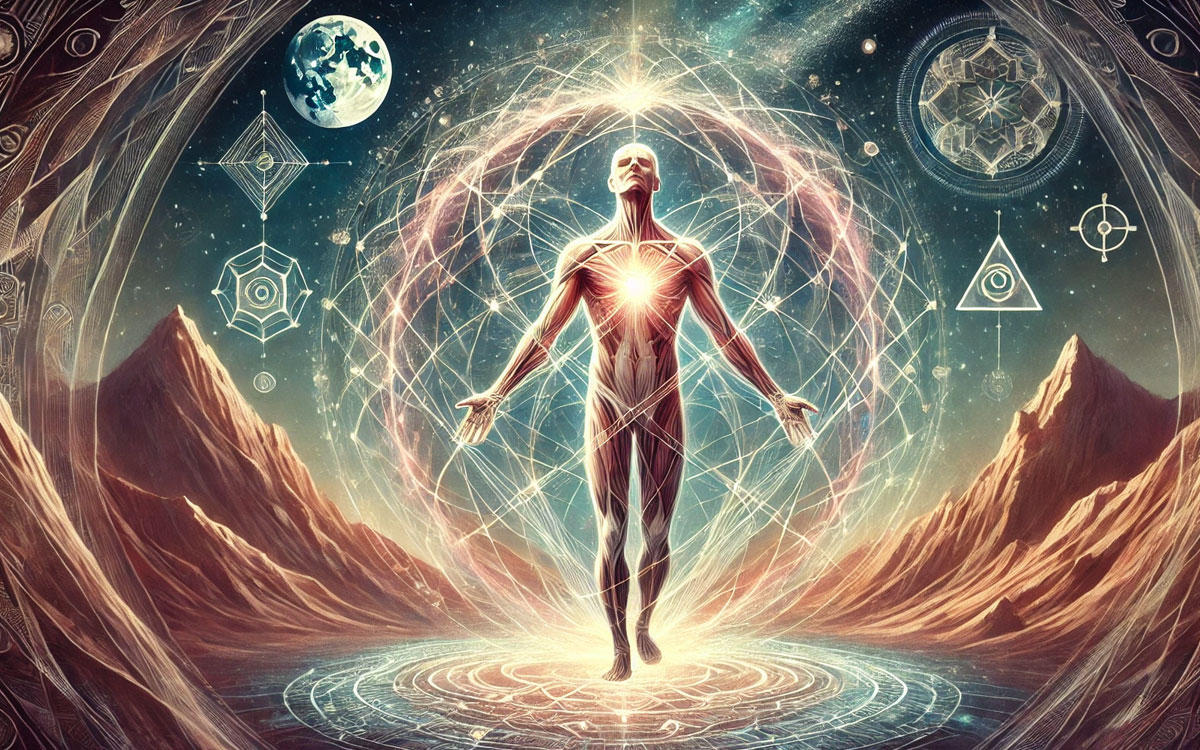
From Toltec sorcerers to the modern body: this is the art of Tensegrity
The term was not chosen at random. In architecture, tensegrity defines a structure that is held up by the interaction of elements in continuous tension and components in discontinuous compression, all functioning efficiently and in balance. This image is particularly suitable for describing the human body as a dynamic energetic system.
Two forces that hold everything: tension and integrity
Applied to the body, the concept refers to how humans can maintain their energetic and physical balance through the simultaneous activation of opposing and complementary forces. The Tensegrity passes mobilize both muscles and energy, opening internal spaces of perception that were inactive.
These sequences seek to recover attention, break automatism, and reorder the energetic flow. Unlike conventional physical exercise, in Tensegrity each movement has an energetic, perceptual, and cognitive purpose.
A proposal to awaken the energetic body
Today, Tensegrity is not taught as a religion or as esoteric gymnastics, but as a practical tool to expand consciousness, strengthen the body, and activate internal states of clarity and presence. Many of its practitioners claim to feel an increase in vitality, an improvement in attention, and a deeper connection with themselves and their environment.
The body as an instrument of knowledge
For those approaching for the first time, it may seem like just a sequence of movements. But behind each gesture lies centuries of energetic experimentation, and the conviction that the body is much more than a set of muscles and bones: it is a living energetic map that can open portals to different ways of seeing the world.
The heirs of a millennia-old tradition
Carlos Castaneda and his group did not seek to create a cult, but to share a vision. Tensegrity is, in essence, the modern transmission of ancestral knowledge, a living practice that connects those who explore it with a lineage of seekers of the invisible, of seers who learned to see without eyes and to understand without words.