The anecdote of Bohr
A story about how to seek "lateral thinking" alternatives for problem solving.
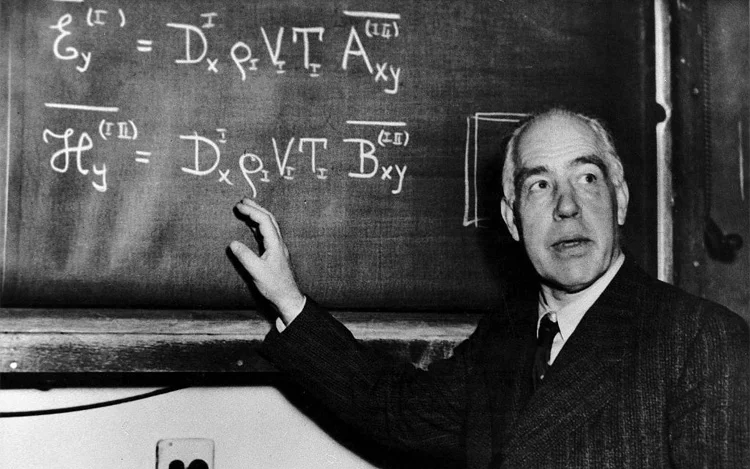
Sir Ernest Rutherford, president of the British Royal Society and Nobel Prize in Chemistry in 1908, recounted the following anecdote:
"Some time ago, I received a call from a colleague. He was about to give a student a zero for the answer he had provided on a physics problem, despite the student firmly claiming that his answer was absolutely correct. Professors and students agreed to seek arbitration from someone impartial, and I was chosen. I read the exam question: Demonstrate how it is possible to determine the height of a building with the help of a barometer.
The student had answered: "take the barometer to the roof of the building and tie a very long string to it. Lower it to the base of the building, mark and measure. The length of the string is equal to the height of the building."
"In fact, the student had posed a serious problem with the resolution of the exercise because he had answered the question correctly and completely. On the other hand, if he was awarded the maximum score, it could alter his average for the year, obtain a higher grade, and thus certify his high level in physics; but the answer did not confirm that the student had that level. I suggested that the student be given another opportunity. I granted him six minutes to answer the same question but this time with the warning that in his answer he had to demonstrate his knowledge of physics."
"Five minutes had passed, and the student had not written anything. I asked him if he wanted to leave, but he replied that he had many answers to the problem. His difficulty was choosing the best one. I excused myself for interrupting him and urged him to continue. In the last minute he had left, he wrote the following answer: take the barometer and throw it to the ground from the roof of the building, calculate the time of fall with a stopwatch. Then apply the formula height = 0.5 A times T2. And thus we obtain the height of the building. At this point, I asked my colleague if the student could leave. He gave him the highest grade."
"After leaving the office, I ran into the student again and asked him to tell me his other answers to the question. Well, he replied, there are many ways, for example, you take the barometer on a sunny day and measure the height of the barometer and the length of its shadow. If we then measure the length of the shadow of the building and apply a simple proportion, we will also obtain the height of the building."
"Perfect, I said, and in another way? Yes, he replied, this is a very basic procedure: to measure a building, but it also works. In this method, you take the barometer and position yourself on the stairs of the building on the ground floor. As you go up the stairs, you mark the height of the barometer and count the number of marks until you reach the roof. In the end, you multiply the height of the barometer by the number of marks you have made, and you have the height."
"This is a very straightforward method. Of course, if what you want is a more sophisticated procedure, you can tie the barometer to a string and move it as if it were a pendulum. If we calculate that when the barometer is at the height of the roof, gravity is zero, and if we take into account the measure of the acceleration of gravity when lowering the barometer in a circular trajectory as it passes through the perpendicular of the building, from the difference of these values, and applying a simple trigonometric formula, we could undoubtedly calculate the height of the building. In this same style of system, you tie the barometer to a string and lower it from the roof to the street. Using it as a pendulum, you can calculate the height by measuring its period of precision. In short, he concluded, there are many other ways."
"Probably, the best way is to take the barometer and knock on the janitor's door. When he opens, say to him: -Mr. Janitor, here I have a nice barometer. If you tell me the height of this building, I will give it to you. At this moment in the conversation, I asked him if he did not know the conventional answer to the problem (the difference in pressure marked by a barometer in two different places gives us the difference in height between both places). He said he knew it but that during his studies, his teachers had tried to teach him to think."
The student was named Niels Bohr, Danish physicist, Nobel Prize in Physics in 1922, best known for being the first to propose the model of the atom with protons and neutrons and the electrons that surround it. He was fundamentally an innovator of quantum theory.
Moral: Let us learn to think, there are a thousand solutions to the same problem, but what is really interesting, what is truly brilliant is to choose the most practical and quick solution, so that we can eliminate the problem at its root... and dedicate ourselves to solving OTHER problems.