Starlink, Elon Musk's satellite internet, arrives on these cell phone models.
Elon Musk's satellite internet promises to revolutionize access to the web, bringing connectivity even to the most remote corners of the planet.
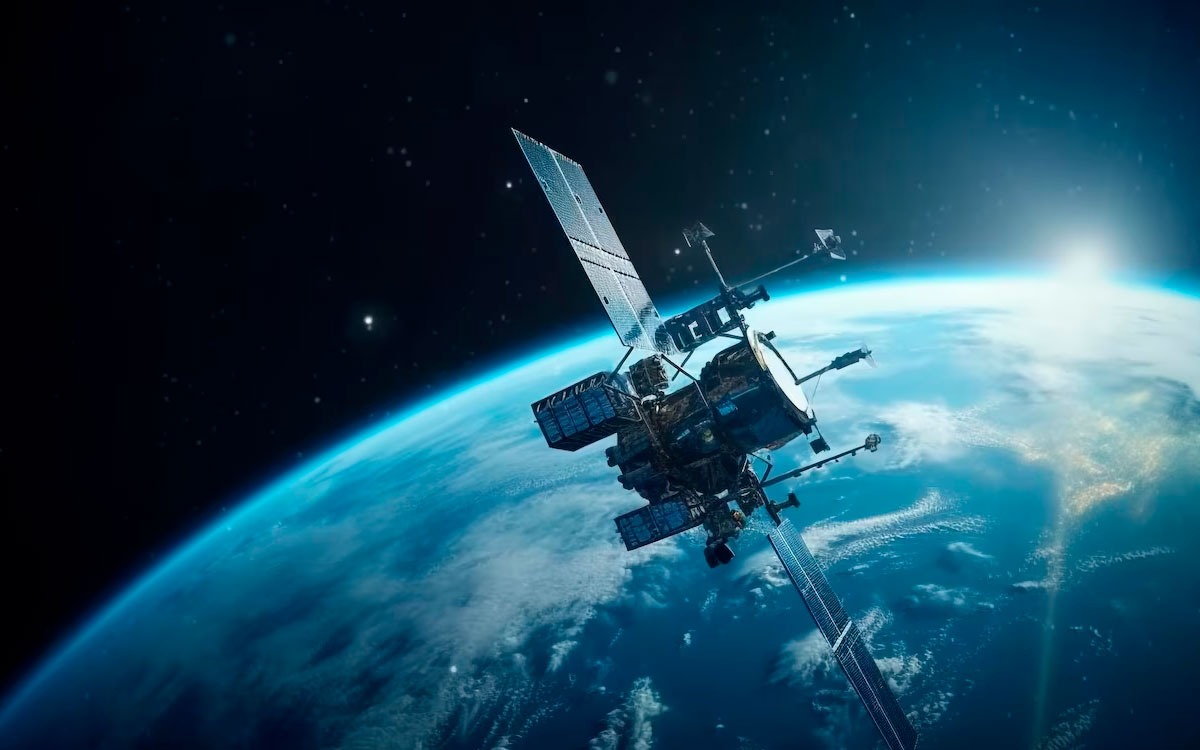
The revolutionary Starlink satellite internet service, led by Elon Musk, is taking a key step by integrating with cell phones thanks to a partnership with telecommunications company T-Mobile. This technology promises to connect devices from rural, mountainous, and desert areas, where traditional networks often fail.
Starlink: connectivity anywhere in the world
Starlink, developed by SpaceX, operates through low-orbit satellites that send signals directly to mobile devices, eliminating the need for telecommunications towers. This makes it an ideal solution for remote or hard-to-reach areas, where connectivity has historically been limited.
According to T-Mobile, “we are the first and only phone company in the United States that keeps users connected in places they never thought possible, thanks to the largest satellite constellation in the world in partnership with Starlink.”
The service will initially launch in the United States and will be available to T-Mobile customers with 4G or 5G smartphones on postpaid voice plans.
Starlink comes to mobile: how to connect from anywhere
Which cell phones will be compatible with Starlink internet?
The initial trial of the Starlink service will be exclusive to T-Mobile users. To participate, interested individuals must register on the company's official website, as spots are limited.
The highlight is that Starlink technology does not require specific or cutting-edge devices, but works with any smartphone that has 4G or 5G compatibility.
Additionally, the system does not rely on physical telecommunications towers, making internet access easier even in emergency situations or natural disasters, where traditional networks may collapse.
Advantages of Elon Musk's satellite internet
- Coverage in rural and remote areas: Starlink promises connectivity where it was previously impossible, such as mountainous, desert, or rural areas.
- High resilience in emergencies: By not depending on physical infrastructure, the service remains operational during natural disasters or mass outages.
- Universal compatibility: It works with a wide range of mobile devices, as long as they have access to 4G or 5G networks.
- Limited trials: Although the initial launch is exclusive to T-Mobile, future expansion to other operators and countries is expected.
The impact of Starlink on global connectivity
Satellite internet represents a technological transformation that not only benefits individual users but also has the potential to close digital gaps in underserved communities. This advancement could revolutionize education, business, and communications in regions where traditional infrastructure is limited or nonexistent.

Goodbye to towers: this is how satellite internet for cell phones works. Starlink comes to mobile: how to connect from anywhere.
Elon Musk has reiterated on several occasions that Starlink aims to democratize internet access, offering quality connectivity from anywhere in the world. This vision aligns with the goals of SpaceX, a company that not only explores space but seeks innovative solutions to global problems.
The challenge of initial registration
Although the service promises great reach, the initial registration to test it is subject to limited availability. Interested individuals will need to complete a form on the T-Mobile website, where they will receive instructions to set up the connection on their devices.
The expected demand to participate in the trials is high, reinforcing global interest in this technology. Once the trials are completed, Starlink is expected to expand its reach and availability internationally.
How does satellite internet work?
Unlike traditional networks that rely on signal towers and underground cables, satellite internet uses a network of low-orbit satellites to transmit data directly to devices.
In the case of Starlink, this network consists of thousands of satellites that form an interconnected constellation. Users do not need special equipment, as the signal reaches their phones directly through 4G and 5G technology.
Future prospects of Starlink
The success of satellite internet could open new doors for global connectivity. With Elon Musk leading the initiative, it is likely that other tech companies will join this market, fostering competition that benefits consumers with more affordable prices and constant improvements in service quality.
Starlink could also play a crucial role in humanitarian projects, such as providing internet access in regions affected by natural disasters or armed conflicts.
What to expect from the initial launch?
Although it is still in the testing phase, SpaceX's satellite service is already generating expectations due to its ability to solve historical connectivity problems. For now, T-Mobile users in the United States will be the first to experience the benefits of this technology.