Possible remains of Noah's Ark discovered in Turkey
Evidence of the biblical flood: scientists analyze remains on Mount Ararat

A recent archaeological finding in Turkey suggests that the remains of Noah's Ark, described in the Bible, may have been discovered, generating intense debate between science and religion.
In a discovery that could mark a turning point in the interpretation of biblical accounts, a team of archaeologists from several universities has identified what could be the remains of Noah's Ark in a remote region of Turkey. This finding reignites the discussion about the connection between science and faith, and offers new perspectives on one of the most emblematic stories of the sacred scriptures.
What does the Bible say about Noah's Ark?
The account of the Ark of Noah, present in Christianity, Judaism, and Islam, describes how God decided to send a flood to purify the Earth due to the wickedness that dominated humanity. According to the Bible, God instructed Noah to build a huge vessel to save himself along with his family and a pair of each animal species.
The story of the universal flood is seen by many believers as a symbol of divine justice and renewal, while others consider it an allegorical narrative intended to convey moral teachings.
However, until now, the lack of concrete archaeological evidence had generated skepticism in the scientific community. This finding, although not definitive, offers a new angle to explore whether the account has a historical basis.
The odds that the finding is Noah's Ark
The debate over the authenticity of the finding is far from over. Although the geological elements and initial analyses seem to match the context of the flood described in the Bible, scientists insist that more research is needed to confirm that these remains actually correspond to the Ark of Noah.
"Our findings reveal the presence of life in this place during that time," said Faruk Kaya. According to the researchers, the type of materials found in the area indicates that the region was completely submerged at some point, which could align with the idea of a massive flood. Additionally, the fossils found belong to marine species, reinforcing the theory that the region experienced a drastic change in its geography due to flooding.
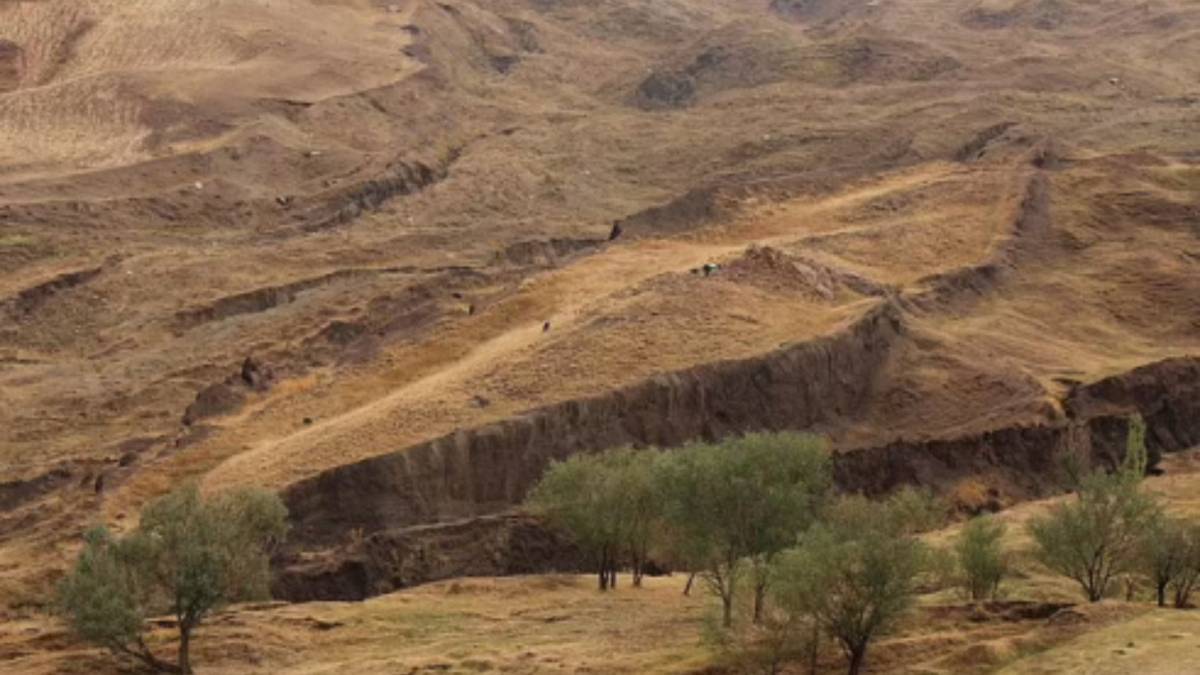
The place where it is believed Noah's Ark may have run aground, on Mount Ararat, Turkey
Despite the excitement surrounding the discovery, some more skeptical archaeologists suggest that the formations could simply be natural structures shaped by thousands of years of geological activity. However, the team behind this research defends the importance of continuing to explore to determine the nature of the finding with certainty.
Which scientists are behind the finding?
The discovery, which has attracted the attention of the scientific and religious community globally, was led by researchers from three prestigious universities: Istanbul Technical University, Andrew University, and Ibrahim Çeçen University. This multidisciplinary team analyzed the geological formations of the mountainous region of Turkey known as Mount Ararat, a place that has been linked for centuries to the account of Noah's Ark.
The vice-rector of Ibrahim Çeçen University, Faruk Kaya, explained that the findings made by the group of scientists coincide with biblical descriptions and, most interestingly, with the historical period in which the famous flood would have occurred. According to Kaya, the collaboration of these universities opens a door to possible scientific interpretations of a narrative that until now had remained in the realm of faith and oral tradition.
How was the research conducted?
To make this finding, the archaeologists employed advanced technology and techniques for analyzing geological samples. Clay materials, marine substances, and fossilized shellfish found at the site provided crucial clues to determine that this area may have been submerged during a massive flooding event, something that aligns with the account of the universal flood.
According to experts, the elements found date back to a period between 5,500 and 3,000 B.C., dates that coincide with the estimated timeframe of the flood narrated in the Bible. This time interval also corresponds to what some archaeological studies have identified as periods of significant climate changes and natural disasters in the region.
Additionally, through satellite images and 3D studies of the rock formations in the area, researchers were able to identify patterns suggesting the presence of structures that are not completely natural. This reinforces the possibility that the remains of the Ark could be hidden in these formations.
Science and religion: an eternal debate
The discovery of the possible Noah's Ark not only has scientific implications but also cultural and spiritual ones. On one hand, skeptics argue that the findings can be explained from a strictly geological perspective. On the other hand, those who support the authenticity of the Ark see this as tangible support for the biblical account.
This type of research also highlights how science and faith can interact fruitfully. For archaeologists, sacred texts can serve as a cultural map guiding the search for physical evidence, while for believers, scientific findings can reinforce their faith.
What’s next for this finding?
Archaeologists plan to conduct new excavations and more detailed studies to confirm their hypotheses. This includes carbon-14 analysis, geological mapping, and comparisons with historical and religious texts. Additionally, the international team plans to share their results at scientific conferences and specialized journals.
Although much remains to be done to obtain a definitive answer, this discovery is already marking a milestone in the study of biblical accounts and their possible connection to historical events.