Not even in Europe is it so cheap: the system that will activate the gasoline discounts in the early morning.
The gasoline price cuts at dawn will arrive on June 23 with an intelligent self-service system at 1,600 stations of the Argentine oil company YPF.
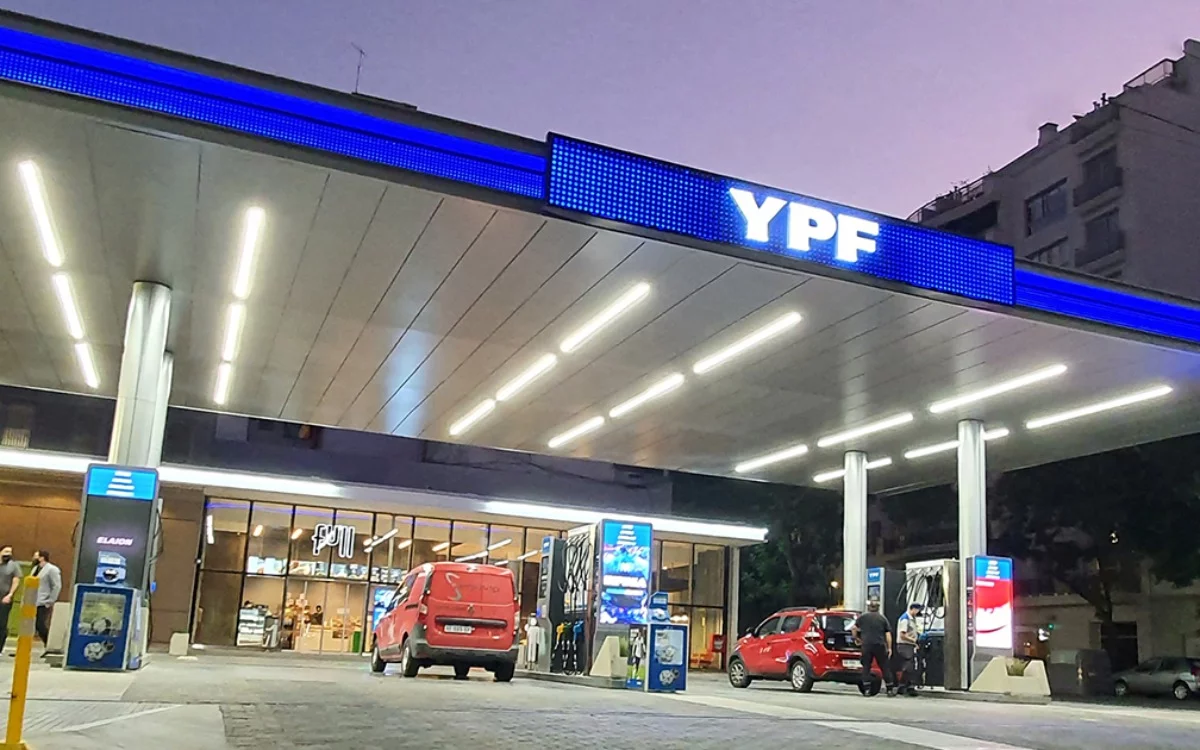
Gasoline discounts at dawn: YPF's artificial intelligence plan that changes the rules of the game
The gasoline discounts at dawn already have a date: they will come into effect on June 23, marking a turning point in the fuel marketing system in Argentina. YPF, the majority state-owned oil company, announced that it will implement a scheme of segmented prices by time of day, supported by artificial intelligence (AI) and self-service technology.
The objective is twofold: reduce fixed costs during low demand hours and, at the same time, benefit the user with more affordable rates during the night. This is a strategy already applied in service stations in Europe and now arrives in the country with an initial projection in 1,600 service stations distributed throughout the national territory.
“The system will allow us to optimize nighttime operations and offer the customer a real improvement in fuel prices,” explained Horacio Marín, president of YPF, during his participation in the Energy Chubut 2050 event.
How YPF's new system will work
The plan includes the implementation of night self-service, a modality through which drivers will be able to refuel without the intervention of an operator. This translates to lower operational costs for the company and direct discounts at the pump during the early morning.
According to the announcement, the system will be regulated by artificial intelligence algorithms that will allow prices to be adjusted in real-time based on the time, demand, and user loading behavior. The central technological platform will be the Real Time Intelligence Center (RTIC), a unique control center in the region that will enable micropricing decisions in seconds.
“At 3 in the morning, no one refuels. We lose money. So we lower costs with self-service and reward the user who takes advantage of those hours,” Marín explained.
What time is best to fill the tank?
Although YPF has not yet reported the exact percentage discounts by time of day, company spokespeople indicated that savings could range between 5% and 10% compared to the standard daytime price. The discount would apply approximately between 12:00 AM and 6:00 AM, depending on each station and its usual flow.
This modality will not only benefit those who travel at night or work atypical hours, but it will also alleviate daytime demand, allowing for better flow at stations during the day and avoiding unnecessary queues or waits.
“Fuel already has a high price. If you can save 10% refueling at 2 in the morning, it's a considerable difference,” said an analyst in the energy sector.
What is the RTIC and why is it key in this change?
The new Real Time Intelligence Center will be the heart of this strategy. It is an analysis center that will control YPF's entire marketing in real-time, from pump prices to Full stores, including supply logistics.
This center already operates in areas such as Vaca Muerta and the La Plata Refinery, and will now extend to the network of stations. The idea is to make automated decisions second by second, based on variables such as car influx, fuel stock, weather, consumption habits, and competitor prices.
“We are going to do what is done in Europe,” Marín reiterated. “This is real efficiency applied to the business and the consumer.”
What changes for the user with these price reductions?
With this new system, those who approach a YPF station during the early morning will see lower prices at the pump, as long as they use the self-service system. To refuel, the user must identify themselves, select the type of fuel, pay digitally or with a card, and operate the nozzle on their own.
The procedure will be similar to that of a fast checkout at a supermarket. It is also expected that the stations will be monitored remotely to assist the user with any questions or technical issues.
Initially, not all stations will be enabled for this system immediately, but the oil company's goal is to cover 100% of its national network by the end of the year.
Less staff at night, more efficiency
One of the central points of this transformation is the reduction of staff during nighttime hours, something that generates resistance in union sectors. However, the company assures that there will be no layoffs, but rather a reassignment of shifts and functions, focusing on daytime service and logistical tasks.
“Today, keeping a station open all night with three employees, without sufficient sales, generates losses. This is a fairer model for everyone,” said YPF representatives.
Additionally, it is expected that the system will deter nighttime crimes or thefts, as self-service reduces cash handling and exposed human presence.
A model that could extend to other oil companies
If the system is successful, it is expected that other companies in the sector such as Shell, Axion, and Puma will evaluate similar alternatives. The current context, with rising operational costs and tight margins, drives oil companies to explore new ways of profitability without raising prices.
“It's a smart move. If demand is low, it's better for the customer who wants to save to take advantage. And if the company saves too, everyone wins,” said an entrepreneur in the energy sector.