Neither visa nor passport: the silent change that has already begun in airports and could transform the way of traveling in the United States.
Traveling with a cell phone: the tool that is gaining ground in airports in the United States
Although for decades physical documents were essential to pass through security checks, a new technological tool began to change that scenario.
This is digital identification, a system that allows official documents to be stored directly on a smartphone and used to verify identity at airports.
U.S. authorities have already begun to implement this modality at various points across the country. The goal is clear: simplify security checks and speed up the passenger verification process.

The Transportation Security Administration (TSA) confirmed that more and more airports are incorporating technology compatible with these digital identifications. The system allows travelers to present their identity directly from their phone, without the need to show physical documents like licenses or cards.
Although the transformation will be gradual, specialists believe that this change could redefine the experience of traveling within the country.
What is the digital identification that is starting to be used at airports
The so-called digital ID is an electronic version of official documents that is stored on a mobile phone. This information is stored in secure applications or in digital wallets integrated into the device's operating system.
Among the documents that can already be stored in digital format are:
- Digital driver's licenses
- State identifications
- Documents compatible with federal security standards
These documents function as an electronic credential that can be shown at airport security checkpoints.
The big difference with the traditional model is that the traveler does not need to physically hand over their document. Instead, the system uses digital verification technologies that allow identity confirmation in a matter of seconds.
The process aims to maintain the same levels of security, but with a faster flow of passengers.
How the new system works in security checks
In airports that have already implemented this technology, the procedure is simple.
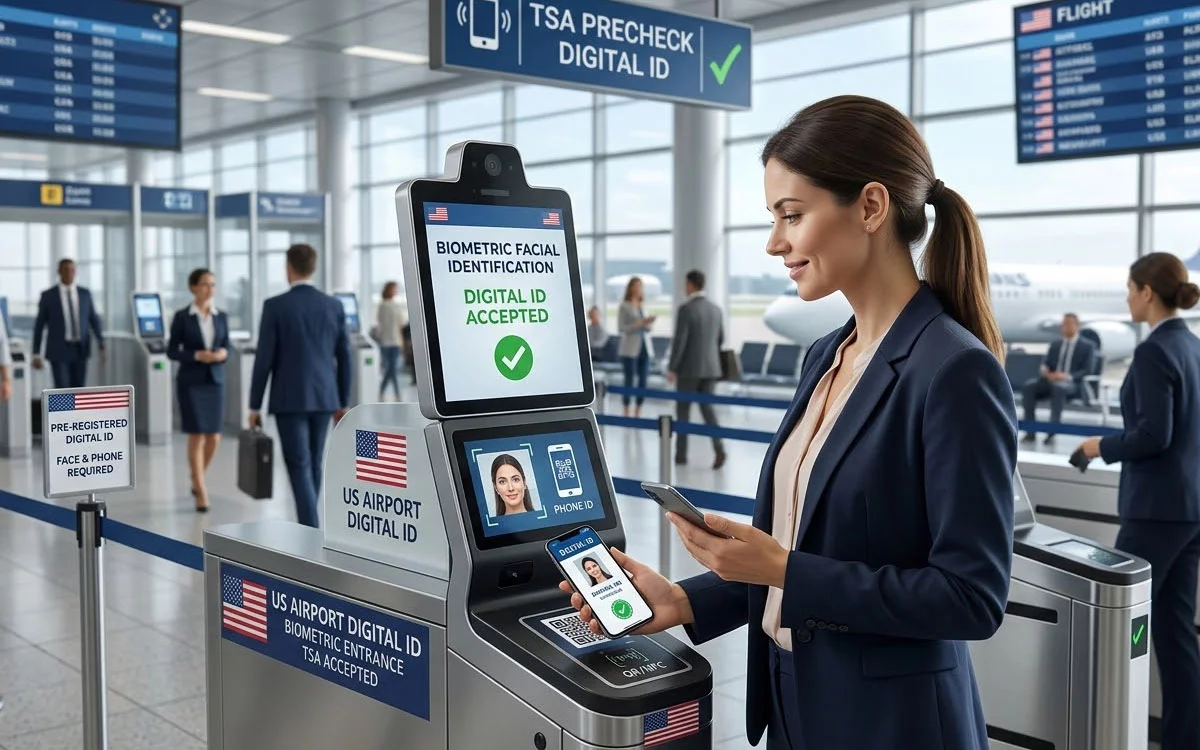
The passenger presents their smartphone at the security checkpoint and shows the digital identification stored in the corresponding application. Then an electronic verification is performed.
The process usually includes three main steps:
- Show the digital identification from the phone
- Scan the code or bring the device close to a reader
- Verify identity using biometric data or facial recognition
This technology allows for confirming the passenger's identity without handling physical documents.
Additionally, the system reduces the review time at security checks. During peak times, such as holidays or tourist seasons, this improvement could be key to avoiding long lines.
Airport authorities highlighted that the system does not completely replace traditional documents for now, but it does represent a new step towards the digitization of the travel process.
Why mobile technology is changing the way we travel
The advancement of smartphones has transformed multiple aspects of daily life. Travel is no exception.
In recent years, mobile devices have begun to concentrate more and more functions related to transportation and mobility.
Today, it is common to use the phone for:
- Showing boarding passes
- Buying tickets
- Checking in with airlines
- Accessing hotel reservations
- Managing payments during the trip
Digital identification is a natural evolution of that process.
By integrating official documents into the phone, security systems can verify identity quickly and securely.
This model also reduces the need to carry multiple physical documents, something that has been a frequent concern for travelers for years.
The role of the TSA in implementing this technology
The Transportation Security Administration began evaluating the use of digital identifications as part of its strategy to modernize airport controls.
The agency explained that the system was designed to maintain strict security standards, while also taking advantage of the benefits of mobile technology.
One of the central points of the model is the protection of personal information. Digital verifications use encrypted systems and security protocols that limit access to user data.
Additionally, biometric verification allows for confirming that the person presenting the device is indeed the holder of the document.
This approach aims to reduce the risk of fraud and increase the reliability of the process.
Authorities indicated that the system will continue to expand gradually as more airports adapt their technological infrastructure.
What benefits could it bring for travelers
The introduction of digital identifications promises several benefits for passengers traveling within the United States.
One of the most important is the reduction of time at security checks. By automating identity verification, procedures can be carried out more quickly.
A more comfortable travel experience is also expected.
Many travelers already use their phones for most flight-related tasks. Incorporating identification into the same device further simplifies the process.
Among the most notable advantages are:
- Fewer physical documents to carry
- Faster verification processes
- Greater integration with travel applications
- Reduction of physical contact at checks
This last point gained relevance after the pandemic, when many systems began to prioritize contactless procedures.
What devices and applications allow storing these identifications
The latest smartphones incorporate digital wallet systems that allow for storing official documents.
These platforms function similarly to applications used to store credit cards or boarding passes.
Digital documents are stored in a secure section of the device and can only be accessed through user authentication, such as:
- Fingerprint
- Facial recognition
- Security code
When the passenger arrives at the airport, they simply open the corresponding application and present the digital identification for verification.
The expansion of this system will also depend on collaboration between state governments, phone manufacturers, and federal authorities.
Why some experts believe this change is just beginning
Technology and transportation specialists agree that digital identification represents only a first stage in the transformation of the travel system.
In the future, airports could integrate multiple processes into connected digital platforms.
This would allow the passenger to use their phone for virtually all stages of the journey:
- Check-in at the airport
- Security check
- Access to the boarding gate
- Identification during the flight
Some analysts even suggest that future airports could use fully automated systems, where identity is verified through biometric data and digital credentials.
If that scenario materializes, physical documents could become a secondary tool.
The transition will be gradual in the coming years
Despite the enthusiasm this technology generates, experts warn that the change will not happen overnight.
Many airports are still adapting their infrastructure to incorporate digital readers and biometric verification systems.
Additionally, states must issue digital versions of licenses and identifications so they can be used in these systems.
For that reason, for several years physical documents and digital identifications will coexist.
The goal of the authorities is to offer both options so that travelers can choose the one that is most convenient for them.
However, all indications are that digitization will continue to advance.
The trend is already clear: smartphones are starting to become the main key to travel.