Humanoid robots: The Argentine startup Humandroid trains them with AI, and the global industry is starting to look at this technological development with surprise.
The Argentine startup bets on humanoid robots trained with artificial intelligence and promises to change the way factories and companies work.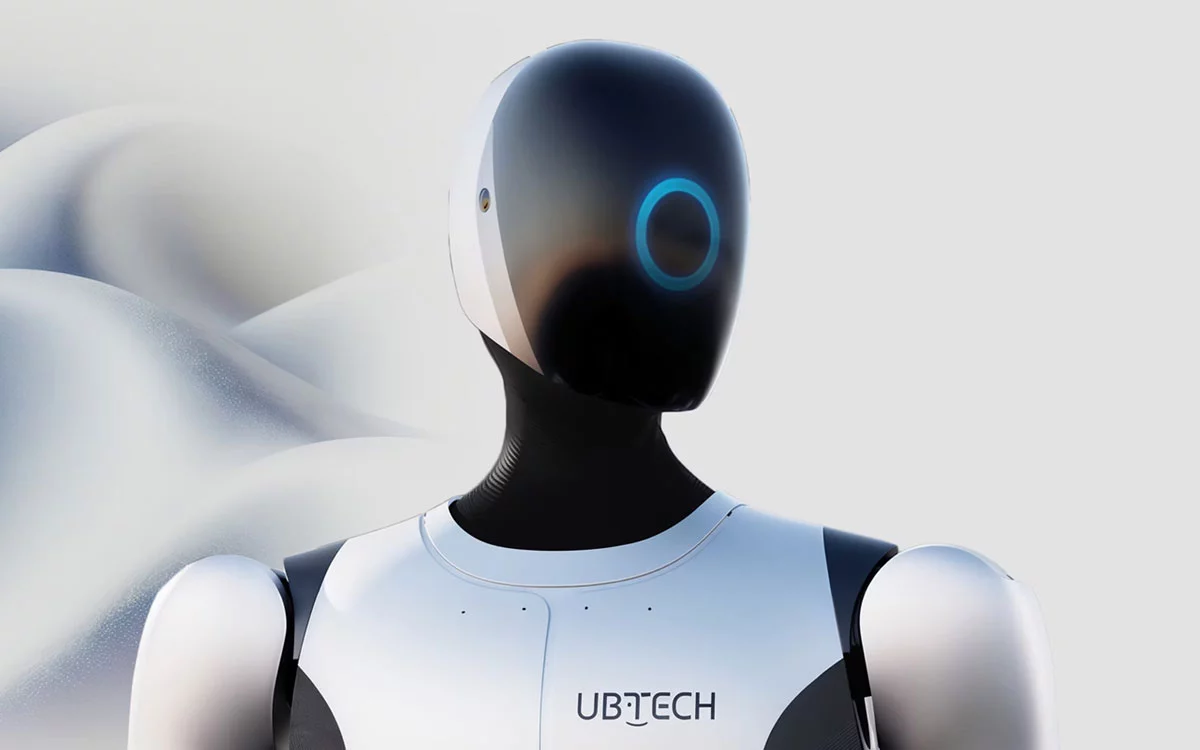
Humanoid robots trained with artificial intelligence are beginning to gain prominence in the global technological ecosystem. While many imagine these advances concentrated in Silicon Valley or in the large laboratories of Asia, an initiative born in Argentina has started to demonstrate that innovation in robotics can also emerge from Latin America.
This is Humandroid, a startup founded in the province of Córdoba that works on the training and configuration of humanoid robots capable of executing complex industrial tasks. Its proposal combines digital simulation, artificial intelligence, and advanced technological development platforms to prepare robots that will then operate in real environments.
The company's goal is clear: to create tools that collaborate with human workers, especially in tasks that involve physical risks or high operational demands. Instead of replacing employees, the project aims for machines to take on the heavier or repetitive tasks, allowing people to focus on higher-value activities.
The initiative began with an initial investment of $30,000. However, the growth plan is ambitious: the company projects to reach a turnover close to $10 million by the year 2027.
The technology that allows training robots before they exist
The operation of the humanoid robots developed by Humandroid is based on a technological concept that is gaining more relevance in the industry: digital twins.
Through the Nvidia Omniverse platform, the company recreates in virtual environments the same conditions in which the robots will later operate. This means that before a machine arrives at a factory, it has already "learned" to work in that place through advanced simulations.
In these digital spaces, the actual tasks that the robots will need to execute are replicated. From moving heavy loads to assembling industrial parts, each action is trained in a virtual environment that accurately reproduces the physical space where the work will take place.
The robots used by the startup are not manufactured in Argentina. They come from manufacturers in different countries, including China, the United States, and Germany. However, the real innovation lies in the training they receive before arriving at industrial plants.
The simulations allow each robot to learn through virtual experiences repeated thousands of times. That learning is then transferred to the physical device, which arrives in the work environment with the tasks practically mastered.
This approach reduces implementation times and avoids errors during the initial stages of work.
The origin of the startup and the experience that changed everything
Humandroid was founded by three engineers: Alejandro Parise, Santiago Braña, and José Montalvo. The three shared a vision about the potential of advanced robotics and decided to turn that idea into a business project.
The definitive push came after an experience that profoundly marked Parise. During a technological demonstration, he witnessed how a humanoid robot performed a specific task and was then able to explain the process it had followed to complete it.
That scene revealed something to him that, as he recalls, changed his way of seeing the future of technology.
"From that moment on, I knew that robotics had crossed a point of no return. If robots can already reason, we must guide them to work for the benefit of humanity," he stated.
That reflection became the starting point for the creation of the company. The three partners decided to bet on the development of solutions that connected artificial intelligence with robotics applied to real work.
Thus, Humandroid was born.
Robots that help workers in demanding tasks
One of the central principles of the project is that humanoid robots function as assistants to workers and not as substitutes.
Industrial tasks often include physically demanding or repetitive activities. Lifting heavy loads, manipulating metal parts, or assembling components during long shifts can lead to physical wear and even accidents.
The startup's proposal is for the robots to take care of those tasks while human workers supervise the processes, manage the operation, or perform activities that require technical judgment and creativity.
According to the company, this approach can improve workplace safety and increase productivity at the same time.
The automotive industry appears as one of the sectors with the greatest potential for this type of technology. Vehicle production lines require precise and repetitive operations that robots can execute with great efficiency.
For that reason, Humandroid has focused a significant part of its commercial strategy on that sector.
The company will participate in Automechanika Buenos Aires 2026, one of the main fairs in the automotive industry in the region. There, it will seek to connect with companies interested in incorporating humanoid robots into their production processes.
The challenge of reducing training time
Currently, training a robot to perform specific tasks can take about a month.
This process includes simulations, tests, and adjustments that ensure the machine can work correctly when it arrives in the real environment.
However, Humandroid's engineers are developing new software that could transform this process.
The goal is ambitious: to reduce the training time to just 24 hours.
To achieve this, the company is working in a data analysis laboratory where technicians and programmers analyze the performance of the robots and optimize their learning systems.
The use of artificial intelligence allows machines to process large volumes of information and learn behavior patterns in less time.
If this goal is achieved, the adoption of humanoid robots could accelerate significantly across multiple industrial sectors.
Companies already using trained robots in Argentina
Although it is a relatively young startup, Humandroid has already begun working with large-scale industrial clients.
Among them are companies like TGN and Aluar, which have incorporated robots trained by the company for different tasks.
These projects allow validating the technology in real productive environments and generating experience for the development of new models.
Internationally, humanoid robots are already used in various sectors. In addition to industry, some units work in services, teleoperations, and even in healthcare environments.
This suggests that the potential of this technology could expand far beyond factories.
The current cost of humanoid robots
One of the factors that still limits the mass adoption of humanoid robots is their price.
Currently, the value of these machines hovers around $100,000 per unit. This figure can be high for many companies, especially for those just beginning to explore advanced automation.
However, technological evolution tends to reduce costs over time.
Parise anticipated that the development of new technologies will allow for a decrease in the price of robots and expand their reach in different productive sectors.
If this happens, humanoid robots could become common tools within factories, logistics centers, and service companies.
A global market in full growth
The growth of industrial robotics is already a reality worldwide.
Data from the International Federation of Robotics indicates that by 2025 there were nearly five million industrial robots operating around the planet.
But the humanoid robot segment is still in an early stage. However, forecasts point to significant expansion in the coming years.
A report from the consulting firm Zipdo projected in 2026 that the global market for humanoid robots will exceed $5 billion by 2030.
This scenario opens opportunities for companies that develop technology, software, or services related to advanced robotics.
Humandroid aims to position itself within that ecosystem.
Humandroid's expansion plans
The company's growth plan includes several strategic steps.
The first is to consolidate its presence in Argentina by training robots for different industries.
Then, the company will seek to expand to other countries in Latin America, where industrial automation still has a wide margin for development.
In a later stage, the company projects to enter more mature markets like Europe and the United States.
To sustain this growth, Humandroid plans to create a network of robot training centers. These spaces will allow simulating industrial environments and preparing the machines before they arrive at their workplaces.
The company also plans to expand its team, which currently consists of seven people.
Goals for the coming years
Within its roadmap, the startup has set concrete objectives.
One of them is to train at least 80 robots during 2026. This number would represent a significant leap in the company's operational scale.
Another goal is to achieve a turnover of $10 million by the end of 2027.
If it manages to meet these goals, Humandroid could become one of the most promising technology companies in the robotics ecosystem in Latin America.
For its founders, the challenge is not only business-related.
It is also about demonstrating that Argentina can occupy a relevant place in the development of advanced technology.
"We want to establish the country as a reference in robotic innovation," explained Parise.
The engineer believes that by 2030 the sector will reach a level of maturity sufficient to operate on an industrial scale.
In that scenario, companies that are currently taking their first steps could become important players in the global market.