The future of cardiac regeneration: how science is transforming the treatment of damaged hearts
New solutions for heart failure: organ regeneration.

The regeneration of the human heart is in the sights of science, which is currently working on revolutionary techniques to restore damaged organs. Inspired by the regenerative capabilities of certain animals, such as salamanders and zebrafish, scientists are exploring how to adapt these processes for human medicine. Regenerative medicine promises an unprecedented solution: not only to alleviate the symptoms of chronic diseases but also to repair essential organs like the heart. This approach could radically improve the quality of life for millions of people affected by heart problems.
What would happen if, after a heart attack, the heart muscle could regenerate instead of deteriorating? This is the vision that researchers are pursuing today, developing methods for the heart to recover naturally. This approach raises the possibility that the heart muscle, which currently has no regenerative capacity, could pump blood again as a healthy heart would. Regenerative medicine is shaping up to be one of the most promising branches of medical science, in which research is being conducted on how to restore vital organs, from the heart to the lungs.
Nature-inspired techniques to regenerate the heart
Animals like salamanders and zebrafish possess the remarkable ability to regenerate organs and limbs, something that humans cannot do. Although humans have some ability to regenerate tissues like skin or liver, the heart muscle does not share this characteristic. Scientists are seeking to overcome this limitation, exploring how to emulate the regenerative mechanisms of these animals in the human body.
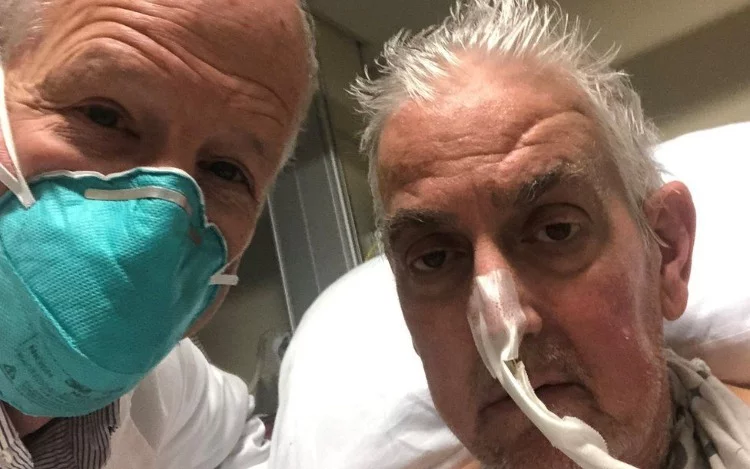
Peter Schultz, president of Scripps Research, explained in an interview with the Wall Street Journal: "We want to find ways to reverse damage and restore normal function to organs." Schultz has an ambitious vision for the future of this technology. If these treatments fulfill their potential, they could even reverse the effects of aging, restoring the function of an aging heart to that of a young one.
Heart failure: a global health urgency
Heart failure, which affects 3% of the global population, is the leading cause of hospitalization in countries like the United States. This condition arises when the heart loses its ability to pump blood effectively, which can result in progressive and fatal deterioration. According to Schultz, the need for regenerative solutions for the heart is urgent, as conventional therapies so far are limited to alleviating symptoms without addressing the root damage.
Chuck Murry, an expert in regenerative medicine, explains that the structure of the human body is not designed for regeneration but for performance. This characteristic means that the heart muscle, when it suffers a heart attack and millions of its cells die, does not recover naturally, generating scars that compromise pumping function. Murry and other researchers are attempting to reprogram the body to respond in a regenerative way, rather than simply compensating for the damage.
Stem cells: a path to the rebirth of cardiac tissue
One of the most promising approaches in regenerative medicine is the use of stem cells. These cells, when transplanted into the heart, have the potential to become muscle cells, integrating into the existing cardiac tissue and restoring pumping capacity. Chuck Murry has led research with stem cells at the University of Southern California and, in trials with monkeys, has managed to have hearts treated with these cells fully regain their pumping function. However, the process has challenges, such as controlling the arrhythmias caused by these new cells, which beat at their own rhythms.
To solve this problem, Murry's team combined antiarrhythmic medications with gene editing techniques, achieving that the young cells maintain a rhythm coordinated with the heart. This advance opens the door to a cardiac therapy that could change the treatment landscape for heart diseases, with clinical trials scheduled to begin in humans in 2026.
MicroRNA therapy: regulating gene expression to heal the heart
Another revolutionary technique in development is microRNA therapy. These small RNA fragments regulate the expression of specific genes, and scientists are using them to stimulate the regeneration of cardiac cells that survive damage. Mauro Giacca, a researcher at King’s College in London, has developed a microRNA-based therapy that, in trials with pigs, has shown to significantly improve pumping function and reduce scarring in the heart.
To ensure that the microRNAs effectively target the heart, Giacca uses lipid nanoparticles similar to those in messenger RNA vaccines, allowing for more precise and safe delivery. This strategy marks an important advance in cardiac regeneration by reducing the amount of scar tissue that compromises cardiac function.
Hydrogel drugs: creating a conducive environment for regeneration
At the Scripps Research Institute, researchers have developed an injectable drug in the form of a hydrogel that offers an alternative to stimulate cellular regeneration. This gel is injected into the pericardial sac, the membrane surrounding the heart, where it envelops the damaged tissue for a week. This duration allows surviving muscle cells to multiply in a controlled and safe environment, preventing disproportionate growth of the heart.
Animal tests have shown encouraging results, and human trials are also expected to begin in 2026. This treatment could offer a less invasive and effective alternative for those suffering from heart failure, providing them with a regenerative option instead of relying on palliative therapies.
Growing complete hearts: a vision of comprehensive replacement
Doris Taylor, a pioneer in regenerative medicine and CEO of Organamet Bio, is working on an even more ambitious technique: growing complete hearts in the laboratory. By using the patient's stem cells, Taylor and her team are developing personalized hearts that can adapt to each individual's body. This process involves using a pig's heart as a scaffold to seed human cells, taking advantage of the anatomical similarity between the two species.
Currently, the hearts created by Taylor's team are undergoing durability testing, and her team plans to initiate clinical trials in humans within the next five years. This innovative technique could provide a radical solution for those with advanced heart failure, who in the future could receive a heart specifically created for them.
Regenerative medicine: a future full of hope for the heart
Regenerative medicine applied to the heart is transforming the way heart disease treatment is understood. From the use of stem cells and microRNA to hydrogel drugs and the creation of complete hearts in the laboratory, science is tirelessly working to offer revolutionary solutions. Each of these techniques addresses heart failure from a regenerative perspective, focusing on restoring the heart's original function rather than just alleviating its symptoms.
Progress in this field promises a future in which heart diseases, previously untreatable, can be reversed. The possibility of the human heart regaining its regenerative capacity represents a paradigm shift, where patients could experience a real improvement in their quality of life and longevity. With regenerative medicine advancing by leaps and bounds, the dream of repairing damaged hearts no longer seems like a chimera, but an increasingly close reality.