Deciphering a MESSAGE from MARS: the discovery of a mysterious extraterrestrial signal by a father and daughter, which could change everything
First Contact: the message that arrived from Mars contains an image of the fundamental building blocks of life.
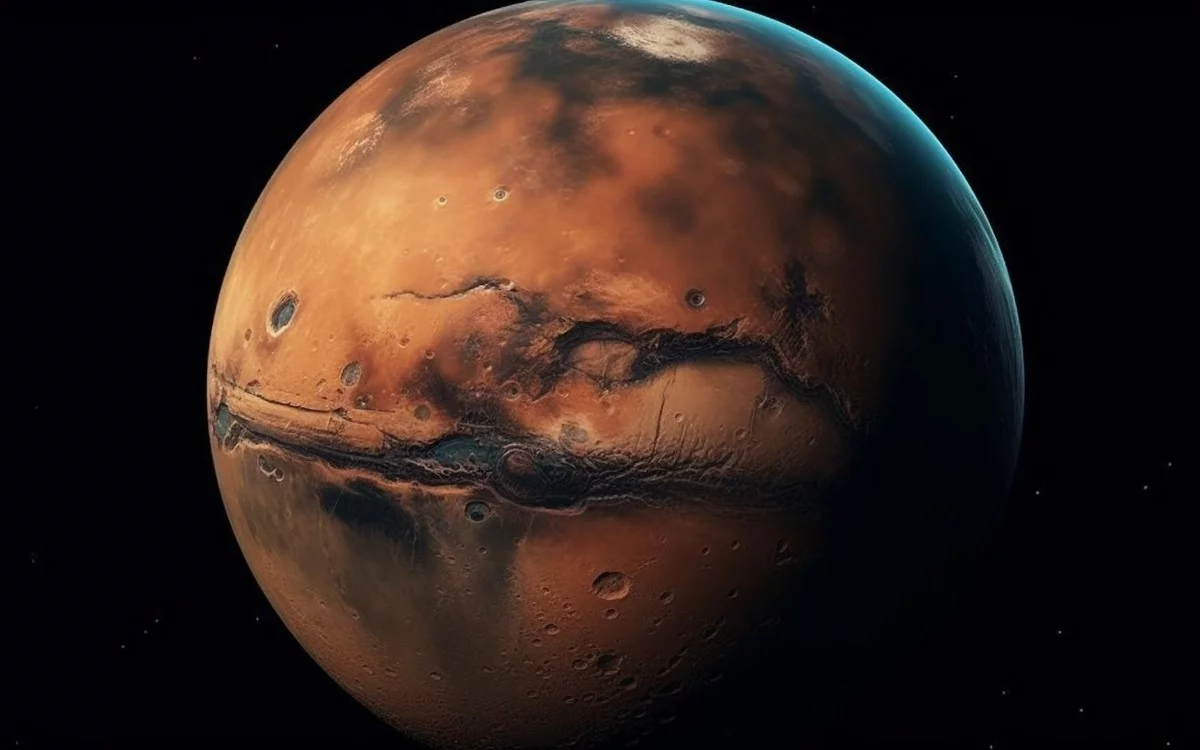
A message that arrived from space over a year ago has finally been deciphered thanks to a surprising team of scientists: Ken and Keli Chaffin, father and daughter, who achieved what seemed impossible. This breakthrough, framed within the "A Sign in Space" project of the European Space Agency (ESA), represents an achievement that could set precedents for science and the understanding of possible extraterrestrial communications. The signal, emitted by the ExoMars Trace Gas Orbiter in May 2023, has kept researchers, amateur scientists, and experts around the world in suspense until now.
A mission for all humanity
The goal of the ESA's "A Sign in Space" project was not only to receive a space signal but also to test humanity's ability to decode messages that might come from space in the future. This artificial signal was transmitted from Mars and captured at three ground observatories, making it publicly available for anyone to attempt to decipher it. The scientific and enthusiast community quickly joined this intriguing challenge, and although the initial process of extracting the signal took just ten days, the real challenge lay in interpreting its meaning.
It was then that Ken and Keli Chaffin, from the United States, delved into the task of understanding what others could not. The feat came on June 7, 2024, when the Chaffins managed to contact Daniela de Paulis, the artistic director of the project, to reveal the meaning behind the received data. The discovery by father and daughter not only captured the attention of the scientific community but also highlighted the importance of citizen collaboration in such large-scale initiatives.
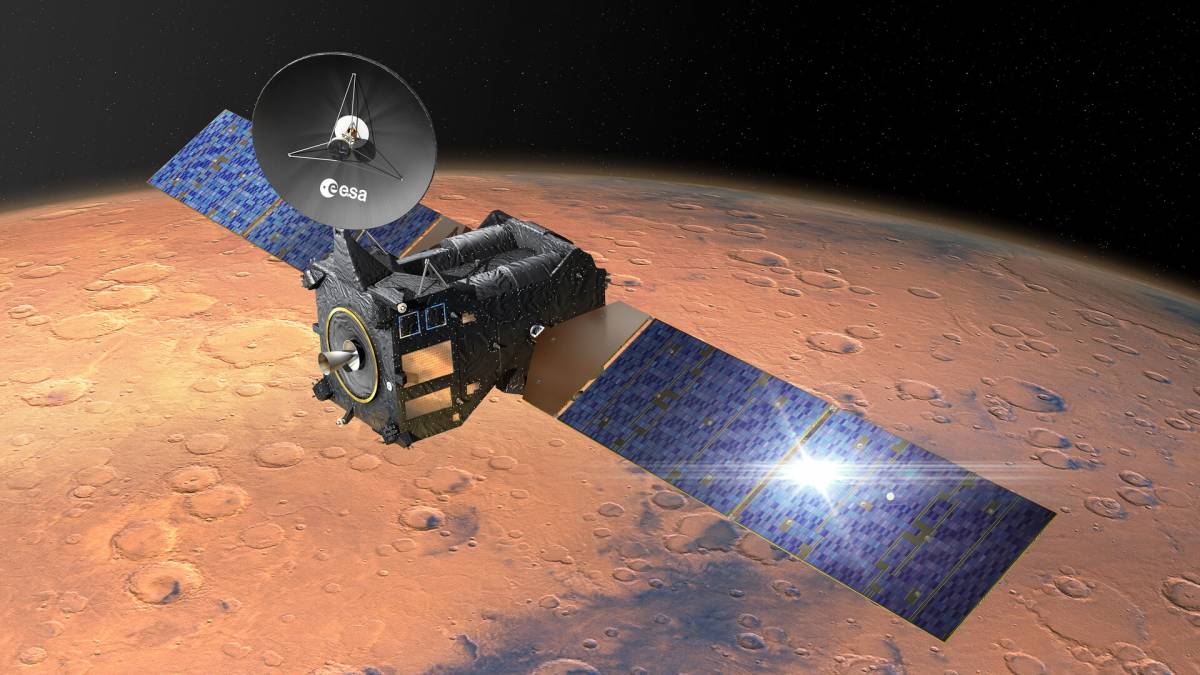
The ExoMars Trace Gas Orbiter satellite from ESA
A signal that unites art and science
This message, as revealed, was designed by an interdisciplinary team, combining contributions from astrobiologists, astronomers, poets, a computational scientist, and a lawyer specializing in space law. These minds worked together to create a simulation of what a message of extraterrestrial origin might be, intending to assess whether humanity has the necessary skills to interpret it. The SETI Institute and the Green Bank Observatory in West Virginia also participated in this process, supporting the initiative by offering their expertise and advanced technologies.
Finally, the Chaffins managed to decode the message as a representative image of the structure of five amino acids, the fundamental building blocks of proteins. This finding is remarkable, as amino acids are considered key elements in the formation of life as we know it, and their structure could open doors for future studies on the possible basic components that could originate from other worlds.

Representative image of the structure of five amino acids, the fundamental building blocks of proteins
The signal itself was created by a group of "simulated extraterrestrials" that included a physicist, a radio engineer, and several astronomers and astrobiologists, all with a single goal: to design a message complex enough to evaluate human deciphering capabilities. Thus, the message became an enigma that challenged not only the intellect of scientists but also the creativity and perseverance of thousands of people around the world who attempted to solve it.
The importance of citizen participation
One of the most relevant aspects of this experiment was the citizen collaboration. The collected data was open to anyone interested in attempting to decipher the message, allowing for the creation of a vibrant community of science and astronomy enthusiasts. This community, which remains active on platforms like Discord, continues to explore possible meanings and discuss the importance of what has been discovered. This type of participation demonstrates that modern science, especially in fields like astrobiology and the search for extraterrestrial life, can benefit from the contributions of citizens from various disciplines and levels of experience.
Projects like "A Sign in Space" highlight the role of citizenship in scientific discovery. Ordinary people become key pieces in the analysis and development of innovative ideas, contributing unique perspectives that enrich collective knowledge. Citizen astronomy, as in the case of the Chaffins, increasingly shows itself as a field where people from anywhere in the world can make significant contributions to questions that have been raised for centuries.
What this discovery means for the future
For many experts, this type of exercise goes beyond simple decoding. Science speculates that the ability to interpret messages of unknown origin will be crucial in the future, especially if humanity ever receives a genuine message from an extraterrestrial civilization. How would we react? Would we have the necessary skill and sensitivity to interpret it correctly? These are fundamental questions, and this exercise has shown a promising response by testing collective ingenuity and creativity.
The Chaffin discovery also opens the door to new ways of thinking about communication with extraterrestrial civilizations. Although we still do not have conclusive evidence of life beyond Earth, the possibility of an interstellar message suggests the need to keep an open mind. In many ways, the experience of deciphering a simulated artificial message from Mars is practice for something much larger. Cooperation, the exchange of ideas, and the willingness to face the unknown will be essential if, at some point, we receive a message that challenges us to rethink our place in the universe.
A revelation that comes from anywhere
The success of Ken and Keli Chaffin in the field of citizen astronomy reveals that great ideas and the most important revelations do not always come from established laboratories or research centers. In this case, a father and his daughter, united by a common passion, managed to solve a mystery that had left experts around the world perplexed. This demonstrates that knowledge and curiosity are accessible to anyone willing to explore them, and that scientific discoveries can arise from the most unexpected places and people.
This type of experiment also highlights the importance of creativity in science. Many times, unconventional approaches, even those that include art and poetry, turn out to be the most effective for solving seemingly indecipherable problems. The Mars signal, designed by an interdisciplinary team, reminds us that science is not always a series of formulas and cold data; it is also a constant search for meaning, beauty, and connection.