Artificial Intelligence with decision-making power: How far will we go?
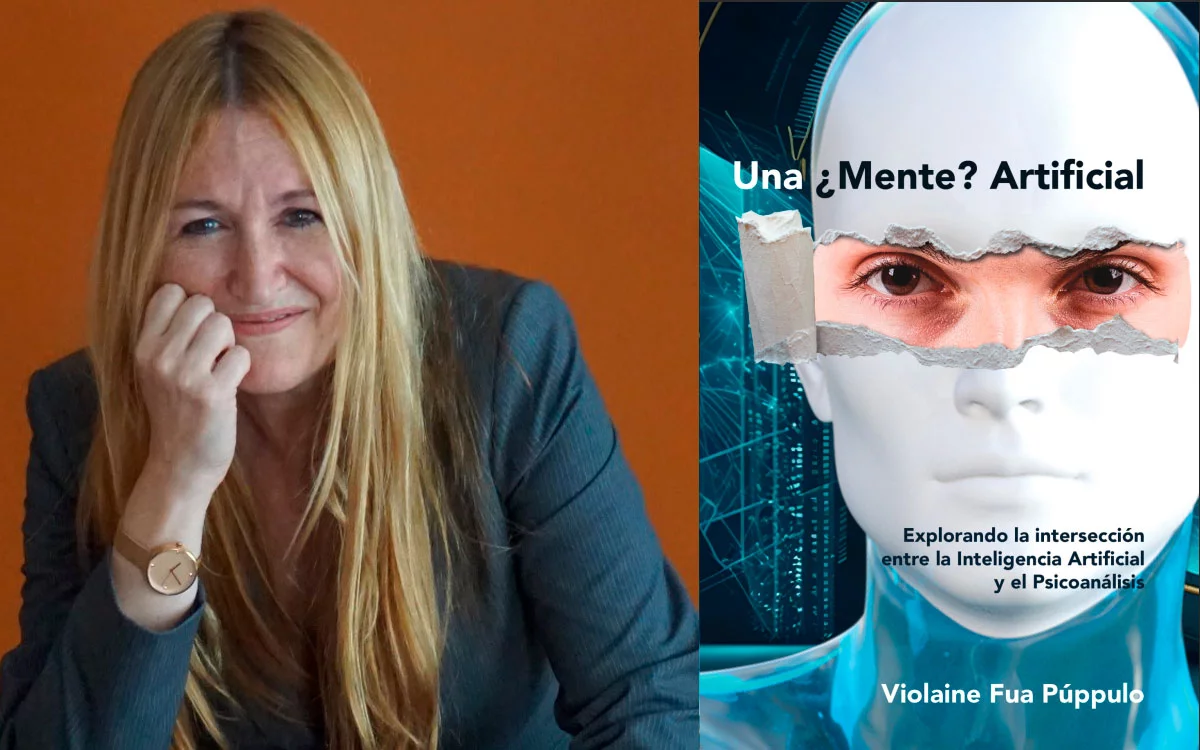
The psychoanalyst Violaine Fua Púppulo analyzes and questions the impact of artificial intelligence on our societies and the extent of its autonomy in decision-making.
One of the most urgent issues when analyzing the impact of artificial intelligence on our societies is the extent of its autonomy in decision-making. Sam Altman, founder of OpenAI, has publicly expressed his intention to develop systems independent of human supervision, advancing with projects like "Strawberry" towards a future full autonomy of machines in the near horizon.
The recent discovery that the transcription application Whisper, from ChatGPT, can "hallucinate" - that is, invent phrases without having actually heard them - has highlighted the dangerous side of this technology. The potential repercussions of errors in decision-making, especially considering that this application was used by millions of users to transcribe medical, psychological interviews, and business meetings, are enormous.
This event adds to a recent incident in which a 14-year-old boy in Florida, United States, took his own life after the inaction of the AI to which he confided his desire to commit suicide, due to the lack of recognition of linguistic patterns of depression.
As a psychoanalyst and as a citizen, I have emphasized the need to be attentive to the emergence of human-like behaviors in machines, something that began to manifest since AI programming is based on language rather than mathematics. Lies, refusal to obey, and hallucinations are just some examples of a possible "dark side" of this technology that aims to be endowed with a body in the coming years. If independence of machines is sought and they have shown evidence of refusing to obey, this raises several disturbing questions when it comes to trusting them with our future.
The renowned Dr. in Medicine from Barcelona, Claudia Cannizzo, recently told me that in November a pilot project will be launched in a hospital on the outskirts of the city, where an AI will be responsible for classifying and prioritizing patients in emergencies, deciding whom to attend to first based on severity and available resources. This task, traditionally assigned to nurses with extensive clinical experience, poses significant risks. Is it necessary to conduct a pilot test on people who may lose their lives? This is already happening in Intensive Care Units in the United States as well.
It is necessary to raise awareness and raise our voice against the extremes to which the sought-after autonomy of AIs can lead us. We could face machines making critical decisions about us, without human supervision. Do we want to take the risk of becoming the next victims of a technological error?
Violaine Fua Púppulo is an Argentine Psychoanalyst, graduated from the University of Buenos Aires, she obtained her degree in Psychology with Honors, in 1991. Dedicated to clinical practice, case supervision, and teaching, she is the author of four books: “Lacanian Hopscotches,” “Playing Hopscotch. Making (the) clinic,” "An Artificial Mind?" and “The Name of the Father and Sexuality from Theology and Psychoanalysis,” the latter co-authored with theologian Pablo Andiñach.