It happened in the heart of the galaxy: "Albert Einstein" could be right after this unexpected signal.
A possible signal near the galactic center tests Albert Einstein's theory in an extreme gravity environment.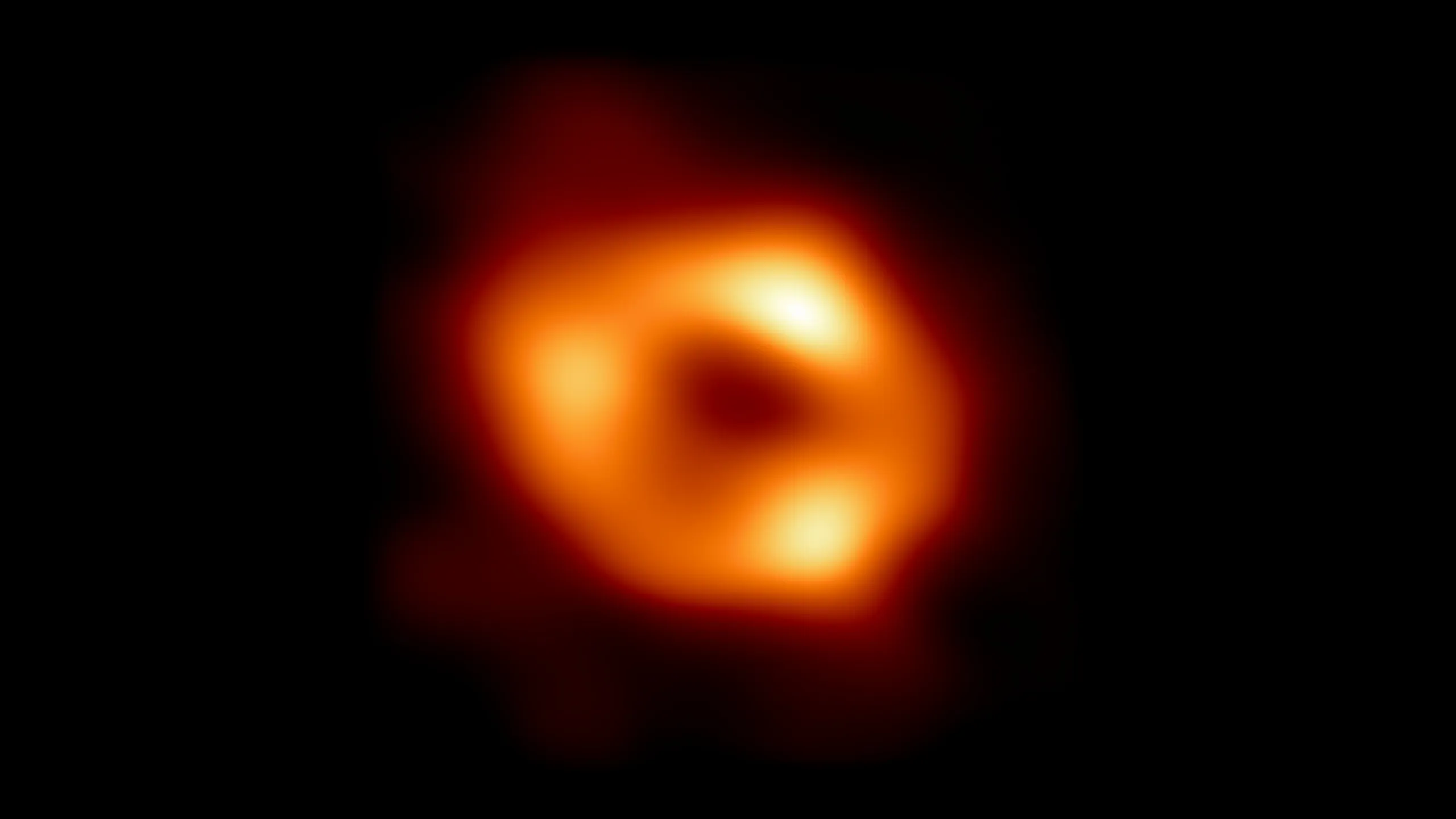
Albert Einstein returns to the center of scientific debate more than a century after formulating his most revolutionary theory. A possible signal detected in the heart of the galaxy has opened the door to what many consider a historic opportunity: to test general relativity in one of the most extreme environments of the known universe.
The finding occurred in the vicinity of Sagittarius A*, the supermassive black hole located at the center of the Milky Way. There, an international team of researchers identified a signal that could correspond to a millisecond pulsar, that is, the ultradense core of a dead star spinning at extraordinary speeds.
The study was recently published in The Astrophysical Journal and has already raised expectations in the astronomical community. However, specialists have urged caution. Further observations are needed to confirm the exact nature of the object.
A signal that could change what we know about gravity
The detected object emitted regular radio pulses, similar to the flashes of a cosmic lighthouse. According to preliminary data, the pulsar candidate rotated on its axis every 8.19 milliseconds. That speed makes it an extremely precise natural measuring instrument.
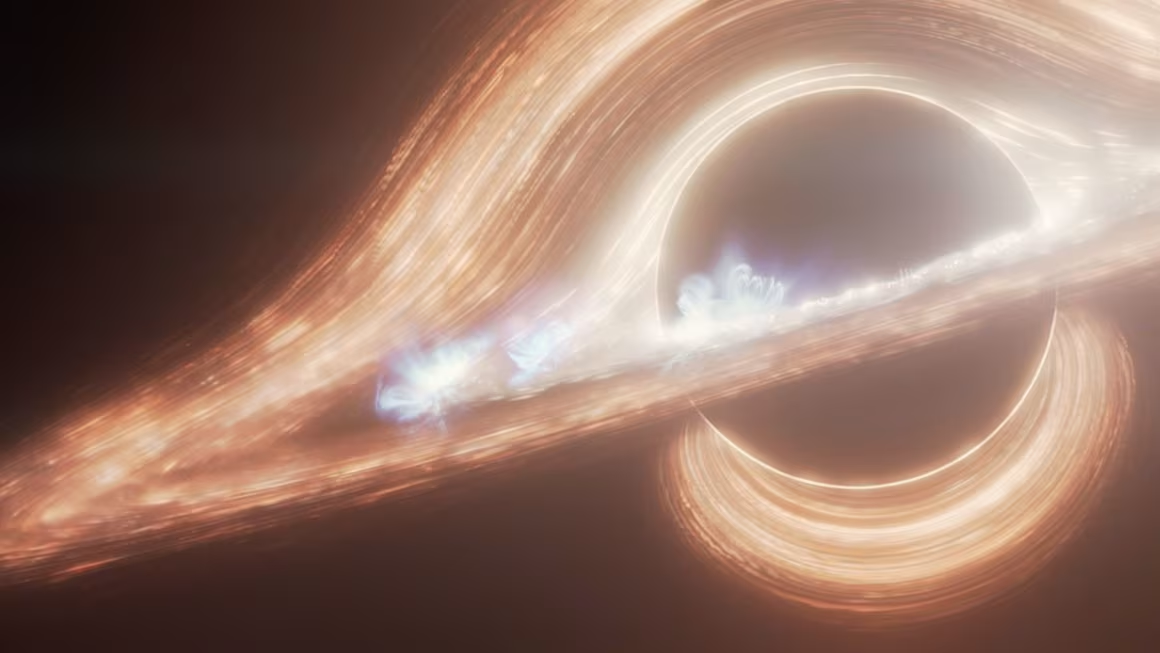
Why is it so relevant? Because its proximity to a black hole of approximately four million solar masses offers a unique laboratory to study general relativity in action.
The theory formulated by Albert Einstein held that gravity does not work as a conventional force, but as a curvature of spacetime generated by mass. In regions where gravity is extreme, that curvature should be more evident.
Observing how the radio pulses behave as they pass through that environment will allow for mathematically precise measurements of whether space and time deform as the German physicist predicted.
Sagittarius A* has become the silent protagonist of this story. This supermassive black hole dominates the galactic center and represents one of the densest and most energetic environments that can be studied.
The region surrounding it is filled with interstellar dust, gas, and intense gravitational fields. Therefore, detecting clear signals in that area is not easy. Cosmic interference often complicates the identification of specific sources.
However, this signal managed to filter through the usual noise. If it is confirmed to come from a millisecond pulsar, astronomers will have an unprecedented tool at their disposal.
How a pulsar works and why it is so valuable
A pulsar is the extremely compact remnant of a massive star that exploded as a supernova. Its collapsed core spins rapidly and emits beams of electromagnetic radiation from its magnetic poles.
Each time one of those beams points toward Earth, radio telescopes detect a pulse. The regularity of those signals is so precise that some scientists have compared them to natural atomic clocks.
In this case, the rotation every 8.19 milliseconds indicates that it would be a millisecond pulsar, a category particularly useful for gravitational studies.
If the pulses experience delays, deviations, or alterations when passing near the black hole, researchers will be able to measure how extreme gravity affects the fabric of spacetime.
The role of the Breakthrough Listen program
The detection was made possible thanks to the Breakthrough Listen program, an international initiative dedicated to tracking radio emissions in search of exotic phenomena and possible technosignatures.
During a survey of the galactic center, the system managed to isolate this specific frequency. Subsequent analysis allowed for the identification of the periodicity compatible with a pulsar.
Karen Perez, a researcher at the SETI Institute, led the study that examined the data obtained through these search programs.
The use of public data allowed other laboratories to replicate the analysis. This detail is key in science: independent verification is essential to validate any finding.
Why it could vindicate Albert Einstein
If it is confirmed that the signal indeed corresponds to a pulsar orbiting or gravitationally interacting with Sagittarius A*, scientists will be able to measure with unprecedented precision the effects predicted by general relativity.
Among the phenomena that could be observed are:
-
Gravitational time dilation.
-
Deviation of the trajectory of radio waves.
-
Delays in the arrival of pulses due to the curvature of spacetime.
Any deviation from theoretical predictions would be revolutionary. Confirming that the data matches the calculations would further strengthen the theory formulated by Albert Einstein in 1915.
If, on the other hand, anomalies were detected, physics could face a new paradigm.
Caution in the scientific community
Despite the initial enthusiasm, researchers emphasized that there is still no definitive confirmation regarding the nature of the object.
The central region of the Milky Way is one of the most complex for astronomical observation. The density of matter and electromagnetic interference complicate the interpretation of signals.
Additional observations and prolonged measurements will be needed to determine whether it is truly a millisecond pulsar or another emitting source.
The coming months will be decisive. New analyses could confirm that this object is the missing piece to study extreme gravity under real conditions.
A window to deep space
The discovery opened a concrete possibility: to study directly how gravity works in one of the most extreme environments of the universe.
So far, many tests of general relativity have been conducted in less extreme contexts, such as binary systems or the orbits of planets. Having a pulsar close to a supermassive black hole would change the rules of the game.
The detected signal not only excites due to its potential theoretical confirmation. It also demonstrates that deep space still holds answers to questions posed more than a century ago.
If the evidence supports the predictions, Albert Einstein will have been right once again. And if not, modern physics will be on the verge of writing a new chapter.