Where does the most unsettling doll from "Squid Game" come from?
What you didn't know about Young-hee, the doll that marked the Netflix series.
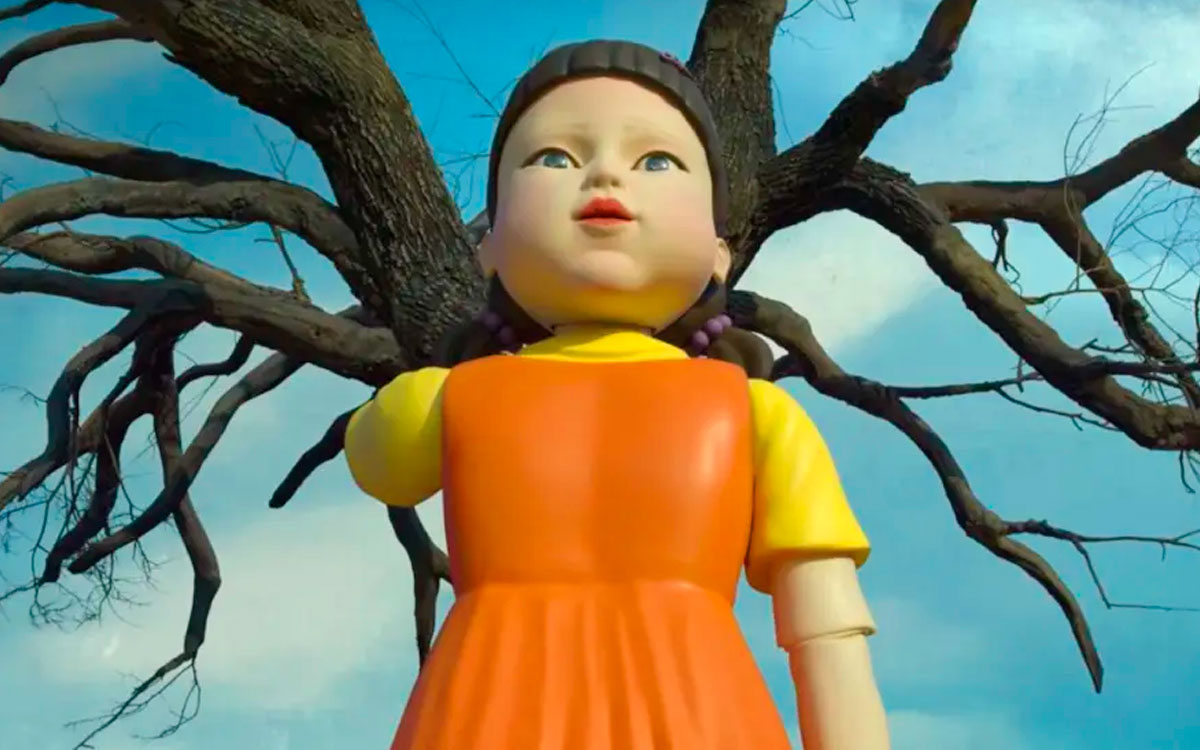
Young-hee, the iconic character from the South Korean series Squid Game, has instilled fear and fascination in millions of viewers since the premiere of its first season in September 2021. Although many assumed that this figure was a mere product of fiction, the reality behind its creation has cultural roots and deep symbolism that few know.
Young-hee: the sinister symbol that marked the series
The gigantic doll that stars in the first deadly game, "Red Light, Green Light," was designed to be more than just a terrifying element. Its fixed gaze and braided hair evoke mixed feelings: while some see it as a ruthless killing machine, other South Koreans view it as a nostalgic nod to their childhood.
The recent premiere of the second season of Squid Game on December 26, 2024, not only brought back this unsettling character but also renewed interest in discovering its origin and the details behind its creation.
Inspiration from Korean childhood in the 60s and 70s
Unlike other elements of the series that emerged from imagination, Young-hee has a real basis. According to Hwang Dong-hyuk, creator and director of the series, the design of the doll is inspired by characters from South Korean school textbooks from the 1960s and 1970s. In these materials, two recurring figures appeared: Young-hee and her male counterpart, Chul-su, representing childhood, family values, and the importance of teamwork.
For South Koreans of that generation, Young-hee and Chul-su were images associated with innocence and morality. However, in Squid Game, this connection is disturbingly distorted by turning Young-hee into a lethal guardian, relentless with those who break the rules of the game. Her transformation from an educational symbol to a macabre character underscores the series' critical and dark tone.
Revealing details about Young-hee's design
The creative process behind Young-hee included specific decisions to enhance her visual and emotional impact. Production designer Chae Kyoung-sun shared that the doll's appearance was partially inspired by her own daughter, who used to have a bowl haircut. "Her eyes are a bit crazy," Chae explained. This trait, essential to the character, allowed the doll's eye movements to be clearly visible, emphasizing her threatening nature.
The large eyes, imposing design, and unsettling presence not only created a memorable character but also contributed to making Young-hee a cultural icon of the series.
What does the name Young-hee mean?
The name of the doll was not chosen at random. Young-hee means "Eternal flower that never fades," a reference to the mugunghwa, the national flower of South Korea. This symbol of perseverance and strength fits with the main themes of the series, which explores the struggle for survival in extreme conditions.
Does Young-hee exist in real life?
Many fans have wondered if the doll really exists beyond the screen. The answer is yes. Before its debut on Netflix, Young-hee was part of an exhibition at the Macha Land museum, located in Jincheon, a province of South Korea.
This museum, known for showcasing large figures and traditional elements, featured Young-hee as one of its main attractions. After the filming of the series, the doll was returned to the museum, where it has gained popularity as a tourist destination for locals and foreigners.
With the premiere of the second season, interest in Young-hee has grown exponentially, attracting thousands of visitors eager to see this chilling character up close.