What the 'panettone' reveals according to science and that few know
The panettone according to science is a masterpiece of precision: gluten, fermentation, and structure explain its unique texture and its Christmas magic.
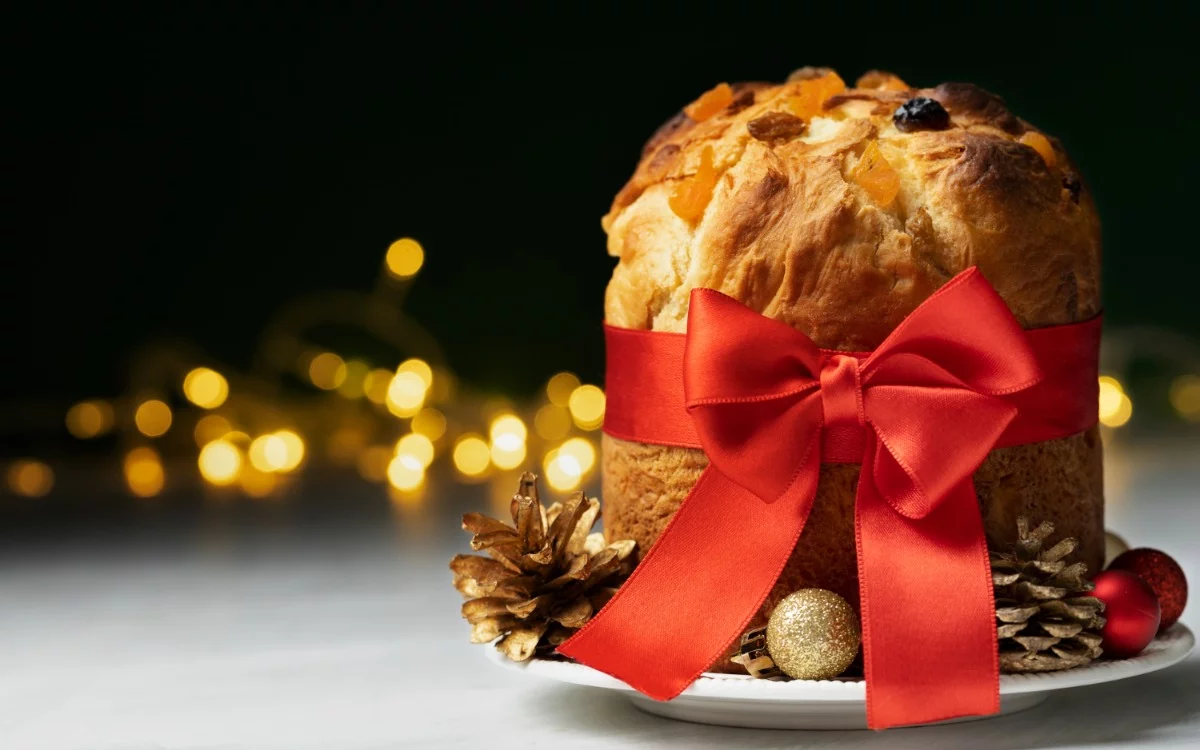
Understanding the ‘panettone’ according to science is discovering that behind this Christmas classic there is no magic or chance, but a delicate balance between ingredients, fermentations, and physical-chemical transformations that turn it into a gastronomic icon. Although for those who enjoy it every December it may seem simply like a fluffy sweet, its structure responds to complex processes that food technology can explain in detail. What is surprising is that, when we break down each stage of the panettone, a true masterpiece of culinary engineering appears before us.
This famous Italian brioche, with its airy dome and deep crumb, is recognized worldwide for its softness, its particular height, and its enveloping aroma. But behind that first sensory impression is the joint action of gluten, proteins, starch, prolonged fermentations, and chemical reactions essential to achieving its final texture. What thousands of people celebrate at Christmas is, unknowingly, the result of perfectly orchestrated processes at the molecular level.
From Italy to the world: a classic with a scientific basis
The panettone was born as an Italian sweet, but its expansion has been remarkable. In countries like Spain, it has become a regular guest at Christmas tables, sharing the spotlight with nougats, polvorones, and roscón. In Latin America, it also has a special place: in Argentina, for example, it arrived in the 19th century as “pan dulce,” an adaptation of the Italian pandolce. Since then, its consumption has been associated with celebrations, gatherings, and family moments that repeat year after year.
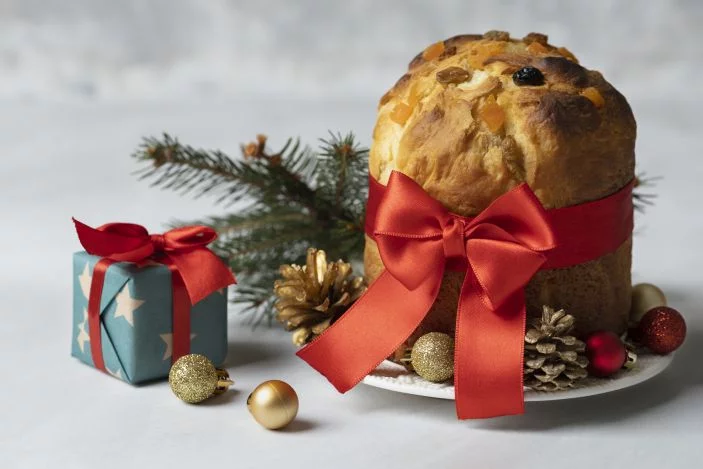
Although these traditions wrap it in a halo of magic, it is important to remember that everything we eat is science. The fluffy texture, the slightly sour flavor of its sourdough, the sweet and toasted aroma… all of that responds to perfectly identifiable reactions that occur during kneading and baking.
From a gastronomic perspective, it can be defined as a large, airy brioche made with sourdough, strong flour, multiple fermentations, and a peculiar final step: turning it upside down after baking. This gesture, which many see only as a quirk of bakers, has a clear scientific reason.
More gluten, more structure: the beginning of the panettone
Everything begins with the preparation of the prefermented dough. The essential ingredient is strong flour, a protein-rich flour capable of forming gluten. Gluten acts as a viscoelastic mesh, a true “scaffold” capable of trapping gases and supporting volume. Without it, it would be impossible to achieve that alveolated crumb that characterizes the panettone.
This detail explains why gluten-free products have so much difficulty imitating it: the panettone needs a strong, elastic, and resilient network.
To this flour, other indispensable protagonists are added:
- Sourdough and/or baker's yeast, responsible for fermentation, CO₂ production, and the creation of complex aromas.
- Water, which hydrates proteins and starches.
- Sugar, a direct food source for the yeasts.
- Butter and yolks, which provide fat, emulsification, and softness.
The sourdough, in particular, is responsible for the deeper flavor nuances. It can be compared to a more evolved intelligence: while fresh yeast produces a simpler fermentation, sourdough generates more complex, mature, and balanced aromatic responses.
Kneading: where the internal network of the panettone is born
A panettone depends on its kneading as much as on its ingredients. The enveloping movements allow the gluten to integrate and form a stable network. At the same time, the starch begins to hydrate, extending its amylose and amylopectin chains, which progressively thickens the mixture.
This process culminates in a dough that rests for about two hours. This rest is not a simple break: it is a crucial stage where the yeasts ferment the sugars and begin to release gases that will be responsible for the first internal alveoli. Aromatic compounds, such as aldehydes and organic acids, are also generated, which will give the panettone its characteristic aroma.
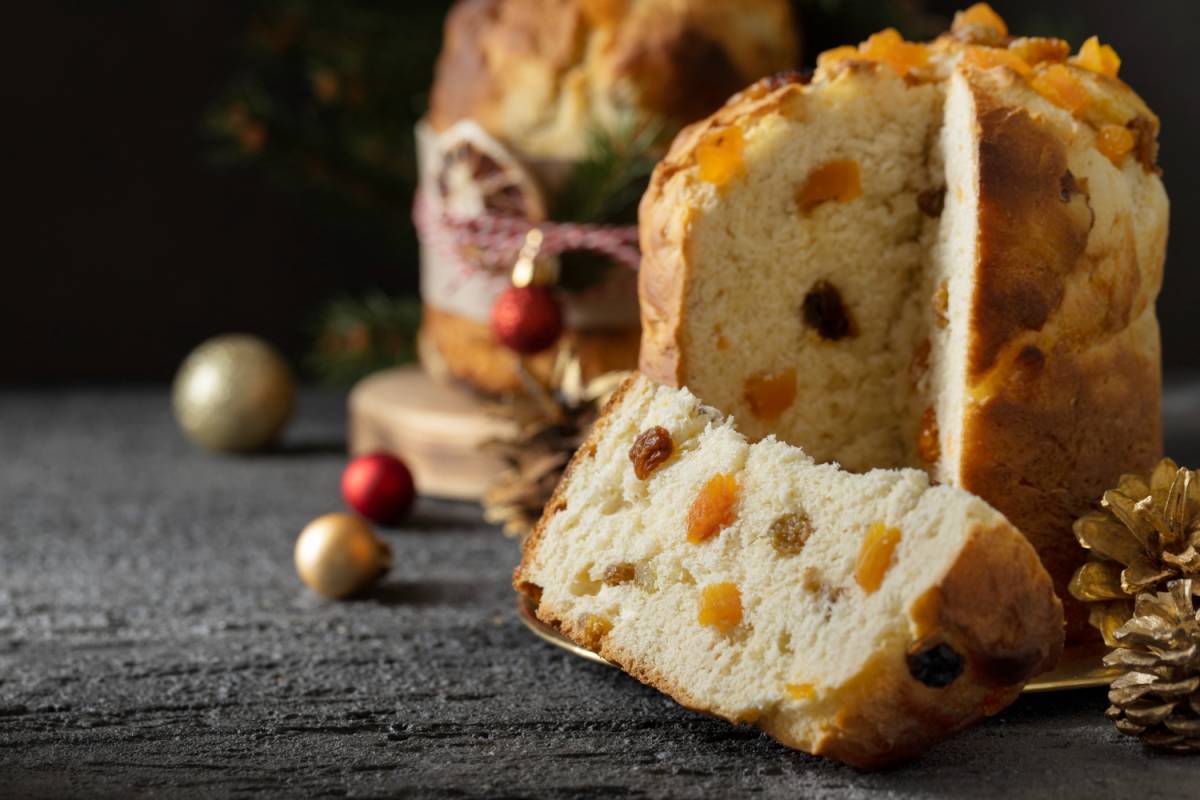
It happens inside the dough: the scientific process of the panettone explained easily
The perfect mesh: the second mixing and the development of the structure
After the first rest comes the second mixing, an additional mixture where ingredients such as butter, yolks, sugar, salt, vanilla, candied fruits, raisins, or chocolate chips are integrated again. This new phase requires careful kneading to avoid breaking the delicate network in formation.
When the dough has already doubled in volume, it is divided and the so-called boleado is performed: forming tight spheres to ensure a uniform structure. Here speed is needed, as manipulating the dough too much can degas it and weaken its internal mesh.
The balls are placed in special molds and rest again. The mixture will grow again until it doubles in size, a sign that fermentation is still active and stable.
Baking: pure chemistry to create the final work
The panettone is baked for about 40 minutes at 180 °C. During this step, a profound transformation occurs:
- The dough reaches its final volume, pushed by expanding gases.
- Maillard reactions develop, responsible for the toasted color and complex aromas.
- The gluten consolidates.
- The starch hardens, fixing the fluffiness.
To check if it is ready, the traditional toothpick test is used: if it comes out clean, the inside is sufficiently gelled.
The final gesture: turning the panettone upside down
This step, which surprises many, has a scientific explanation. Once out of the oven, the dough is still very hot and its structure is fragile. If it were left to cool normally, it would risk collapsing and sinking.
That is why it is hung upside down: gravity prevents the crumb from falling, and while it cools, a process known as retrogradation of amylose occurs, where the starch molecules reorganize and consolidate the final structure.
Without this step, the panettone would be denser, harder, and have a less airy crumb.
The final result: a masterpiece created step by step
The panettone, once cooled, is ready to be enjoyed. Its fluffy crumb, sweet aroma, irregular alveoli, and smooth texture are the product of science applied with precision.
Each part of the process—from the strength of the gluten to the final turning—combines to create a sweet that, although many associate with Christmas magic, is a direct result of perfectly identified physical, chemical, and microbiological phenomena.
Understanding the ‘panettone’ is to look with new eyes at this tradition that fills tables around the world every December, reminding us that even festive moments are built on scientific principles as subtle as they are fascinating.