This 89-year-old man is taking on a multinational over a phone booth.
In Sharrington, United Kingdom, an 89-year-old man is fighting against a multinational to prevent the historic telephone booth that has been key to his rural community from disappearing.
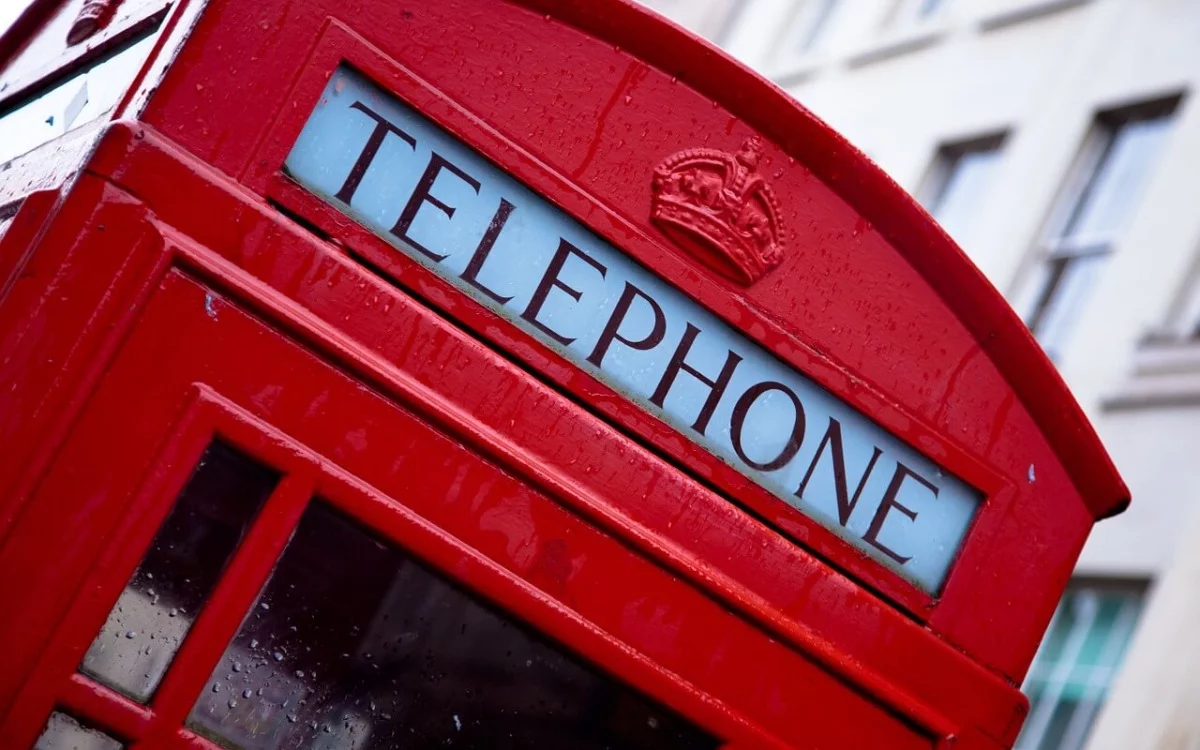
A symbol in danger: the fight of a community for its telephone booth
In the heart of the small village of Sharrington, in Norfolk, England, an iconic red telephone booth became the center of an unexpected battle between tradition and modernity. Derek Harris, an 89-year-old veteran, decided to confront the multinational BT to prevent this historic communication point from disappearing.
For Harris, the booth is not just a relic of the past, but a present necessity. In a rural area where mobile phone coverage is poor and many residents are elderly people without mobile phones, this booth remains a lifeline in emergency situations.
The news of its dismantling appeared on the agenda of a parish council meeting, and Harris knew he had to act. “I thought, ‘I better do something about this’,” he explained to The Guardian Weekly. His struggle resembles the story of David versus Goliath: an elderly man facing a company with vast resources and an unyielding modernization plan.
The decline of telephone booths in the UK
Just 30 years ago, the UK had 100,000 telephone booths. Today, that number has drastically reduced to 14,000, of which only 3,000 maintain the iconic red design.
The company BT, responsible for these booths, has been removing those it considers obsolete. However, there are regulations that prevent their removal if they meet certain criteria, such as being located in areas with poor mobile coverage or registering at least 52 calls a year.
In the case of the Sharrington booth, only a few calls were made in the last year. For BT, this is sufficient justification for its removal, but Harris argues that each of those calls could have been crucial.
Back in 2016, when the booth faced a similar threat, the community managed to save it. Harris is confident that this time they will be able to do so as well. “It faced death in 2016 and it’s still here,” he said proudly.
More than a booth, a symbol of identity
The Sharrington booth is a K6 model, designed in 1935 by Sir Giles Gilbert Scott. Its distinctive red color and golden crown make it a British symbol, an element that is part of the landscape and collective memory of the country.

BT wants to remove it, but this man will do the impossible to save it
Harris was born the same year this iconic design was created, which reinforces his bond with it. His life has been marked by resilience: he survived German bombings in World War II, served in the army, and overcame serious injuries that, according to doctors, would shorten his life. But today, at 89 years old, he is still standing, fighting to preserve what he considers a valuable legacy.
“The closer you get to the end, the more you want to see things alive”, he reflected. “I wouldn’t want to see them die. That’s what I’m fighting for.”
For Harris and many others in the community, the booth is not just an object of the past, but a testament to the history and identity of Sharrington.
A future for the telephone booth?
The local councilor Andrew Brown supports Harris's cause and agrees that the booth is a communication element and a cultural heritage.
In various parts of the country, many telephone booths have been transformed into community libraries, defibrillator stations, or small information centers. However, Harris opposes that idea.
“It wasn’t designed for that”, he insists. “It was designed for communication. Why should it be transformed into something else?”
For now, Harris and his allies have secured a one-month extension to defend their case. The battle remains open, and the community hopes their effort is not in vain.
In a world where technology advances relentlessly and many traditions disappear, Harris's fight reminds us that some symbols deserve to endure. Because, even as everything changes, there are objects and places that still serve a purpose, even if their greatest value is to remind us who we are and where we come from.