Neither the refrigerator nor the fruit bowl: “how to keep bananas” from spoiling in days and the trick that few apply at home.
Experts explain how to keep bananas for longer with a simple method that delays ripening and reduces waste.
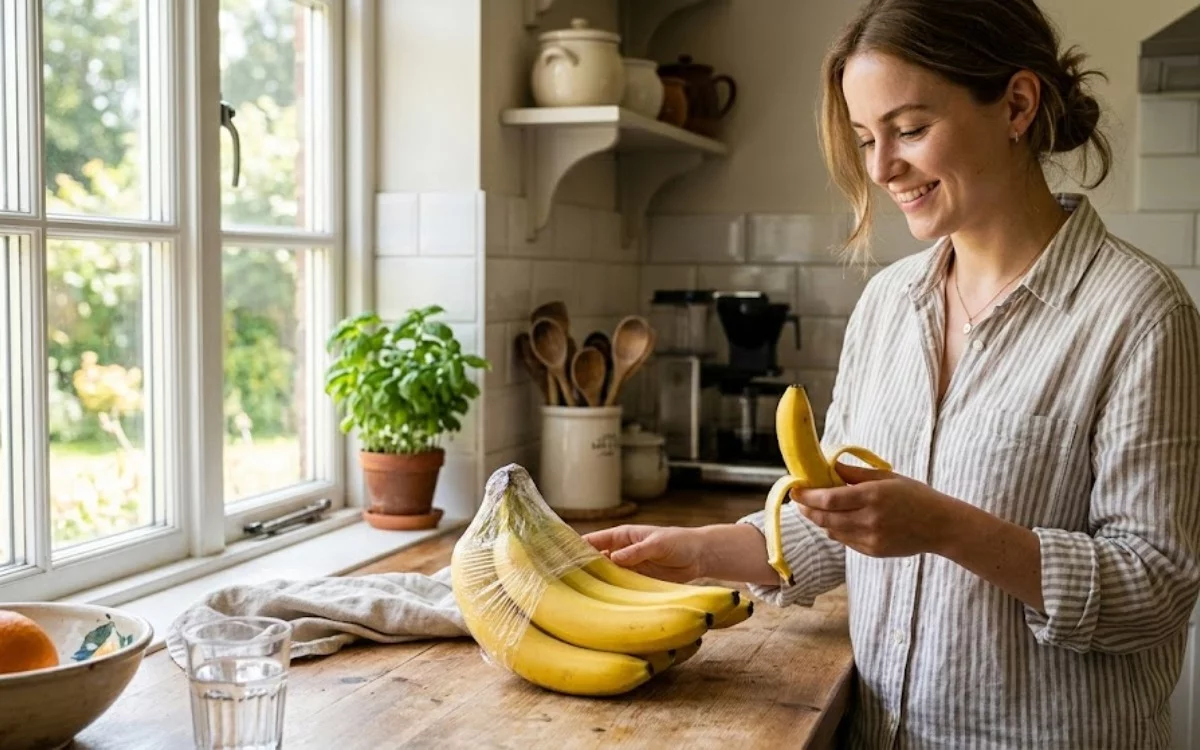
How to preserve bananas became one of the most repeated searches in households where this fruit is never missing. The reason is clear: within days, what seemed like a firm and yellow bunch ended up covered in brown spots and with a texture that was too soft. Faced with this everyday problem, food science researchers cited by Reader’s Digest revealed a simple method that managed to extend the freshness of bananas without the need for special products or complex techniques.
The procedure was within anyone's reach. It only required a bit of plastic wrap and a few seconds of attention. The key was not in the pulp or the peel, but in a part that almost no one looks at when storing the fruit.
The homemade method that changed the way to store bananas
Food science consultant Ed McCormick explained that wrapping the stems with plastic wrap turned out to be a simple and effective solution. The process was straightforward: place a small piece of plastic around the junction of the bunch or cover each stem separately.
McCormick stated that this method “reduces the ripening signal.” It does not eliminate it completely, but it does slow it down. As he detailed, that small gesture allowed for an additional one to two days before the fruit reached an advanced state of ripeness.
In domestic terms, that margin made a difference. Two extra days could mean less waste and more opportunities for consumption at the right moment.
The recommendation was even more precise. Separating the bananas before wrapping the stems improved the effect. By doing so, air circulation around each fruit increased and mutual influence within the bunch was reduced.
The science behind the trick: the role of ethylene
The explanation was not a kitchen myth or a piece of inherited advice without scientific basis. Certified culinary scientist Jessica Gavin explained that “bananas ripen because they release a gas called ethylene.” This gas acted as a plant hormone.
The highest concentration of ethylene was generated in the stems, the point where the bananas remained connected to each other. From there, the gas functioned as a chemical signal that accelerated the ripening of the rest of the bunch.
McCormick specified that ethylene acted as an internal communication system. When one banana began to ripen, it stimulated the others to do so at the same time. That’s why, many times, the entire bunch changed color almost simultaneously.
By wrapping the stem with plastic, the amount of ethylene that dispersed to the rest of the fruits was reduced. In the specialist's words, the trick allowed for “lowering the volume” of the process. It did not turn it off, but it did make it progress with less intensity.
Gavin clarified that the wrapping “will not completely stop ripening, but it can give several additional days before brown spots appear.” That difference was key for those who bought green bananas intending to consume them progressively throughout the week.
The ideal moment to apply the method
Experts agreed that the trick worked best when applied at early stages. That is, when the bananas were still firm and bright green or yellow.
If brown spots had already appeared, the internal ripening process was in an advanced phase. McCormick indicated that, at that point, “a large part of the internal process has already begun.” Consequently, wrapping the stems had a limited impact.
Therefore, the recommendation was clear: apply the wrap as soon as the bananas were purchased. That early gesture marked the difference between extending freshness or simply trying to stop something that was already underway.
Separating each fruit also helped. It not only facilitated individual wrapping but also allowed for better overall ventilation. That detail contributed to preventing ethylene from concentrating in a single point.
Refrigerator: yes or no? What the specialists say
The debate about storing bananas in the refrigerator was not new. Many people opted to refrigerate them when they began to darken. Science confirmed that the cold slowed down the softening of the pulp, although it did not completely stop the process.
Gavin recommended using the refrigerator as a secondary measure. If the banana already showed brown spots, the cold helped preserve the internal texture for a longer time, although the peel might darken even more.
It is important to understand that the color change in the skin did not always indicate that the pulp was in poor condition. In many cases, the interior remained suitable for consumption even when the peel became darker.
The impact on industry and commerce
The use of wrapping on the stems was not exclusive to the domestic sphere. As Gavin explained, this resource was partially used in the industry during transportation and display in supermarkets.
However, it was not applied on a large scale. The reasons were logistical and economic. The cost of the material, the additional handling time, and the need to strategically control the ripening speed influenced that decision.
Businesses managed the ripening pace to optimize sales. If all the bananas remained green for too long, turnover could be affected. That’s why controlling ethylene became a commercial tool in addition to a scientific one.
Does it work with other fruits?
The principle was also tested on other ethylene-producing fruits. Apples, pears, and avocados released this natural gas. However, the effect of the wrapping was less noticeable.
McCormick explained that bananas generated a significantly higher concentration of ethylene from the stem. For that reason, the impact of the wrap was more visible in this fruit than in others.
Gavin emphasized that “this trick works best with bananas.” For the rest of the fruits, she recommended prioritizing separation and ventilation as more effective strategies.
Keeping ethylene-producing fruits away from those sensitive to the gas also helped. For example, keeping bananas separate from other fruits could delay cross-ripening.
A simple habit that reduces waste
The rapid deterioration of bananas represented a domestic frustration for decades. Buying a large bunch involved the risk of losing part of the fruit before consuming it.
Applying the wrap method changed that equation. Wrapping the stems took just a few seconds. It did not require technical knowledge or special tools.
That small adjustment allowed for better organization of weekly consumption. It also helped plan recipes, from breakfasts to smoothies or baking preparations.
When the banana reached a very advanced state of ripeness, there was still a useful alternative: using it in baked goods, puddings, or smoothies. This way, unnecessary waste was avoided.
What the experts said, word for word
The statements cited by Reader’s Digest provided clarity and scientific backing.
McCormick was emphatic: “It reduces the ripening signal.” He also explained that the trick allowed for “lowering the volume” of the process, but not turning it off.
Gavin reinforced the technical explanation: “Bananas ripen because they release a gas called ethylene.” And she added that the method can offer “several additional days before brown spots appear.”
These statements agreed on a central point: the key was to intervene before the process advanced too much.
Step by step to apply the trick at home
Applying this advice did not require prior experience. Specialists recommended following these steps:
- First. Separate the bananas from the bunch if a more prolonged effect is sought.
- Second. Cut small pieces of plastic wrap.
- Third. Wrap tightly around the stem area where the fruits connect.
- Fourth. Place the bananas in a cool place, away from other ethylene-producing fruits.
- Fifth. Refrigerate only if the ripening process has already advanced and you want to preserve the internal texture.
Each of these steps aimed to control the release and circulation of ethylene.
The reason the trick went viral
The method caught attention because it combined simplicity and scientific foundation. It did not promise miraculous results or radical transformations. It offered something concrete: additional time.
In a routine where food planning was key to reducing expenses and waste, gaining one or two days marked the difference.
Moreover, the advice spread quickly because it responded to a common experience. Almost everyone has lived the scene of finding bananas too ripe before expected.