Neither the Apollo astronauts nor the most recent missions expected this from the far side of the Moon.
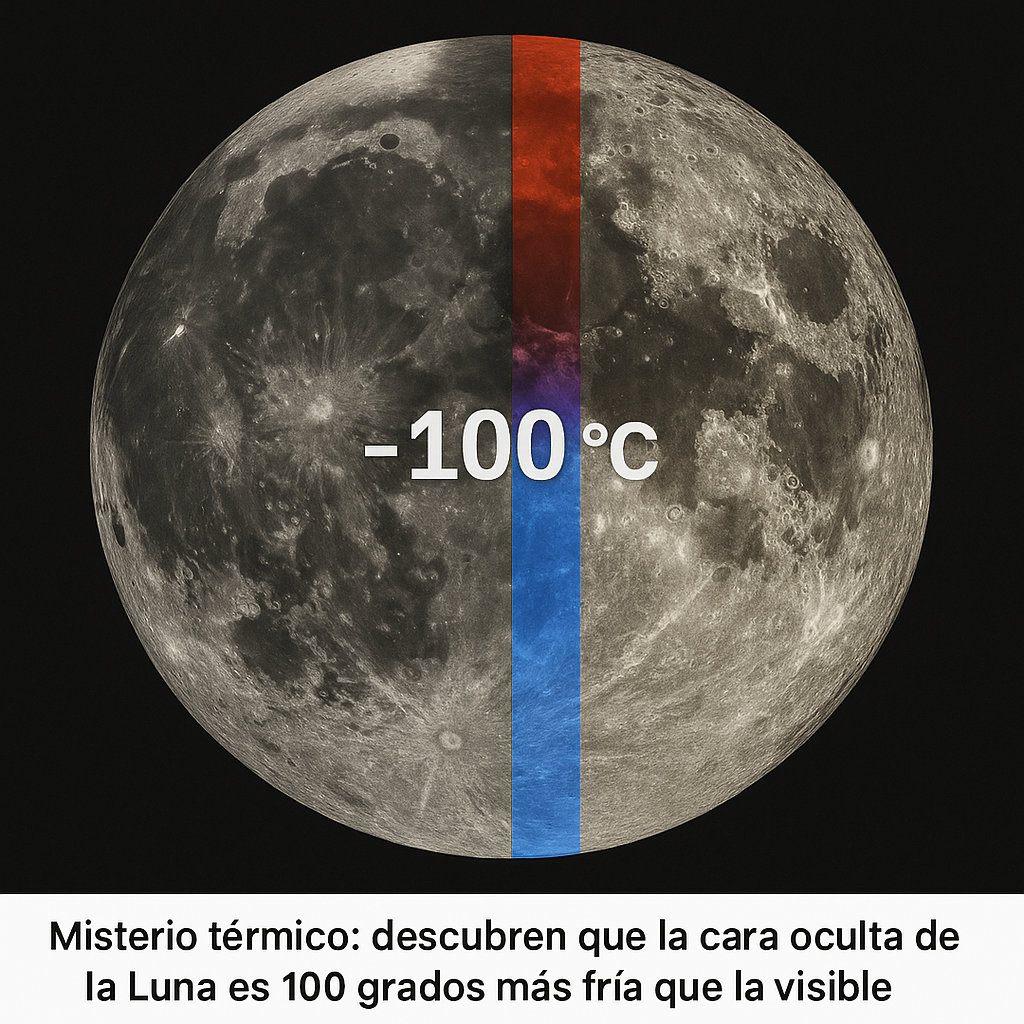
A new study reveals that the far side of the Moon is up to 100 °C colder than the visible side, and the reason could change what we know about its origin.
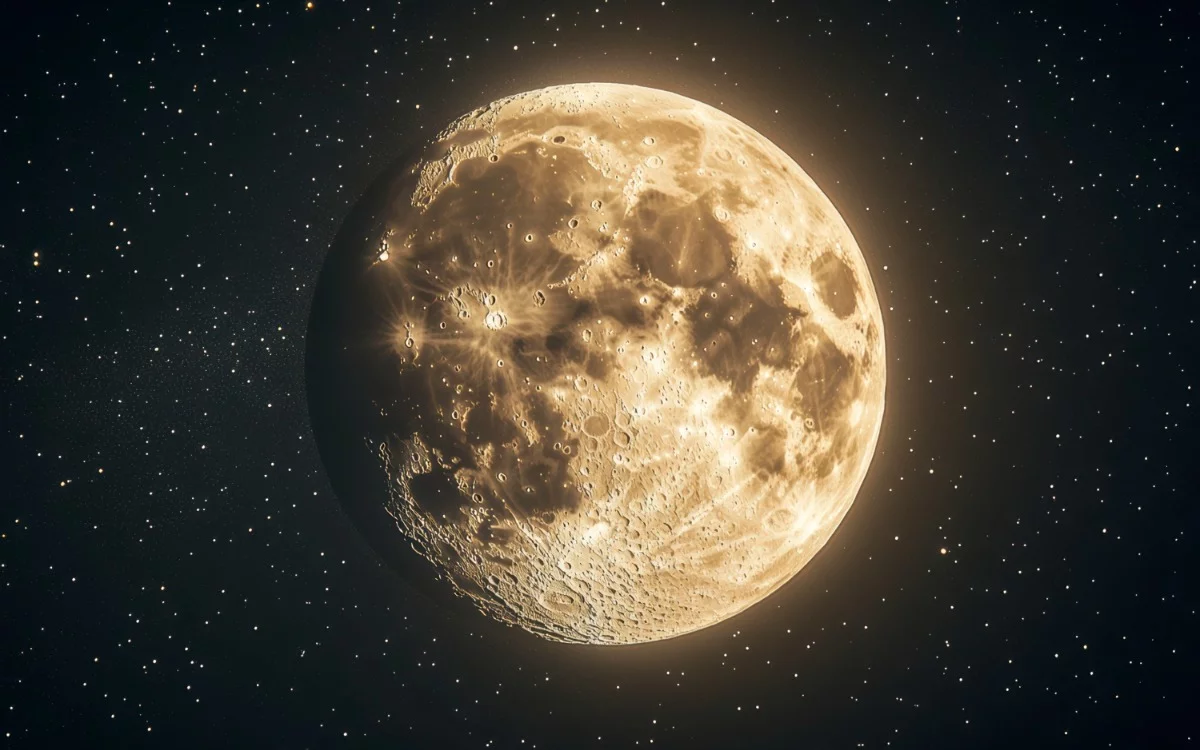
The dark side of the Moon has just revealed a secret that puzzles scientists around the world: it is at least 100 degrees Celsius colder than the visible side, the one that always faces Earth. This finding, confirmed by a new study published in Nature Geoscience, could rewrite what we know about the thermal and geological evolution of our natural satellite.
The discovery arose from the analysis of lunar samples brought back by the Chinese mission Chang’e 6, which in 2023 achieved something unprecedented: collecting fragments of soil and rock from a crater on the dark side. These samples, along with others collected decades ago by NASA's Apollo missions, allowed for a direct comparison between both sides of the Moon. And the difference is surprising: the lava from the dark side solidified at about 1,100 °C, while that from the visible side did so at temperatures near 1,200 °C.
A difference that goes beyond the surface
Until now, we knew that the dark side of the Moon is distinct in its appearance: more mountainous, with fewer volcanic plains and a thicker crust. But this new finding shows that the asymmetry also affects the lunar interior, suggesting a very different geological history between the two hemispheres.
“The Moon has two very distinct faces, both outside and inside. This is the first time we have direct evidence of such a deep thermal difference,” explained Professor Yang Li from University College London and Peking University, who led the study.
The analysis indicates that radioactive elements such as uranium, thorium, and potassium —which generate heat as they decay— are much more present in the visible hemisphere. This would explain why that part of the Moon was warmer, more volcanically active, and more prone to forming the known dark basalt “seas.”
A satellite of two distinct halves
From Earth, we only see one face of the Moon due to its synchronous rotation: it takes the same time to rotate on its axis as it does to orbit our planet, about 28 days. This means it always presents the same face towards us and leaves the other in constant shadow from our perspective.
The historian and lunar specialist Diego Córdova explained it this way: “This type of rotation causes the Moon to have two completely distinct hemispheres. They receive different amounts of solar radiation and different frequencies of meteorite impacts. That, over billions of years, changed not only its surface but also the internal composition of its minerals.”
Córdova, author of the book Footprints on the Moon, highlighted the importance of recent missions: “The Apollo missions gave us 90% of the knowledge we have about the Moon. But now, thanks to the samples collected by Chang’e 6, we are discovering much deeper differences than previously thought.”
Why it is colder: the key lies in the elements
The study analyzed 300 grams of lunar soil brought from the dark side. Using tools such as electron probes and secondary ion mass spectrometry, researchers were able to identify the age of the rocks —about 2.8 billion years— and calculate the temperature at which they solidified.
The conclusion was clear: the lava from the dark side cooled under much colder conditions due to the lower presence of heat-producing elements, such as uranium, thorium, and potassium. These elements, grouped with phosphorus and rare earths in the material known as KREEP, seem to have been expelled or concentrated from the visible side of the Moon in the early stages of its formation.
Researcher Xuelin Zhu from Peking University summarized the finding: “The differences are not just on the surface. They extend deep into the interior of the satellite.”
A colossal impact or a fusion of distinct bodies?
This finding has reignited the debate about the asymmetric origin of the Moon. There are several theories regarding this. One suggests that a massive impact in the early history of the satellite would have redistributed radioactive elements towards the visible side. Another proposes that the Moon formed from the fusion of two distinct celestial bodies, one rich in heat-producing materials and another much poorer in those elements.
A third hypothesis points directly to the constant influence of Earth. Its gravitational force could have kept the visible hemisphere warmer for millions of years, thus reinforcing the thermal imbalance.
“Whatever the scenario, what is clear is that the dark side of the Moon has a very different history from what we see from our planet,” stated Pieter Vermeesch, a researcher at University College London who refined the uranium-lead dating method used in the study.
A natural laboratory to understand other worlds
Beyond what it reveals about the Moon, the finding has enormous implications for planetary geology. The most accepted theory indicates that our satellite formed when an object the size of Mars collided with Earth, generating an ocean of magma that cooled over time.
During that process, the radioactive elements remained in a liquid state for longer, concentrating in specific regions. This pattern can be clearly observed on the visible side of the Moon, richer in KREEP and showing signs of greater volcanic activity.
The dark side, on the other hand, evolved as a more stable region, geologically dead, and much colder. This not only helps to understand lunar evolution but also offers clues about how other rocky bodies in the solar system —or even from distant stellar systems— might have developed if they had similar differences in their initial composition.
“Solving this thermal mystery helps us better understand not only the Moon but also the processes that shaped the planets and satellites we know today,” concluded the international team of researchers.