How a mastectomy drove the creation of an innovative Ford accessory
In the context of "Pink October," Ford presented the SupportBelt, the first device created to help patients undergoing treatment for breast cancer, so they can comfortably use the seatbelt.
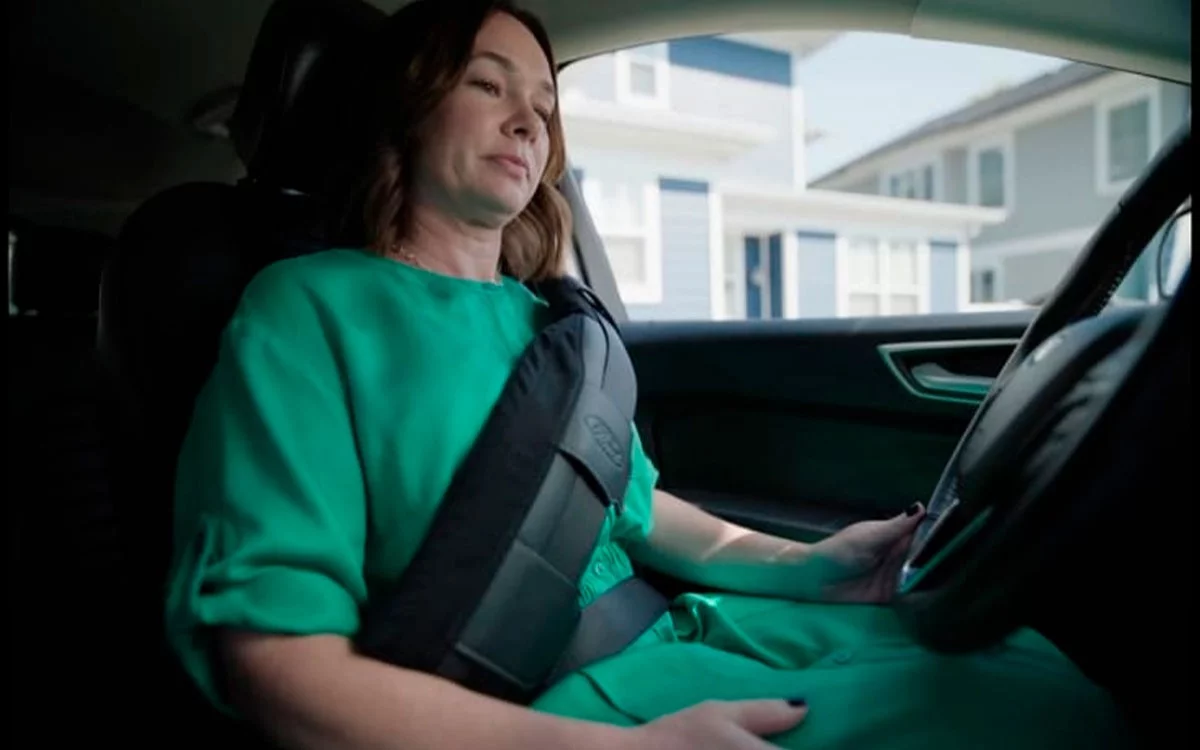
Lynn Simoncini was diagnosed with breast cancer in 2022. After a double mastectomy, she found herself struggling with unexpected pain during a routine activity: driving. The pressure of the seatbelt on her recovering chest was distressing, even on short trips. This problem must be common, she thought, but there were no real solutions.
Lynn, creative director at VML, the global marketing agency partnered with Ford and a big car enthusiast, began sketching ideas. Her initiative led to the creation of the Ford SupportBelt, an accessory designed to meet the needs of approximately 100,000 women and men in the U.S. who undergo a mastectomy, or removal of breast tissue, as part of their treatment each year. Lynn's testimony can be seen in the following video.
Developed and designed by Ford, the SupportBelt is made of soft, breathable foam that adheres to the seatbelt to help alleviate pressure and reduce discomfort in the chest while driving.

Initially, Ford will offer the SupportBelt, the only device of its kind designed and validated by an automobile manufacturer, to mastectomy patients in the U.S. at no cost.
Lear Corp., a global leader in electronic systems and automotive seating technology, will produce an initial batch of SupportBelt in the U.S. until at least the end of 2024, with the first deliveries expected by mid-November.
Breast cancer is the most common type of cancer in women in 157 countries, according to the World Health Organization. Ford has filed a patent for the SupportBelt and plans to open it up to other manufacturers so that production can be scaled globally.
Inspiration
"I couldn't believe there wasn't already a product that made the seatbelt comfortable and looked good," Lynn said after her mastectomy. She shared the idea with her partner, Chad Woolums, and together they developed a proposal for a comfortable support belt specifically designed for post-mastectomy patients. In addition to radiation and chemotherapy, mastectomy is a common treatment for those with invasive breast cancer.
“The surgery is much more intense than one might imagine. The residual pain and sensitivity can last for months after the procedure, making exposure to everyday objects painful and uncomfortable,” says Dr. Nayana Dekhne, a breast surgeon at Corewell Health, a nonprofit health system in Michigan, who collaborated on the development of the SupportBelt.
With the proposal in hand, Lynn took the idea to Emily Obert, Ford's director of experience design. With Emily's guidance and the help of a team that included design intern Rima Shkoukani, the SupportBelt began to take shape. Rima, an industrial design student, focused on research, interviewed breast cancer patients, and created prototypes.
"I worked many hours every day for three weeks straight, just cutting foam and trying different ways to mold it to the body," says Rima.
The team partnered with engineers to ensure that the SupportBelt met Ford's quality standards. They also experimented with various materials, choosing a flexible foam wrapped in a fabric similar to suede, made with 40% recycled PET bottles and featuring a Velcro closure.
Rima hopes that mastectomy patients can recover from surgery more comfortably. "I just want someone who uses this product to say: I'm glad someone understands what I'm going through and has thoughtfully considered this small part of my recovery process," she says.
The SupportBelt is part of Ford's decades-long work to support the fight against breast cancer. For 30 years, Ford Warriors in Pink has supported those affected by breast cancer, including patients and families. Ford has invested over $139 million in the fight against breast cancer by selling inspiring apparel and gear, helping to provide transportation solutions to those in need.
Welcome Comfort
Designed with input from patients and doctors, the SupportBelt helps patients wear their seatbelts comfortably on both the driver and passenger sides. “Knowing that an automobile manufacturer is really thinking about people and doing research to make these women feel more comfortable is really nice,” says Najah Woods, diagnosed with breast cancer in 2023.
The concave design of the SupportBelt allows it to adapt to various body types, with a more personalized fit that reduces the risk of chafing or irritation.
"The SupportBelt demonstrates the profound impact that thoughtful design can have on healing,” says Emily Obert.
For Lynn, the original prototype of the SupportBelt has become part of her daily life. “I keep it attached to my car's seatbelt and use it every day,” she says. "I hope that women around the world who have gone through the same struggles as I have have the SupportBelt and feel comforted knowing that this product was presented to them by a group of people who recognize their struggle and know that the SupportBelt will help them."
For Ford, positively contributing to people and communities through concrete actions is a priority, in this case, making a small contribution to improve the quality of life for breast cancer patients and raising awareness on issues such as health and inclusion, in line with its purpose of helping to build a better world where people are free to move and pursue their dreams.