The consumption of high-fat cheeses and creams is linked to a lower risk of dementia, according to a study.
A new study suggests that the consumption of high-fat cheeses and creams is associated with a lower risk of dementia over 25 years.
Can a food that has been considered unhealthy for years become an ally for the brain? That is the question posed by a new study published in the journal Neurology, where Swedish researchers explored the effect of high-fat cheese and cream consumption on long-term brain health.
The study—analyzing nearly 28,000 people over 25 years—found a significant association between higher intake of these products and a lower risk of developing dementia, compared to those who consumed smaller amounts. Although the authors insist that this is not a causal relationship, the observed data is sufficient to reconsider some entrenched ideas about fat in the diet.
Cheeses and creams: not all dairy has the same effect
The research focused on specific dairy products: cheeses with more than 20% fat content (such as cheddar, Gouda, or Brie) and creams with between 30% and 40% fat (such as heavy cream or double cream). These products are often labeled as “whole” or “regular.”

For decades, nutritional recommendations promoted low-fat diets, and foods like cheese were questioned. But now, the results obtained could modify this perspective. “Some high-fat dairy products could actually reduce the risk of dementia,” explained lead researcher Emily Sonestedt from Lund University in Sweden.
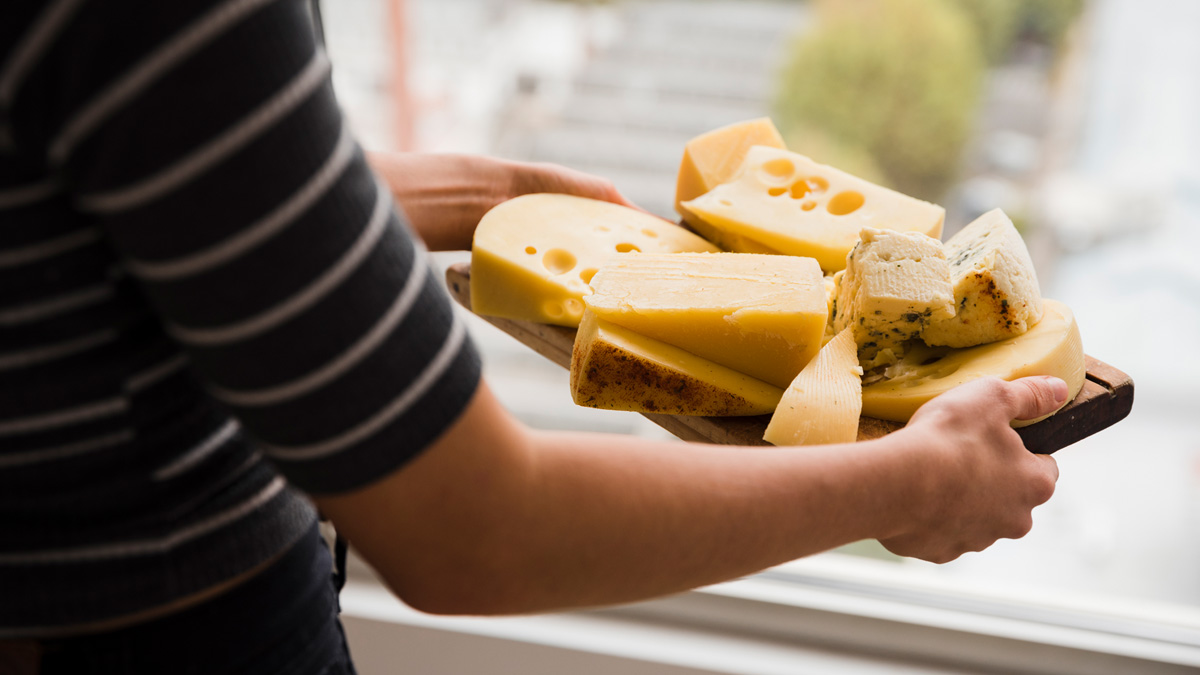
It’s not what you eat, it’s how you eat it: the unexpected food that could protect your brain
The 25-year follow-up that changed the view on fat
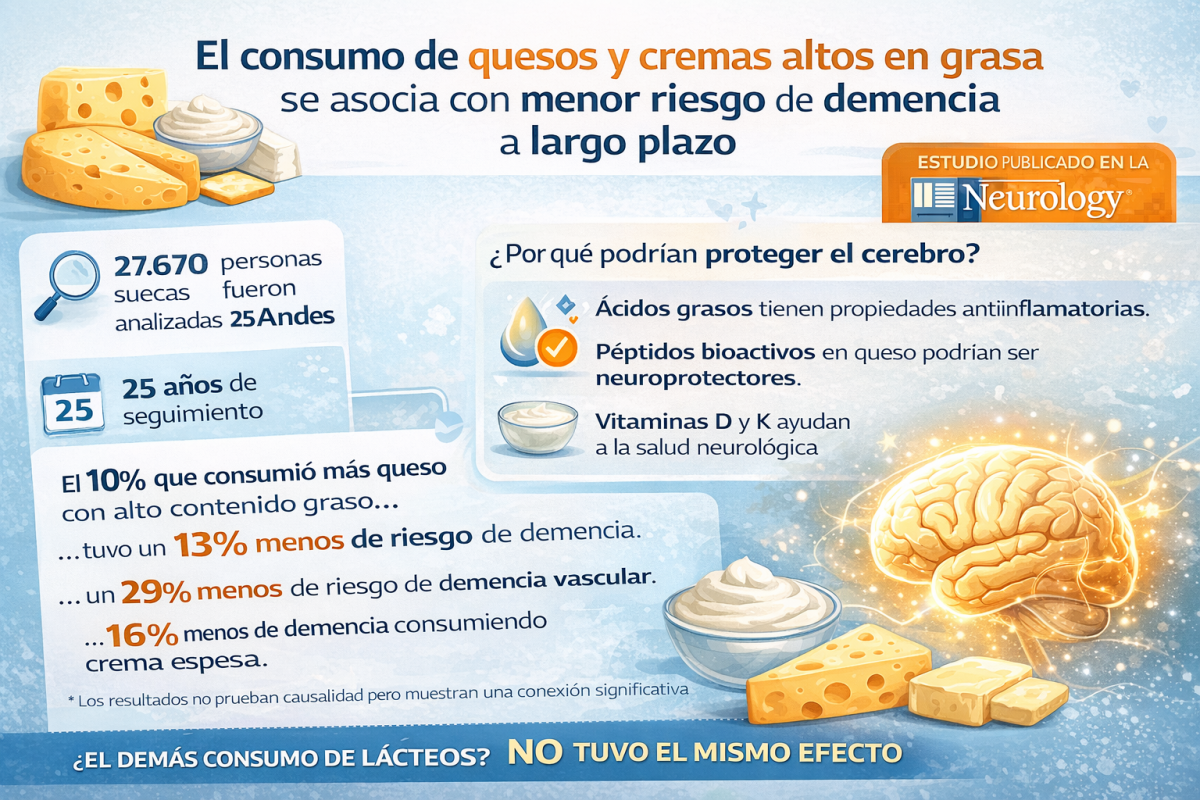
The study analyzed the eating habits of 27,670 Swedish individuals with an average age of 58 at the start of the follow-up. Participants completed food consumption records and answered questionnaires about their diet over a week, including how they cooked their food.
Throughout the study, 3,208 individuals developed some form of dementia. The analysis compared those who consumed at least 50 grams of high-fat cheese daily with those who ate less than 15 grams. To give an idea: 50 grams is equivalent to two slices of cheddar cheese or half a cup of shredded cheese.
Lower risk of dementia in those who consume more cheese
Among the most notable data, it was observed that 10% of those who consumed more cheese developed dementia, compared to 13% of those who ate less. After adjusting for age, gender, education level, and overall diet quality, the researchers concluded that:
- The group with the highest cheese consumption had 13% less risk of dementia.
- The risk of vascular dementia was 29% lower in this group.
- A reduction in the risk of Alzheimer’s was also observed, but only in individuals who did not carry the APOE e4 gene, a genetic marker associated with a higher predisposition to that disease.
A study suggests that eating whole cheese helps the brain
The case of high-fat creams
The analysis also evaluated the effect of consuming heavy or whipping cream. Those who consumed at least 20 grams daily (about one and a half tablespoons) showed 16% less risk of dementia than those who consumed none.
In contrast, no positive association was found with the consumption of:
- Low-fat cheeses
- Light creams
- Milk (whole or skimmed)
- Yogurts, kefir, or other fermented dairy products
- Butter
Why could they protect the brain?
Although the study does not explore the biological mechanisms, experts suggest several hypotheses:
- The fatty acids present in whole cheeses and creams could have anti-inflammatory effects.
- Some bioactive peptides in cheese could act as neuroprotectors.
- Healthy fats promote the absorption of fat-soluble vitamins (such as D and K2), which play a key role in neurological health.
Additionally, the fermentation of some cheeses can produce compounds with antioxidant and antimicrobial effects, which are also associated with cognitive benefits.
“Not all dairy products are the same”
Emily Sonestedt summarized it this way: “When it comes to brain health, not all dairy products are the same. Some high-fat products showed benefits, but this was not the case with low-fat versions or other dairy derivatives.”
The author also warned that more research is needed in different countries and cultures, as this study was conducted exclusively in Sweden, where eating habits and the way cheese is consumed differ from other countries.
For example, in the United States, cheese is often heated or combined with ultra-processed meats, which could alter the healthy effect of the food in different contexts.
What we can conclude
Although there is no evidence of causality, the results suggest a relevant connection between high-fat cheese and cream consumption and the reduction of dementia risk. Experts do not recommend radically changing the diet, but rather consider that eliminating all dairy fat may not be necessary or beneficial.
It is also important to clarify that the observed benefits do not extend to all fats or other processed products. The key lies in the quality of the food and the overall consumption pattern, rather than in a single isolated product.