No one saw it coming: why ADHD now seems to be the cause of everything
ADHD has gained visibility on social media and in the media, but does it really explain all attention and behavior problems? We analyze this trend and its implications.
ADHD at the center of all explanations
In recent years, Attention Deficit Hyperactivity Disorder (ADHD) has shifted from being a relatively specialized clinical diagnosis to becoming an omnipresent term. More and more people, from students to adults in the workplace, associate their daily difficulties with this disorder, whether due to lack of concentration, procrastination, or disorganization.
This phenomenon has sparked a debate about the extent to which ADHD is overdiagnosed or, at least, misunderstood. While it is a real medical condition, its widespread use as a “universal explanation” has led to simplifications that could distort its true nature.
Next, we explore the reasons behind this rise in attributing ADHD to a variety of problems.
Increased visibility and awareness
One of the key factors in the popularization of ADHD is the growing public awareness of the disorder. In recent decades, educational campaigns, scientific studies, and media representation have allowed more people to recognize it.
While this increase in information has been positive for reducing stigma and improving access to diagnosis, it has also opened the door for the term to be used lightly. Many people identify with some symptoms without receiving a formal evaluation, leading to a broad use of the term without clinical precision.
Common symptoms and daily difficulties
The main symptoms of ADHD include inattention, impulsivity, and difficulties maintaining concentration. However, these characteristics can manifest in anyone during times of stress, fatigue, or lack of motivation.
For example, feeling distracted or having trouble organizing does not necessarily imply having ADHD. However, since these are common experiences, it is easy for many people to see themselves reflected in the general descriptions of the disorder and assume they have it without a professional evaluation.
The era of self-diagnosis
Access to medical information online has made it easier for many people to attempt to self-diagnose based on articles, questionnaires, or social media content. Although this can be helpful in generating interest in mental health, it can also lead to confusion.
ADHD is a neurobiological disorder that requires a thorough clinical evaluation. However, many social media users have begun to identify with the diagnosis based on personal experiences or viral videos, which can create a misleading perception of its true prevalence and complexity.
Social media: information and misinformation
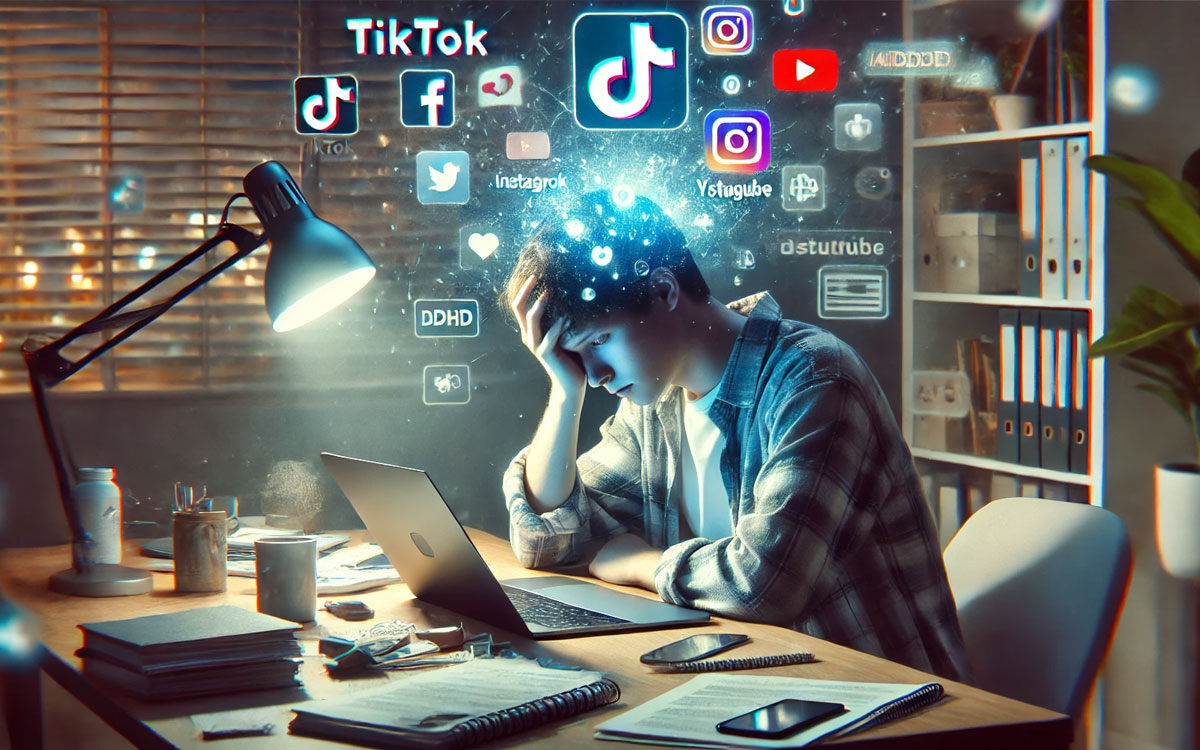
Platforms like TikTok, Instagram, and YouTube have played a key role in the expansion of the term ADHD. On these networks, content creators share their experiences with the disorder, offering tips and strategies to cope with it.
While this has been positive for many people who previously did not understand their condition, it has also generated a wave of simplified content that can lead to misunderstandings. Phrases like “if you get distracted easily, you might have ADHD” have contributed to the idea that the diagnosis is applicable to anyone who has concentration problems.
Moreover, the social media algorithm favors content that generates identification and engagement, reinforcing the perception that many people have ADHD, even if that is not the case.
Informal diagnosis and excessive labeling
In the school and work environment, ADHD is often mentioned as an explanation for performance difficulties. Students with low performance or employees who have organizational problems may receive the diagnosis without a rigorous medical evaluation.
Additionally, some people may use the term colloquially to justify certain behaviors, contributing to the idea that ADHD is a broad diagnosis that encompasses any type of distraction or lack of productivity.
Relationship with other disorders
ADHD often presents alongside other conditions, such as anxiety, depression, and learning disorders. This connection has led to the diagnosis being perceived as a general explanation for multiple emotional and cognitive problems.
While it is true that many people with ADHD experience these additional symptoms, not everyone with anxiety or concentration difficulties necessarily has the disorder. It is essential to conduct a detailed evaluation to differentiate between these diagnoses.
Popular culture and simplification of ADHD
ADHD has been represented in movies, series, and books in a simplified manner. Hyperactive, impulsive, or distracted characters are often labeled as examples of the disorder, even though in reality, this diagnosis is much more complex.
This representation can reinforce stereotypes and lead many people to assume that having ADHD simply means being restless or distracted, when in fact the disorder affects multiple aspects of daily life, including working memory, emotional regulation, and decision-making.
The influence of the pharmaceutical industry
The increase in the prescription of medications for ADHD has generated debates about a possible overdiagnosis. Some critics argue that, in certain cases, the disorder can be diagnosed too easily, leading to an increase in the use of pharmacological treatments without a thorough evaluation of each patient.
While medications can be effective in many cases, the debate over their prescription has contributed to the perception that ADHD is a widely diagnosed condition, reinforcing its presence in public conversation.
The importance of a balanced view
ADHD is a real and significant disorder that affects millions of people worldwide. Its growing visibility has been crucial for improving understanding and reducing stigma, but it has also led to simplifications that can distort its true nature.
It is essential to differentiate between everyday problems and a medical condition that requires a formal diagnosis. Instead of attributing all attention or productivity difficulties to ADHD, it is important to address these challenges comprehensively, considering other factors such as stress, lack of sleep, or information overload.
The debate surrounding ADHD will continue to evolve, but what is essential is to maintain a perspective based on science and clinical evidence, avoiding generalizations that may trivialize the experience of those who truly live with this disorder.