Neither furry nor cosplay: “therians” and the unexpected origin of a name that generates debate
The term therians comes from Greek and defines those who integrate an animal identity into their daily lives.
Therians is a word that began to circulate strongly on social media and in the media, but its origin is much older than many imagine. The term did not originate on the internet or in a recent trend. Its root is found in the Greek “therion,” which means “beast” or “wild animal.” This etymology allows for a deeper understanding of the meaning that those who identify this way attribute to the concept.
For therians, the name is not just a simple label. It is not a passing aesthetic or an occasional costume. The word attempts to describe a self-perception: the feeling that an essential part of their identity is linked to a non-human animal species.
Where the word therian comes from
The term derives from the Greek word “therion.” In ancient times, that word was used to refer to wild animals or beasts. Over time, the concept was adopted in digital environments to describe a particular identity experience.

The choice of the name was not casual. Those who recognize themselves as therians maintain that their connection to the animal kingdom is not symbolic but internal and persistent. The word functions as a linguistic tool to express something they find difficult to explain with traditional categories.
This etymological dimension is key. It is not just a pseudonym. The term seeks to legitimize a subjective experience that, according to its members, is part of their psychological or spiritual identity.
The emergence on the internet during the 90s
To understand the phenomenon, it is necessary to go back to the 1990s. During that period, virtual communities emerged under the concept of “otherkin.” These groups brought together people who claimed to identify, on a spiritual or identity level, with non-human beings.
In its early days, many participants connected with mythological creatures, such as elves or dragons. Over time, this movement diversified. A branch focused exclusively on real animals from the planet emerged. There, the term therians was consolidated.
The development of forums and digital spaces allowed individuals with similar experiences to meet and share stories. This interaction strengthened the construction of a collective identity.
What it means to be therian
For those who are part of this community, being therian means recognizing that a part of their identity is associated with a specific animal, often mammals like dogs, cats, or foxes.
They do not describe it as a game. Nor as a simple aesthetic interest. They assert that it is a constant self-perception that influences their way of feeling and, in some cases, of behaving.
Some testimonies indicate that they experience impulses or sensations that they associate with the nature of the animal with which they identify. Others explain that they adopt certain gestures or body dynamics during leisure moments or group gatherings.
However, most clarify that they maintain a conventional daily life in work, academic, and family settings.
The difference with the furry phenomenon
One of the most debated points is the distinction between therians and the furry phenomenon. Although they may seem similar from the outside, the members themselves draw clear distinctions.
The furry movement is primarily linked to the fandom for anthropomorphic characters and cosplay. In that environment, the use of costumes or accessories responds to an artistic, playful, or social expression.
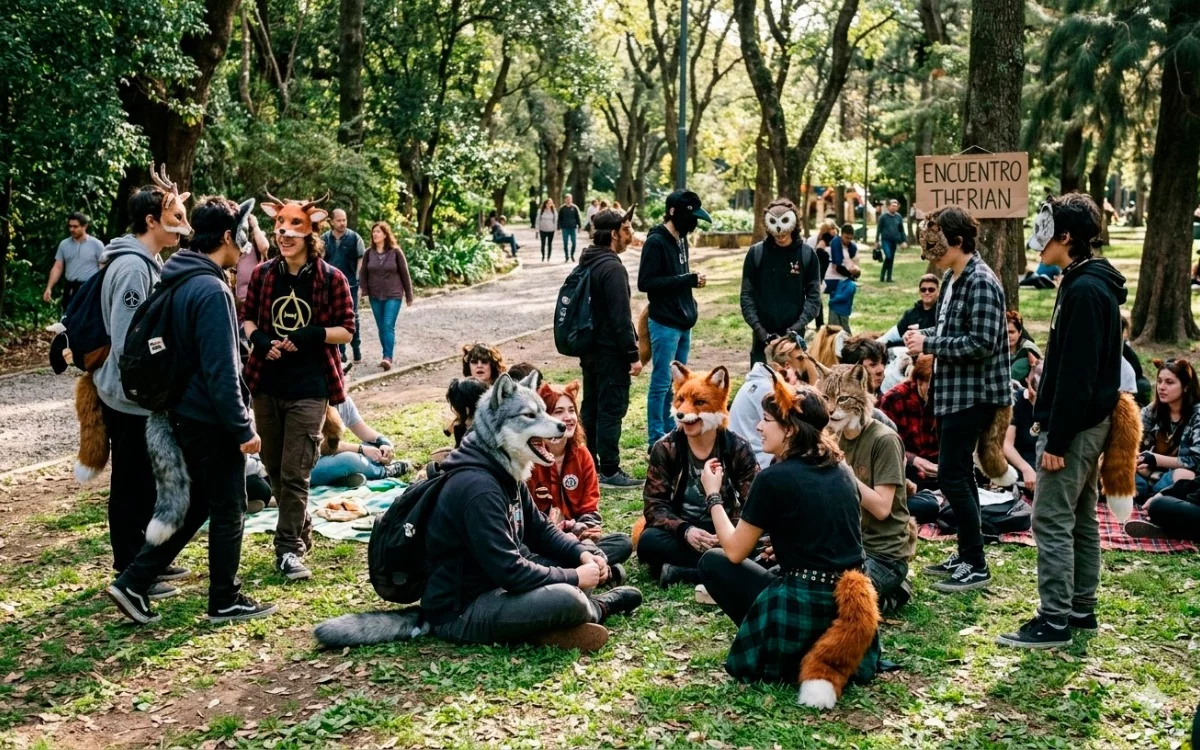
In contrast, those who define themselves as therians maintain that their identity does not depend on a costume. They may use masks or tails as a form of external expression, but they assert that the animal connection is prior and constitutive of their identity.
This distinction is central to understanding why many members of the group emphasize that it is not about entertainment, but about a personal experience.
Presence in public space and social debates
In various cities, the visibility of people adopting behaviors associated with animals has generated surprise and debate. In some cases, group gatherings were observed in squares or parks where participants interacted with each other under dynamics that evoke animal behaviors.
These scenes sparked curiosity and also questions about the limits of contemporary identity. Specialists in cultural studies noted that modernity has expanded the forms of self-identification and personal expression.
In cities like Buenos Aires, some episodes shared on social media intensified the public conversation. The reactions of passersby ranged from surprise to misunderstanding and interest.
Daily life and personal expression
Despite the media exposure, those studying the phenomenon emphasize that most therians engage in regular activities without altering social norms.
Many participants explained that they reserve their practices for private moments or specific gatherings with people who share the same identity. They use the concept of “pack” to refer to those groups.
From their perspective, these behaviors represent a search for authenticity and freedom. They believe that modern urban life imposes rules that repress instinctive impulses, and they find in these practices a way of symbolic reconnection with nature.
Identity in the digital age
The growth of the term therians cannot be separated from the impact of the internet. Digital platforms facilitated the creation of global communities where people with similar experiences could exchange stories and validate their perceptions.
The ability to name an experience generated a sense of belonging. The word, with its Greek root, provided a conceptual framework that transcended linguistic boundaries.
In a context where identities diversify and are discussed in public spaces, the phenomenon invites reflection on how social and personal categories are constructed.
The term, far from being a simple label, concentrates a broader debate on self-definition and the boundaries between the symbolic and the identity.