Bleach or chlorine on clothes: the home trick that almost no one uses and can save your favorite garment
A bleach or chlorine stain on clothing doesn't always mean the end. There is a trick with vodka that can disguise the stain in just a few minutes.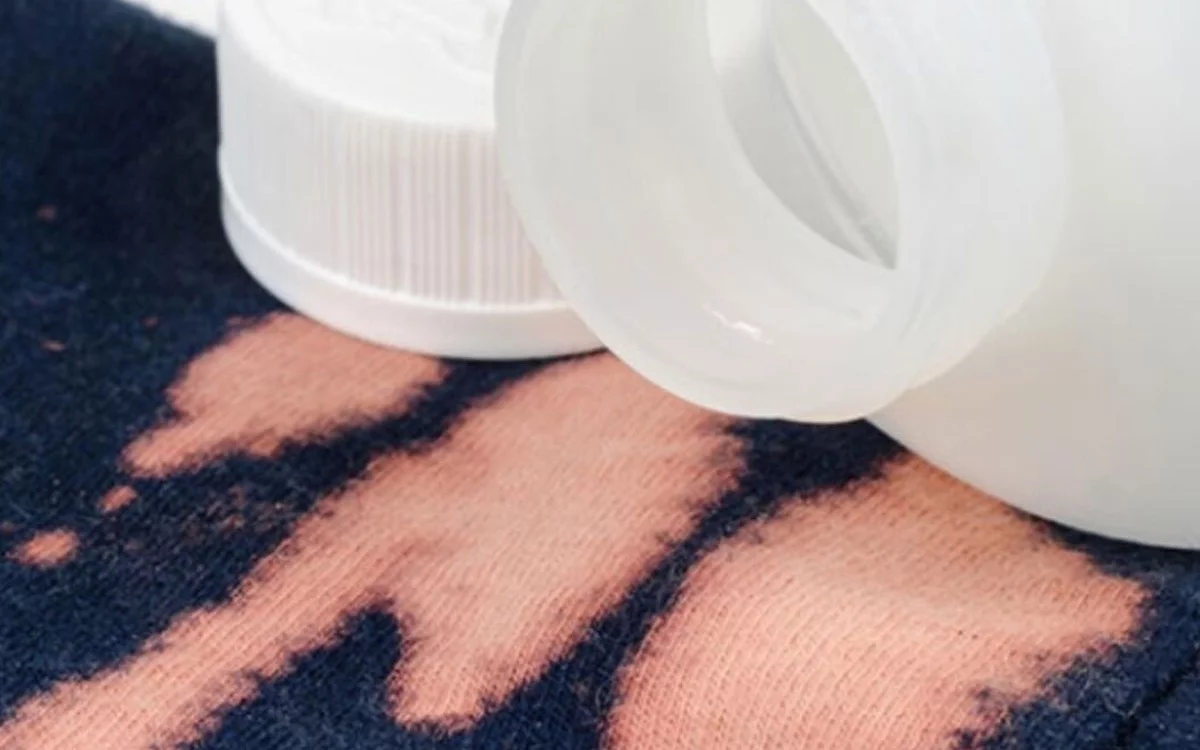
The bleach or chlorine on clothing often causes immediate despair. A white stain on a dark t-shirt or colored pants seems like irreversible damage. Most people think there is no solution. However, there is a simple method that can help you recover the garment using a product you probably already have at home.
When that discoloration appears, the feeling is one of total loss. But before discarding the garment, it is advisable to understand what really happened and what options exist.
Why bleach or chlorine leave permanent stains
Unlike other common stains, bleach or chlorine on clothing does not dirty the fabric. What it does is remove the original pigment from the fabric.
Chlorine chemically acts on the fibers and destroys the color. That’s why what you see is not a traditional stain, but an area where the dye has disappeared. It is a discoloration.
This detail is important. It is not about cleaning something that was added, but about trying to redistribute the color that still remains in the nearby areas.
The vodka trick that can help you
Textile cleaning specialists recommend a little-known method: the vodka trick.
The secret lies in its alcohol content. Vodka works as a mild solvent that can slightly loosen the dye from the healthy fibers around the stain.
This slight detachment allows the color to shift towards the affected area, helping to disguise the discoloration.
Not all alcohols produce the same effect. Some may be too aggressive and damage the fabric. That’s why vodka is specifically suggested.
How to apply the method step by step
If the stain is small and recent, you can follow this procedure:
Pour a quarter of a glass of vodka into a container.
Moisten a clean piece of cotton with the liquid.
Gently rub from the part that still retains color towards the center of the stain.
This point is fundamental. You should always work from the area with pigment towards the discolored area. The goal is to drag the dye towards the center.
Make gentle, circular movements. Do not apply too much pressure to avoid spreading the damage.
In a few minutes, you should notice that the color difference diminishes.
When it works best
This trick offers better results when:
The stain is small
The garment is light-colored
Action is taken immediately after the accident
The fabric is cotton or natural fibers
Speed is crucial. The sooner you intervene after contact with bleach or chlorine, the greater the chances of success.
If the discoloration is extensive or the garment is very dark, the result may be limited.
What to do if the stain is large
When the damage is extensive, there are alternatives that can save the garment.
Using textile dyes
An effective option is to dye the entire garment with a commercial dye of the same shade.
These products are designed to restore color evenly. You just need to carefully follow the manufacturer's instructions.
It is a particularly useful solution for black or dark blue garments.
Opting for embroidery or patches
Another alternative is to transform the problem into a creative resource.
Decorative embroidery and patches are in trend. They allow you to cover the affected area and add a personal touch.
Instead of hiding the accident, you can turn it into a design detail.
Important precautions
Before applying the vodka, do a test on a less visible part of the garment.
Do not use industrial alcohols or stronger products. They could weaken the fibers or cause greater damage.
Always work with gentle movements and monitor the process.
How to prevent future stains
To prevent bleach or chlorine from damaging your clothes:
- Use old garments when handling these products
- Avoid splashes
- Do not mix chemical products
- Work in ventilated spaces
A moment of carelessness can cause immediate discoloration.
Speed makes the difference
When it comes to bleach or chlorine on clothing, acting quickly is key.
If you intervene immediately, you will be able to better disguise the affected area.
If the stain has been there for a while, it will be more difficult to achieve an even result, although there are always alternative solutions like dyeing or personalization.
Before giving up on your favorite garment, try this method. It can make a difference.