Advancement in the fight against cancer: scientists create a precision technology that can enhance immunotherapy
This new oncological technology could achieve significant advances for cancer to stop hiding and be detectable by the patient's immune system, without the classic side effects. This is how this new device works.
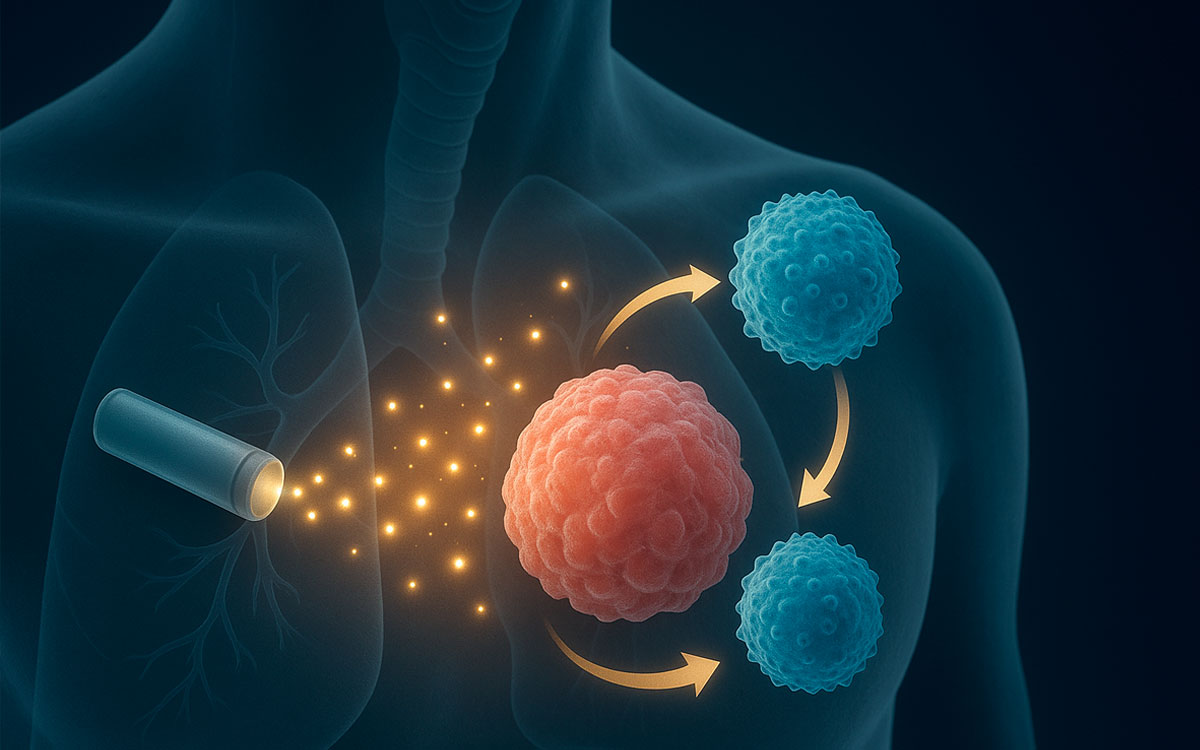
This is the device that could change the future of cancer treatment
A revolutionary breakthrough in the fight against cancer is beginning to modify the therapeutic approach to different types of tumors. Scientists from Rice University in the United States developed an implantable device that releases interleukin-12 (IL-12) directly at the tumor site. This technology could transform immunotherapy by activating a precise and lasting immune response without generating the toxic side effects that accompany traditional treatments such as chemotherapy or radiotherapy.
The proposal consists of a kind of implantable “cytokine factory” that locally releases IL-12, a substance that alerts the immune system and leads it to attack the tumor more effectively. The team behind the development, led by bioengineer Omid Veiseh, published their findings in The Journal of ImmunoTherapy of Cancer, highlighting its potential not only to destroy primary tumors but also to eliminate distal metastases, one of the major barriers of current treatments.
An alarm that only goes off where needed
The innovation of the IL-12 device lies in its ability to release cytokines in a controlled and specific manner, activating the immune system only in the affected area. As the researchers themselves explain, IL-12 acts like a localized alarm: it activates at the tumor and does not affect the rest of the body.

This represents a significant change compared to other immunological therapies that, by acting more broadly, often trigger severe adverse reactions. “We designed the IL-12 cytokine factory to improve immunotherapy while minimizing toxicity, a critical need in the treatment of particularly aggressive cancers,” said Veiseh.
Promising results in animal testing
The study from Rice University is in the preclinical phase but has already shown successful results in mice and non-human primates. The scientists successfully treated models of metastatic melanoma, as well as colorectal and pancreatic tumors.
In all cases, the IL-12 device was well tolerated and showed efficacy in both local tumors and distant metastases. According to the university's statement, “the IL-12 cytokine factory in combination with immune checkpoint inhibitors eliminated tumors in multiple locations in experimental models.”
An analogy that explains it all
To illustrate the mechanism of IL-12, Veiseh used a football analogy: while other cytokines always recruit the same group of lymphocytes (players who tire quickly), IL-12 forms a more varied and durable team that attacks effectively and with long-term resilience.
This new “immune coach” allows not only for a better short-term response but also a more robust and prolonged immune response. That ability to generate immune memory is key to preventing relapses and increasing patient survival.
A less toxic treatment than current ones
One of the major problems with traditional immunotherapy has been systemic toxicity, which often prevents continuing treatment or makes it unviable in weakened patients. IL-12 seeks to precisely address this limitation by applying treatment exactly where it is needed, without affecting healthy organs or tissues.
"The challenge remains to treat solid tumors without causing side effects", explained Professor Nathan Reticker-Flynn from Stanford University. "Our study not only tests the efficacy of this technology but also its safety profile, which is fundamental before starting human trials."
Melanoma: one of the great hopes of the new device
Melanoma, one of the most aggressive types of skin cancer, has been one of the focuses of the study. This tumor is characterized by its rapid spread and the difficulty of treating it in advanced stages. With the IL-12 device, researchers managed to reduce lung metastases in preclinical models and increase the survival of mice.
Additionally, by combining this approach with checkpoint therapy, they activated a systemic immune response, meaning not only local but also extended to other tumor sites, representing a huge advance against tumor spread.
Pancreatic and colorectal: the deadliest cancers could also benefit
Pancreatic cancer is one of the most difficult to treat due to its late diagnosis and the rapid onset of metastases. The IL-12 device offers an alternative by activating the immune system right at the tumor site, with promising results in experimental phases.
In the case of colorectal cancer, the scenario is similar. Its ability to generate metastases and resistance to standard therapies makes it a strong candidate for this type of technology. In mice with colorectal cancer, the treatment managed to prevent tumor spread in 8 out of 9 cases, an encouraging figure that motivates moving towards the clinical phase.
A new horizon in personalized medicine
The idea of a treatment that acts in a specific, localized, lasting, and safe manner summarizes the major goals of modern oncological medicine. The advancement of the IL-12 device embodies that vision, where each tumor is addressed with surgical precision, without ravaging the rest of the body.
While there is still a long way to go until its approval and widespread clinical use, the preclinical results pave a solid path towards a new era in cancer immunotherapy.